FACT: In 79 A.D., Roman author Pliny the Elder marveled at how dust could turn to stone.
“Who, indeed,” he wrote in Naturalis Historia, “cannot but be surprised at finding the most inferior constituent parts of it [Earth], known as ‘dust’ only, forming a barrier against the waves of the sea, becoming changed into stone the moment of its immersion, and increasing in hardness from day to day?”
Pliny was describing the volcanic ash from Puteoli – ash that we now call pozzolana, as modern Pozzuoli is the historical Puteoli – which can indeed transform into solid stone when struck by water. This property accounts for building structures of astonishing endurance, like the Pantheon, whose concrete dome still stands nearly 2,000 years later.
Today, the backbone of everyday skyscrapers and homes is often cement. Its production forces limestone above 1,400 degrees Celsius in a process called calcination. This high-heat process emits roughly 8 percent of global CO₂, making it one of the largest industrial contributors to global warming. To combat this consequence, Tiziana Vanorio, associate professor of Earth and planetary sciences, is turning this history on its head by borrowing Pozzuoli’s volcanic chemistry to reinvent cement with a radically lower carbon footprint.
More research from the Rock Physics and Geomaterials Lab
Drawing inspiration from Pozzuoli in the Phlegraean Fields (her native volcanic region), Vanorio and her colleagues at Stanford – including Alberto Salleo, professor of materials sciences, and Matteo Cargnello, associate professor of chemical engineering – discovered how to harness and process a mix design using rocks that are far more abundant than typical volcanic ash and have already been heated naturally. This means rocks no longer contain the carbonate that releases CO₂ when heated. “Earth does it,” Vanorio said. “I was inspired by how nature cements rocks, but together with my colleagues, we used science and engineering to take it further.”
The Strategic Energy Alliance at the Precourt Institute for Energy, the Department of Energy, the Stanford Rock Physics Affiliates Program, the National Science Foundation, and the Stanford School of Earth, Energy & Environmental Sciences funded the initial stages of this work. The Sustainability Accelerator at the Stanford Doerr School of Sustainability is supporting efforts to scale up the technology. Guidance from the High Impact Technology (HIT) Fund within Stanford’s Office of Technology Licensing was a key part of the startup formation process, helping Vanorio deepen her understanding of the business landscape and explore how to best commercialize the technology in a supportive environment.
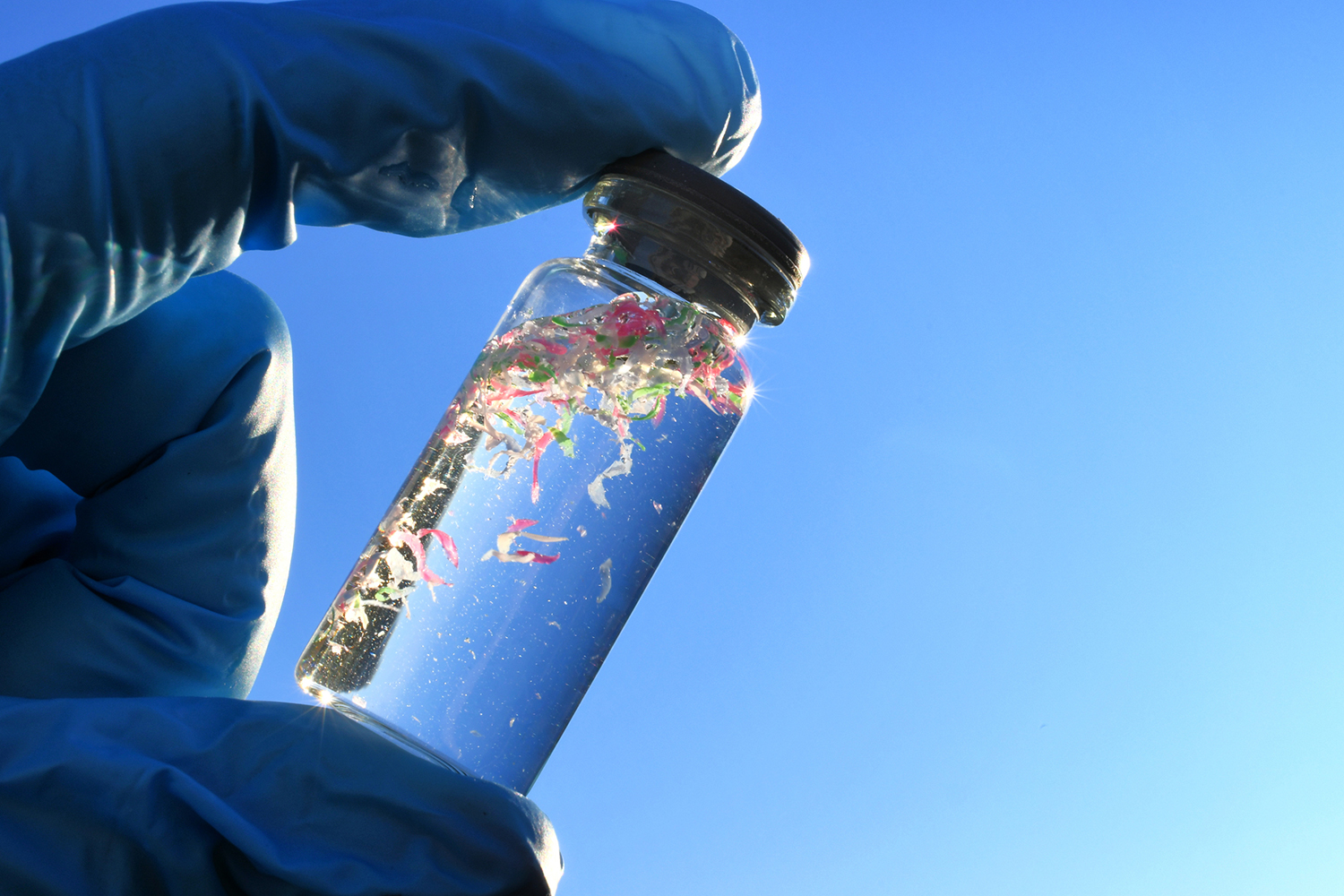
By transforming a ground-up blend of naturally “pre-cooked” igneous rocks into an artificial pozzolana-like binder, Vanorio’s lab has figured out how to purposefully grow a network of microscopic fibers within the material, emulating the natural cementation of rock sediments. (Concrete, by contrast, is often reinforced through the introduction of steel bars.)
Vanorio and her colleagues recently founded Phlego, which will be licensing the technology from Stanford University to bring this greener cement to market.
Seeing as Vanorio was born in Pozzuoli, Phlego is truly the brainchild of a “Pozzolana” – both in name and in fact!


For more information
Vanorio is an associate professor in the Earth and planetary sciences at the Stanford Doerr School of Sustainability.
Writer
Mahima Samraik