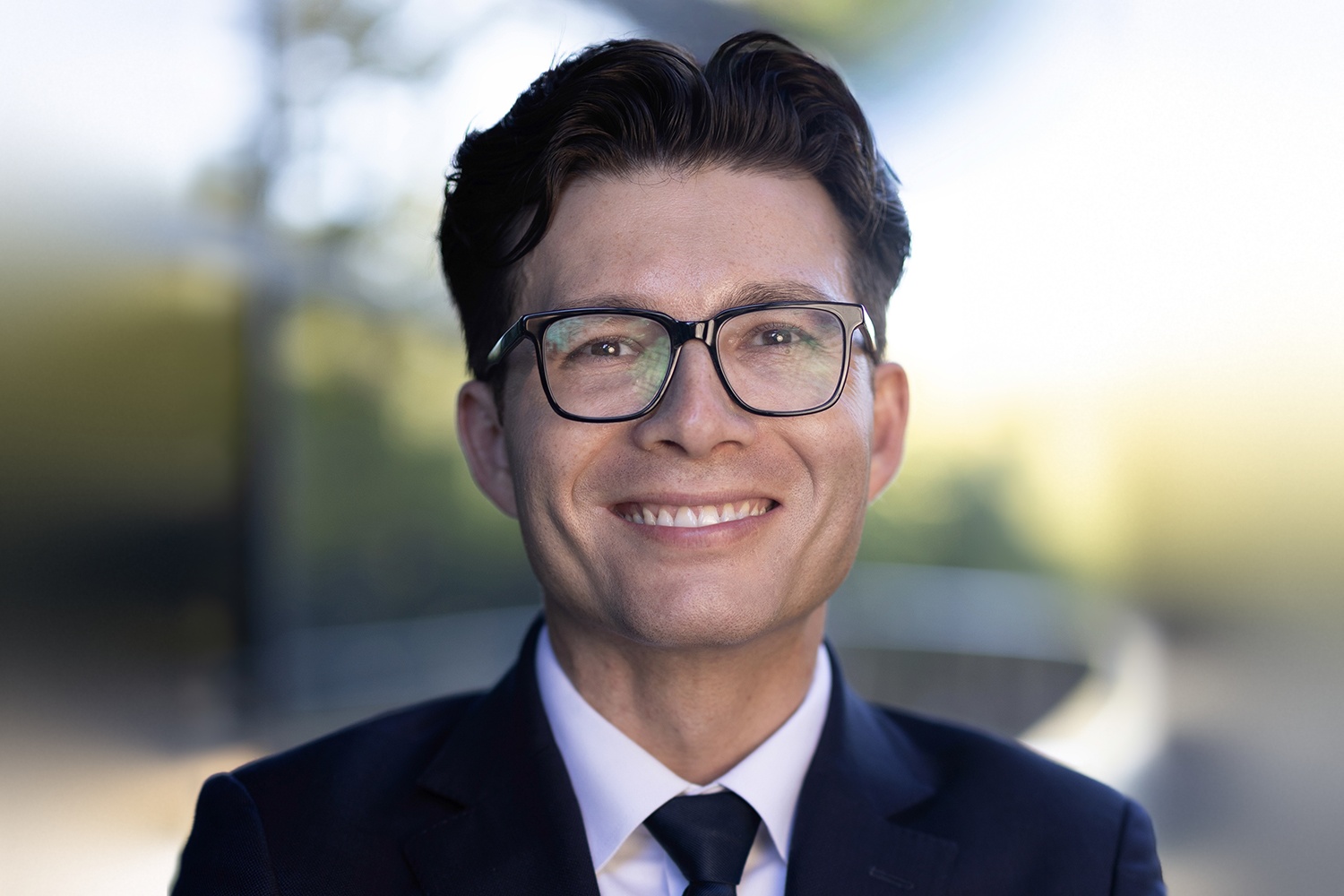
Jeannette Wang, ’26, has been selected as a 2025-26 Newman Civic Fellow by Campus Compact for her dedication to strengthening democracy and fostering civic participation. A political science major, Wang has worked to bring people together across political divides and help her peers find meaningful ways to participate in public life.
Campus Compact is a national coalition of colleges and universities committed to the public purposes of higher education. The Newman Civic Fellowship recognizes students who are public problem-solvers, tackling pressing social and political issues through thoughtful engagement and leadership. Fellows connect in person with a network of peers and have opportunities to develop professional skills, apply for funding for social impact projects, and publish or present their work. Stanford President Jonathan Levin nominated Wang for the award.
Wang’s public service journey began as a high school student. From 2021 to 2024, she was a member and then vice chair of the Mountain View Public Safety Advisory Board, where she was the only youth member. She helped guide public safety policy for the City of Mountain View, including work on the Mental Health Crisis Response subcommittee to improve the city’s approach to mental health emergencies.
Wang also co-founded AAPI Silicon Valley, an organization dedicated to amplifying Asian American and Pacific Islander youth voices and addressing issues facing their communities. The group has lobbied for ethnic studies curriculum funding, organized a Stop Asian Hate rally, and hosted a cultural festival that drew more than 500 attendees. For this work, the group received a Certificate of Recognition from the California State Assembly.
At Stanford, Wang’s efforts have centered on involving her peers in civic engagement. She played a key role in organizing Stanford’s student-run Democracy Day, serving as vice chair in 2023 and chair in 2024. Democracy Day is an annual, campus-wide event held on election day with a full schedule of programming to encourage students to vote and engage in meaningful, respectful discussions across differences.
“As chair of Democracy Day, I wanted to build this feeling of self-efficacy about our American institutions, politics, and civic outcomes into our community’s civic culture,” Wang said.
In the runup to the 2024 election, she led a team that organized more than 40 events with 47 campus partners, reaching more than 2,000 participants. “Our goal was to show the campus community how their stories could intersect with public service, regardless of their major or occupation. But entering new spaces – especially political spaces – is hard and awkward,” she said. “I started the StandForDemocracy coalition, gathering all non-partisan civic student groups on campus with the vision that we might create cohorts of individuals who believe deeply in public service and democracy, making it easier to enter these spaces together.”
Wang complements her service work with academic research aimed at understanding and addressing threats to democratic resilience. As a research assistant with the Polarization and Social Change Lab, she helped develop interventions to reduce political polarization. At the Center on Democracy, Development and the Rule of Law, she researched trends in comparative democratic development with a focus on South Africa and Botswana.
Wang hopes to continue her work in the political and policy arena after graduation, with a focus on civic renewal and democratic reform.
“I hope to work on strengthening our institutions in congruence with emerging technologies,” she said.
Writer
Virginia Bock