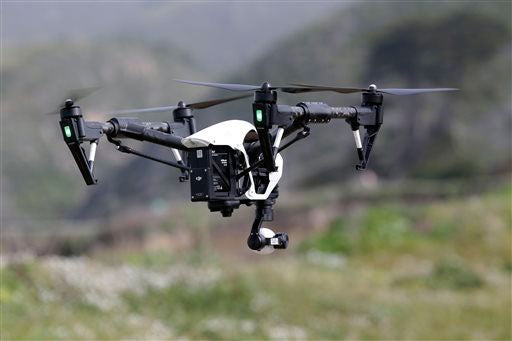
A drone flying in Davenport, Calif., on March 10, 2015. Laws, at both state and federal levels, should make clear where and when privately owned drones can be used, Stanford scholar Vivek Wadhwa said. (Image credit: AP Photo/Marcio Jose Sanchez)
The sudden proliferation of privately owned drones highlights a glaring need to better understand their legal and social implications, says a Stanford expert.
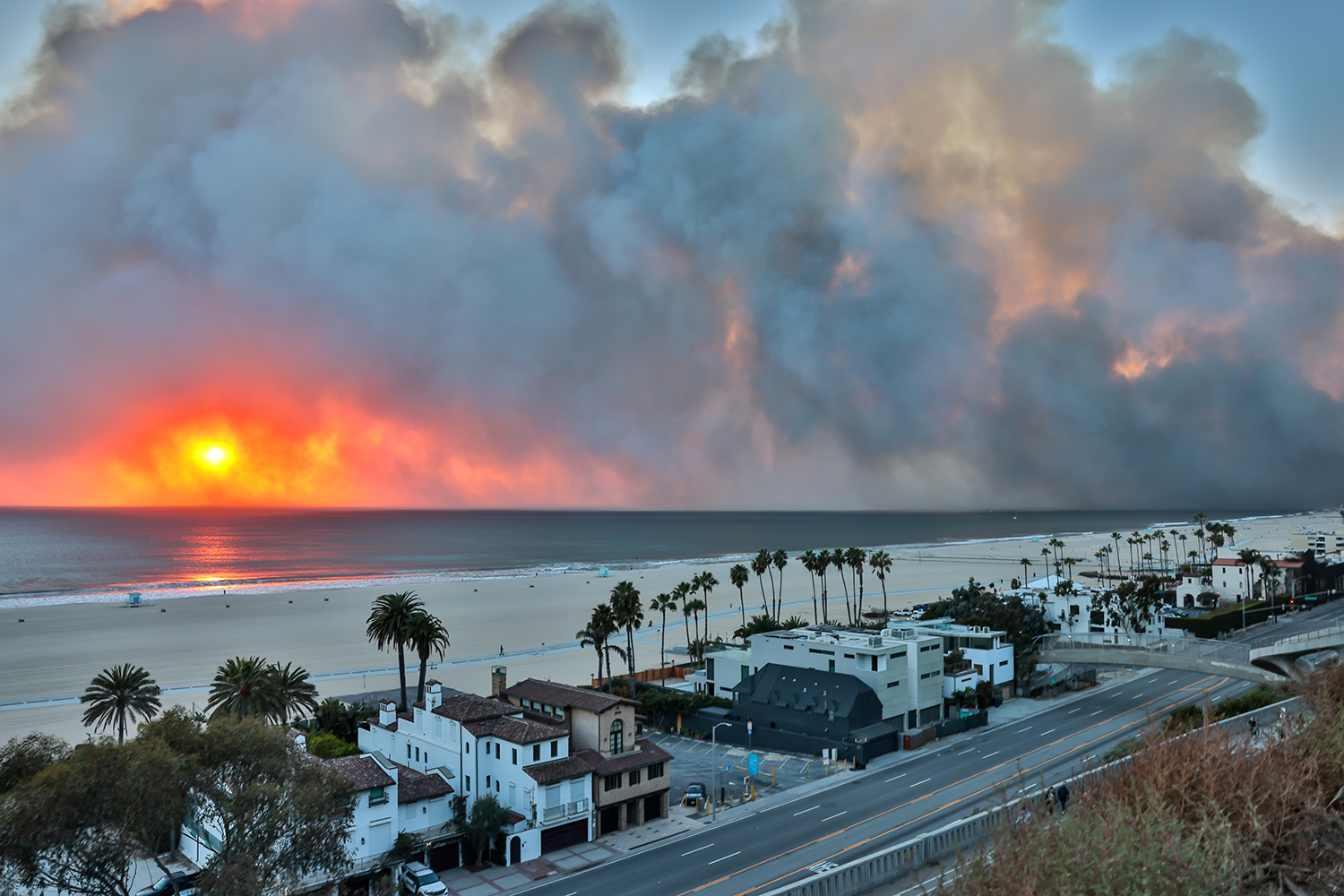
For example, as wildfires scorched areas of Southern California in mid-July, firefighters found themselves hindered by drone hobbyists who were flying their craft overhead.
Now, the California legislature is considering a bill that would allow emergency responders to down drones and levy hefty fines on their operators if they are interfering with emergency operations. And that is at least a step in the right direction, said one Stanford scholar.
“We need to be clear about where drones can be used and when,” said Vivek Wadhwa, a technology entrepreneur and fellow with Stanford’s Rock Center for Corporate Governance, who has studied and written about the drone issue.
For example, he said, drones should not be allowed to be on private property unless they are making a delivery – and then, only with the permission of the homeowner. “We need to have privacy laws that prevent filming of private property from the air. There are many peeping Tom and security issues.”
As far as the issue with forest fires, Wadhwa added, regulations are necessary for drones in these situations. “If there is any kind of a disaster and police, responders or firefighters are in the area, these should not be allowed to operate, for example.”
He suggested that society may need to create “droneways,” just as it has done for automobiles on highways. “In other words, we restrict drones to narrow lanes and heights.”
The question of how the federal government or the Federal Aviation Administration (FAA) should address drones is another pressing problem, Wadhwa said.
“The FAA has been moving very cautiously, letting there be a consensus about what is right and wrong and letting policymakers craft the right legislation. The problem with advancing technologies is that they are moving so fast that we don’t have time to reach a consensus,” he said.
Most people, Wadhwa pointed out, do not understand the new technologies involved in objects like flying drones, let alone their risks and benefits, so this makes it hard for policymakers to develop laws and regulations.
“Laws are, after all, codified ethics. And what is ethical is based on consensus. Forget the loopholes, the proper policies haven’t been developed,” he said.
Wadhwa said drones change our skies as we know them, for better and worse.
“We will have drones everywhere for delivery, safety and surveillance, farming, site inspection, traffic control and spying. There are tremendous risks because of the loss of privacy and the ability to deliver arms and explosives. But the benefits are dramatic reductions in delivery costs and the ability to reach places that were inaccessible,” he said.
Wadhwa expects the technology to progress to the point that drones will transport humans. “They will be the flying cars we dreamed of,” he added.
Still, drones are yet another element of an uncertain future involving accelerating technology, he noted.
“Drones are just one of many debates we need to have; one of many technologies that are advancing rapidly and that we have to figure out how to use in a good way. The advances are unstoppable,” he said.
Media Contacts
Vivek Wadhwa, Rock Center for Corporate Governance: (650) 725-3894, wadhwa@law.stanford.edu
Clifton B. Parker, Stanford News Service: (650) 725-0224, cbparker@stanford.edu
Author
Clifton B. Parker