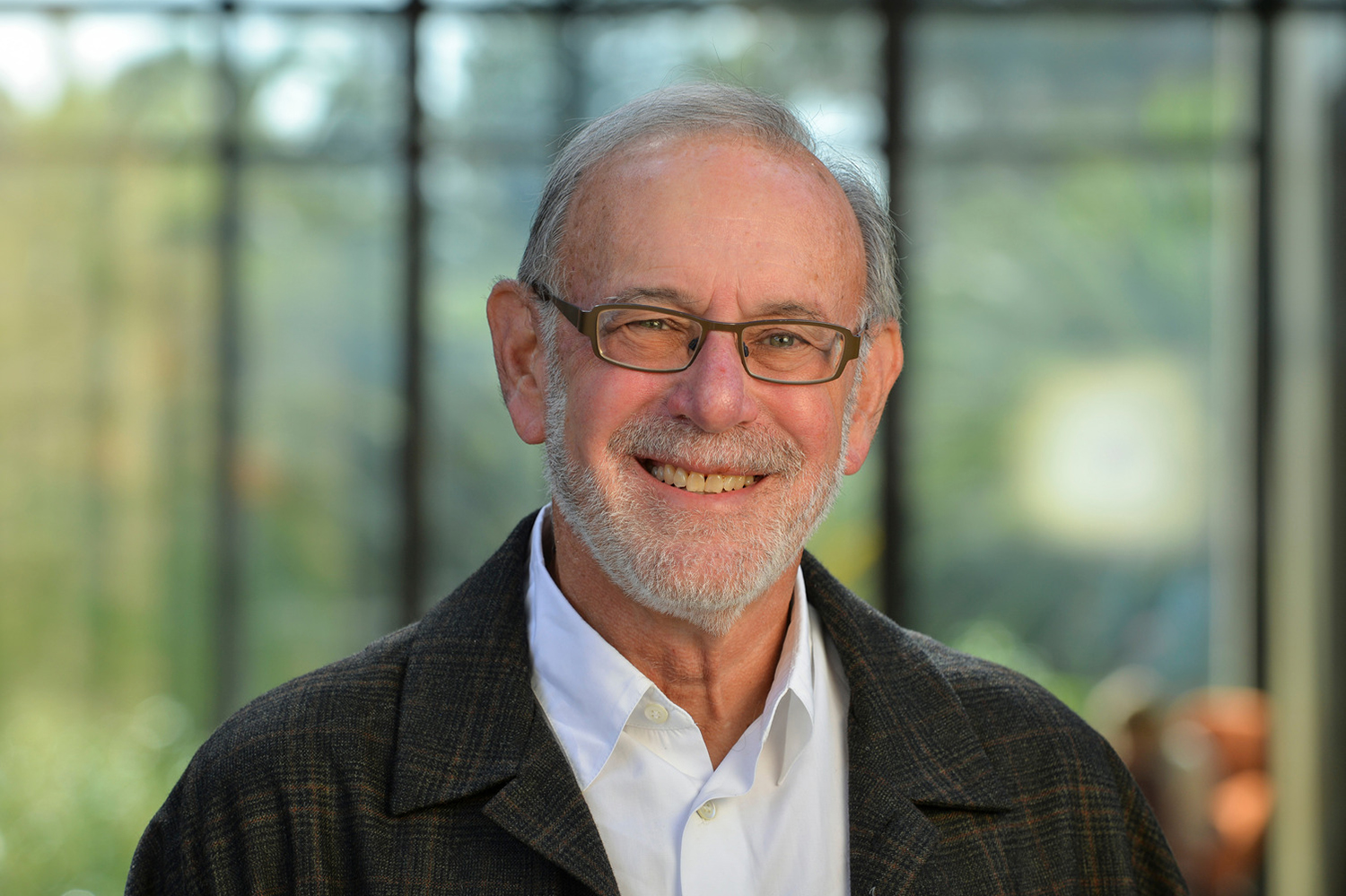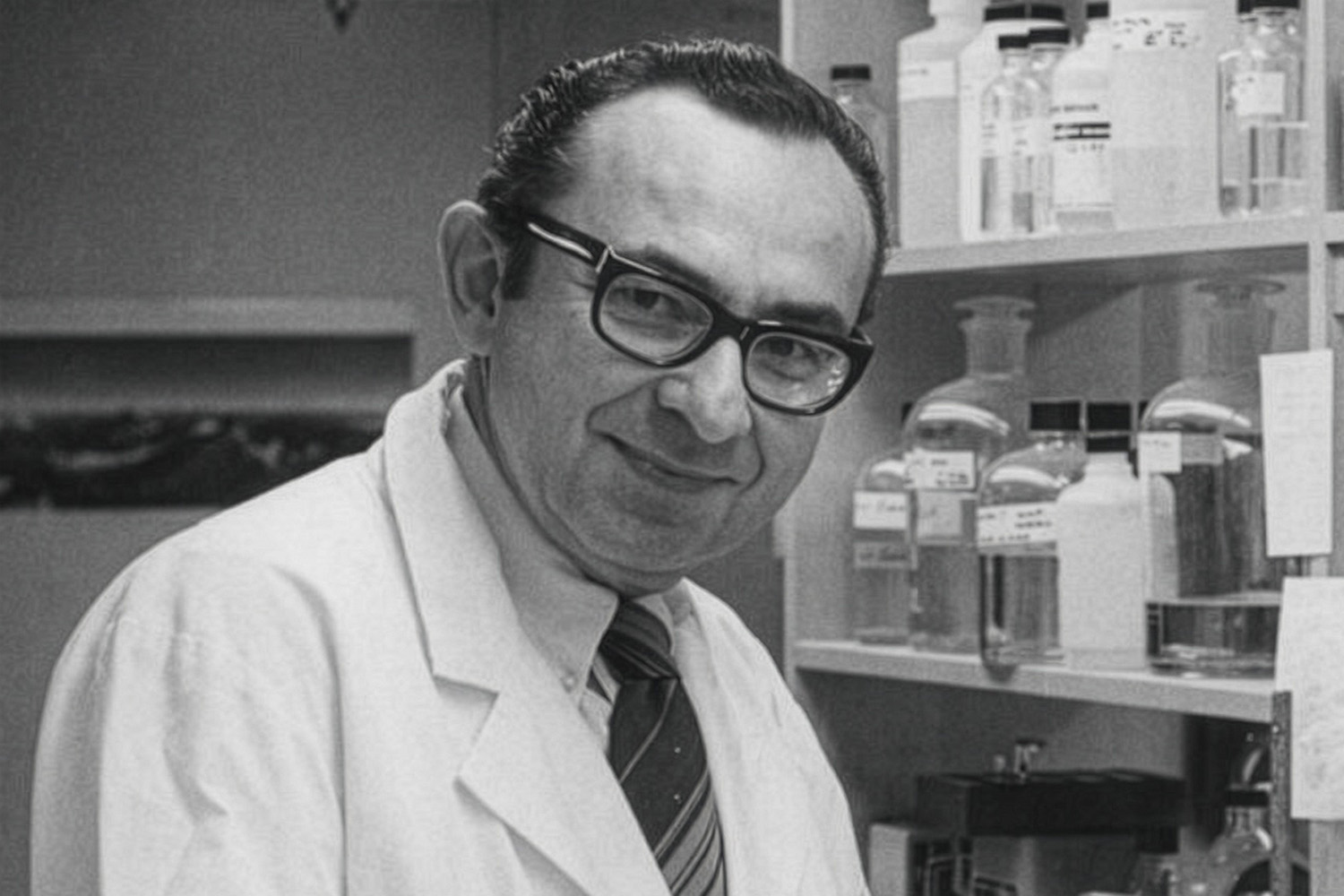
I. Robert Lehman, PhD, a foundational biochemist whose research fueled modern molecular biology and biotechnology, died June 15 at his home on the Stanford University campus, surrounded by his family. He was 101.
“Dr. Lehman embodied the very best of Stanford Medicine – intellectual curiosity, scientific rigor, humility and generosity,” said Lloyd Minor, MD, the Carl and Elizabeth Naumann Dean of the School of Medicine and vice president for medical affairs at Stanford University. “As a founding member of the Department of Biochemistry, he helped build not only an exceptional scientific enterprise but also a collaborative culture that continues to shape Stanford Medicine and generations of researchers.”
Lehman joined the Stanford School of Medicine in 1959 as one of six founding members of the Department of Biochemistry.
“Bob was the last of our biochemistry founding faculty,” said Aaron Straight, PhD, the Pfeiffer and Herold Families Professor and chair of biochemistry. “It feels like the end of an extraordinary generation and scientific chapter for Stanford.”
Over nearly five decades, Lehman helped discover the first DNA polymerase – an enzyme that assembles DNA – and led one of several labs that independently discovered DNA ligase, which seals breaks in DNA.
“He was a gentleman of science,” said James Spudich, PhD, a professor emeritus of biochemistry. “He did terrific work on DNA ligase and nucleases that became critical to molecular biology. My students buy kits containing those enzymes, unaware that work came from down the hall.”
Colleagues described Lehman as a quiet presence: gentle, patient and genuinely interested in others. But he had an outsized scientific impact through his work and his mentorship, Straight said.
“Bob was a bright light in the department and was held in the highest esteem,” said Gilbert Chu, MD, PhD, professor of medicine and of biochemistry, who met Lehman after visiting Stanford Medicine in 1982. “His door was always open at lunchtime so that anyone could walk in and talk about science.”
From Lithuania to Stanford
I. Robert Lehman was born Oct. 5, 1924, in Tauragė, Lithuania, to a Yiddish-speaking family. His parents, Herman and Anna Lehman, immigrated with their only child to the United States in 1927 and settled near Anna’s relatives in Baltimore.
Soon after arriving, Herman Lehman developed tuberculosis and spent two years in a sanatorium, then found work as a baker. During the Great Depression, Robert Lehman worked at a butcher shop while attending Forest Park High School, missing school on Fridays to work and help support his family.
In June 1943, at 18, he graduated from high school and was drafted into the U.S. Army. He served in the 3rd Infantry Division and took part in the invasion of southern France in August 1944 and subsequent fighting in France and Germany. He earned a Purple Heart and a Bronze Star Medal for heroic or meritorious service.
After the war, he returned to Baltimore and enrolled at Johns Hopkins University through the GI Bill. Lehman initially planned to become a physician, as his mother hoped. A senior-year biochemistry course persuaded him to pursue laboratory research.
Lehman earned a bachelor’s degree in chemistry in 1950 and a doctorate in biochemistry in 1954, both from Johns Hopkins University. For his dissertation, he studied viruses that infect bacteria.
In 1954, while a postdoctoral scholar at Johns Hopkins’ McCollum-Pratt Institute, Lehman heard another postdoctoral scholar explain how cells produce the building blocks of DNA and RNA at a meeting in Atlantic City, New Jersey. The scholar was from the laboratory of the late Arthur Kornberg, MD, at the time a professor of microbiology at Washington University in St. Louis.
Drawn to nucleic acid biochemistry, Lehman asked to join Kornberg’s laboratory. Kornberg, who had heard Lehman present his work at the same meeting, invited him to join the lab in 1955. Lehman became an instructor in microbiology there in 1957.
Lehman met Sandra Teper, who had just earned a master’s degree in psychiatric nursing at Washington University, through a mutual friend in May 1958. “Bob made his decision about us very early,” Sandra said. “Things just seemed to click. It felt right, and it worked.”
In Kornberg’s laboratory, Lehman isolated and characterized DNA polymerase I from E. coli bacteria. He and his colleagues showed that the enzyme uses an existing DNA strand as a template to build a new strand.
Kornberg shared the 1959 Nobel Prize in physiology or medicine with Severo Ochoa for revealing how DNA and RNA are built. That year, Kornberg moved most of his Washington University department to Stanford Medicine to establish a biochemistry department.
Robert and Sandra Lehman married in St. Louis on July 5, 1959, and left for California the next day. At Stanford Medicine, he became an assistant professor of biochemistry, an associate professor in 1961, and a professor in 1966. He chaired the biochemistry department from 1974 to 1979 and was named the William M. Hume Professor in 1980. He served as chair again from 1984 to 1986. Sandra pursued a career in psychiatric nursing as they raised three children on the Stanford University campus.
Building the molecular biology toolkit
In his lab at Stanford, Lehman first studied nucleases, enzymes that cut DNA. In 1967, he and a postdoctoral scholar identified and characterized an enzyme from E. coli that seals breaks in DNA, making their laboratory one of several teams to independently discover DNA ligase.
Lehman’s group purified DNA ligase and established its roles in copying, rearranging, and repairing DNA. Ligases later became crucial laboratory tools for creating recombinant DNA and genetically engineered medicines.
“Bob was isolating and characterizing enzymes that make it possible to glue pieces of DNA together,” said Suzanne Pfeffer, PhD, the Emma Pfeiffer Merner Professor in Medical Sciences. “That was essential for other faculty to make recombinant DNA. His work made their discoveries possible.”
After Ronald Davis, PhD, professor of biochemistry and of genetics, joined Stanford Medicine in 1971, he and a graduate student asked Lehman’s lab for ligase to test whether DNA fragments could be rejoined. “They gave us a little tube, and lo and behold, we could put the fragments back into circles and join different molecules together,” Davis said. “That was the beginning of recombinant DNA for us.”
Lehman was elected to the National Academy of Sciences in 1977 and served as president of the American Society for Biochemistry and Molecular Biology from 1997 to 1998. The society gave him its Herbert Tabor/Journal of Biological Chemistry Lectureship in 2008 and named him a fellow in 2026. He also served for decades as an editor of the Journal of Biological Chemistry.
An open door, an enduring culture
Lehman participated in Wednesday Club, the department’s weekly research discussion, and became its unofficial historian. Even after closing his lab, he walked to his office four days a week to review manuscripts and discuss experiments with students.
“Bob never had an agenda,” said Daniel Herschlag, PhD, a professor of biochemistry who considered Lehman a mentor for nearly 40 years. “His agenda was to be supportive.”
When Pfeffer joined the department as its only junior faculty member in 1986, Lehman was chair. She recalled him pulling out her chair at her first faculty meeting and being a wonderful mentor and colleague for almost 40 years.
“If you wanted to talk to Bob, you’d just go into his office,” Davis said. Lehman was “extremely non-arrogant and very interested in everything. Never a show-off. Just asking questions all the time.”
Many of Lehman’s graduate students and postdoctoral scholars became part of his extended family, his daughter Ellen Lehman said. They remained connected throughout his life, sharing family updates and research for decades after they left Stanford.
“He had this unending curiosity about things. Even in his 10th decade, he was pushing himself to learn new things,” Ellen said. Well into his 90s, he closely read The New York Times and The New York Review of Books and worked through all three volumes of The Feynman Lectures on Physics.
“He had a real interest in his children’s and grandchildren’s lives and ambitions,” Ellen Lehman said. “He listened to others and was interested in what others had to say,” his daughter Deborah Lehman added.
Lehman took his children on weekend “science walks” and excelled at explaining science. “He was able to make something very complicated simple, but not make it sound like he was talking to someone simple,” Sandra Lehman said.
Lehman loved opera – Mozart’s The Marriage of Figaro was his favorite – books, food, and travel. He and Sandra belonged to a gourmet club with Stanford colleagues for about 30 years. They traveled widely, often visiting former lab members, and reread his detailed travel journals together during his final weeks.
Lehman is survived by his wife, Sandra, of Stanford; daughters Ellen of Menlo Park, California, and Deborah and her husband Marc Wishingrad of Los Angeles, California; son Sam and wife Tracee Lehman of Fresno, California; and five grandchildren.
For more information
This story was originally published by Stanford Medicine.
Media Contact:
Lisa Kim: 650-723-6696; likim@stanfordhealthcare.org
Writer
Jennifer Welsh