In brief
- Because many breast cancers are hormone-receptor positive, some survivors cannot use systemic hormone therapy to manage severe menopause symptoms.
- Stanford gynecologist Kathryne Sanserino discusses nonhormonal therapies, including newer drugs that target the brain region where hot flashes originate.
- Combining medications and nonpharmacologic approaches can give survivors excluded from hormone therapy individualized options for symptom relief.
When they enter menopause, many younger breast cancer survivors face a disheartening conundrum: Intense menopause symptoms can hamper everything from their sleep and moods to cognitive function and sexual and reproductive health. But the most common treatment – a boost of estrogen via systemic hormone therapy – can increase the risk that their cancer will recur.
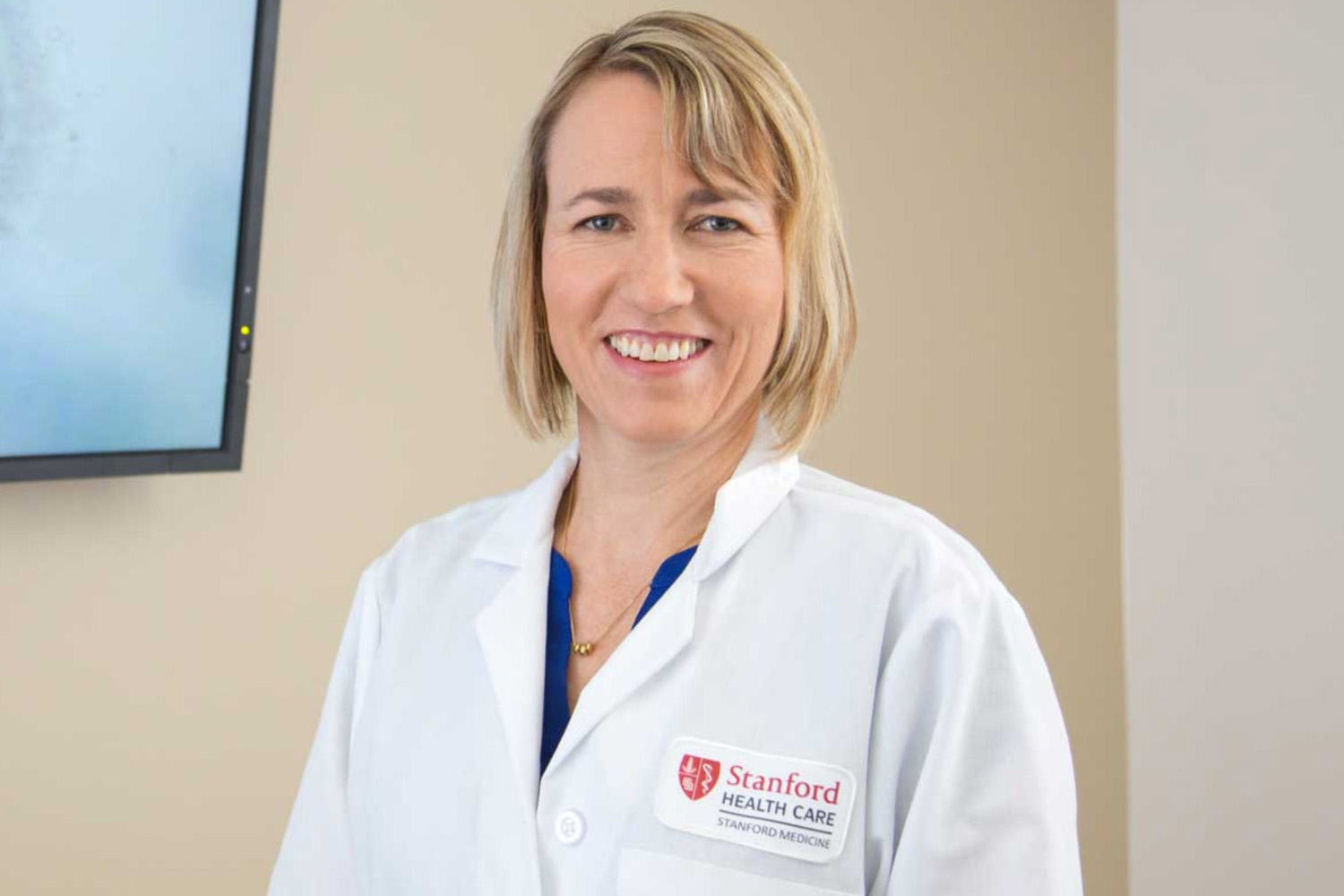
“Menopausal hormone therapy is getting so much attention in the media,” said Kathryne Sanserino, MD, a clinical assistant professor of obstetrics and gynecology at Stanford Medicine. “It’s great that the public is getting more education, but for cancer survivors for whom hormone therapy is not an option, that conversation lands differently. It feels like one more thing cancer took from them.”
About 16% of breast cancer patients are diagnosed before age 50, meaning many women complete cancer treatment before menopause begins. Meanwhile, 80% of breast cancers carry receptors for the reproductive hormones estrogen and progesterone. People who survive these cancers should avoid hormone therapy, but physicians don’t always know what else to offer them.
Sanserino’s expertise fills the gap. She specializes in treating patients facing both cancer and menopause and can provide several nonhormonal treatment options, including two new medications that target hot flashes where they originate in the brain. She also pays attention to the complex mix of emotions that patients bring to her office: They’re grateful to be alive but also feel frustrated and isolated from friends experiencing a “normal” menopause.
“Giving patients hope is key,” Sanserino said. She wants menopausal patients to know that effective treatments exist. Although the road to relief may take a few tries, “I tell them, ‘We’ll figure it out. We can put together a plan that will get you feeling better.’”
A survivor’s journey
“September 2025 is when menopause hit me like a train,” said Anu Gupta, 51, a two-time breast cancer survivor. “My hot flashes got worse, I felt down all the time – crying over anything – and I could not find joy in my life.” She was deeply fatigued and had brain fog that made it hard to string sentences together, she said. In addition to her depression, she sometimes felt rage.
Gupta was first diagnosed with breast cancer in 2005, at age 29. Chemotherapy, a lumpectomy and radiation eliminated her tumor, but genetic testing showed that she had a mutation linked to cancer recurrence. She began receiving follow-up care at Stanford Medicine in 2015, and when her team found another early-stage tumor in 2021, Gupta decided to have a bilateral mastectomy.
The following year, at age 45, she began experiencing menopause symptoms, and in 2023, worsening hot flashes led her to seek help. Her Stanford Medicine oncology nurse practitioner, Jessica Foran, prescribed gabapentin, a nerve-pain drug that can also treat hot flashes and night sweats.
“My cancer was estrogen- and progesterone-receptor positive, so I could not take hormonal therapy,” Gupta said. The gabapentin offered some relief, yet it didn’t address all her symptoms. She was under the impression that because she wasn’t eligible for hormones, she was out of treatment options.
She went online and attended conferences to educate herself about menopause. She found a plethora of ideas for things to try but was unsure which approaches might work. Psychotherapy? Dietary changes? Expensive supplements?
“I was happy I was learning about what’s happening in my body, but it was hard to navigate all this information without an expert,” she said. In 2025, Foran referred her to Sanserino.
A more-intense version of menopause
Breast cancer survivors often tell Sanserino that their symptoms seem worse than those of friends who are menopausal but don’t have a cancer history.
The observation reflects medical reality, Sanserino said. Some chemotherapy can be toxic to the ovaries and cause an abrupt, sometimes permanent version of menopause. Ovarian-suppression medications can also quickly lower estrogen levels and induce menopause. Unlike in natural menopause, patients’ bodies don’t gradually adapt to lower estrogen levels.
Intense menopause symptoms can also arise from medications that prevent breast cancer recurrence. Tamoxifen blocks estrogen at the breast; it also causes hot flashes. Aromatase inhibitors “basically take you from being menopausal to super-menopausal,” Sanserino said – the drugs block production of a weak form of estrogen that circulates in the bodies of most post-menopausal women. Without this weak estrogen, menopause symptoms are stronger.
Menopausal hormone therapy is getting so much attention in the media ... for cancer survivors for whom hormone therapy is not an option, that conversation lands differently.Kathryne SanserinoClinical Assistant Professor of Obstetrics and Gynecology
Sanserino’s patients also struggle with the complicated emotions that come from facing a life-threatening illness. Some worry that mentioning menopause symptoms to the oncologists who saved their lives could come across as ingratitude, for instance.
“I think it’s important to give them space to say that: to feel, yes, you’re lucky that you had great cancer care; you can also be totally pissed off that you are menopausal and you’re only 40,” Sanserino said. “Or you wanted to have a baby this year, but you’re actually having menopause. I see a lot of tears in my office because I give my patients room to feel those things.”
She also acknowledges patients’ frustrations about not being able to use hormones, while tempering what she sees as online hype over hormones: “You’re not missing out on this thing that would have made your wrinkles go away and given you fabulous libido and all the energy in the world,” she tells patients. “Hormone therapy doesn’t do that reliably for most people.”
Treatment options
Sanserino’s key message to her patients is that they don’t have to grit their teeth through their symptoms. Combining medications and nonpharmacologic treatments is often the most effective plan, she said.
“I favor acting early, before symptoms become unmanageable and cause a huge psychological burden,” Sanserino said. Untreated symptoms can snowball: “If you’re not sleeping because of hot flashes, that can cause brain fog, memory disturbances and mood issues. Poor sleep increases your cardiovascular and metabolic risk, too.”
Drugs that can help treat menopause symptoms include:
- Veozah (fezolinetant) and Lynkuet (elinzanetant), two new hot flash medications, which gained U.S. Food and Drug Administration approval in 2023 and 2025, respectively. They target the hypothalamus, the brain region where hot flashes originate, blocking receptors on nerves that help regulate body temperature.
- Antidepressants and antianxiety medications in the selective serotonin reuptake inhibitor (SSRI) family, some of which can reduce hot flash frequency. They also help address mood symptoms.
- Gabapentin, which can reduce hot flashes and sleep disturbance.
- Oxybutynin, a drug originally developed to treat overactive bladder, has been shown to treat hot flashes, including in women taking tamoxifen and aromatase inhibitors.
- Low-dose vaginal estrogen for some women who have severe vaginal dryness. When suggesting this option to women suppressing estrogen to combat cancer, Sanserino talks through the risks. “Unfortunately, we don’t have any randomized controlled trial data about vaginal estrogen and breast cancer survivors, but we do have a lot of observational data,” she said, adding that she explains in detail to patients how the data meshes with their specific situation.
Nonpharmacologic options include:
- Lubricant for sexual activity and vaginal moisturizer for discomfort from vaginal dryness. Patients often express frustration about how vaginal dryness and pain affect their intimate relationships, even long after cancer treatment has ended. Sanserino tells patients, “Your vagina isn’t stupid. If sex is painful, it’s normal that you’re not going to want it. It doesn’t mean you’re broken or you don’t love your partner.”
- Clinical hypnosis: Self-hypnosis has good evidence of reducing hot flash frequency and how much they bother patients. App-based self-hypnosis programs make this option easier for patients to access.
- Cognitive behavioral therapy, which has been shown to reduce annoyance with hot flashes but not their frequency.
- Stellate ganglion block, a nerve block, can also reduce hot flashes. Its drawback is that the effects wear off.
Sanserino informs patients which nonpharmacologic activities don’t have good evidence for reducing hot flashes. “Things like yoga and mindfulness are not going to meaningfully change your hot flash frequency or severity,” she said.
A multipart treatment plan
When Sanserino and Gupta began working together, they put together a treatment plan with several elements. After some trial and error, Gupta is now managing her menopause symptoms with a combination of Lynkuet for hot flashes and an SSRI, plus cognitive behavioral therapy tailored to treating her insomnia. She’s also getting regular exercise and has consulted an oncology nutritionist at Stanford Medicine who helped her make sure she was eating well and taking only the supplements she needed.
Alongside getting effective care, Gupta has embraced being open about her symptoms.
“I feel more comfortable that I can talk out loud about it,” she said. “You know, I have a personal trainer who is a man, and I used to not talk to him about my cycles or how I’m feeling. But now I’m happy going to the gym and saying, ‘I’ve been having hot flashes all day, and I’m not up for a heavy lifting session.’”
The upward trajectory of effective menopause care has made Gupta want to advocate for other women in her situation. Getting the right medical care – especially tapping into the expertise of a menopause-certified gynecologist – helped immensely. She wants breast cancer survivors to know that options exist.
“Definitely use your voice,” she said when asked how she’d advise others like her. “It can be life-changing.”
For more information
This story was originally published by Stanford Medicine.
Writer
Erin Digitale