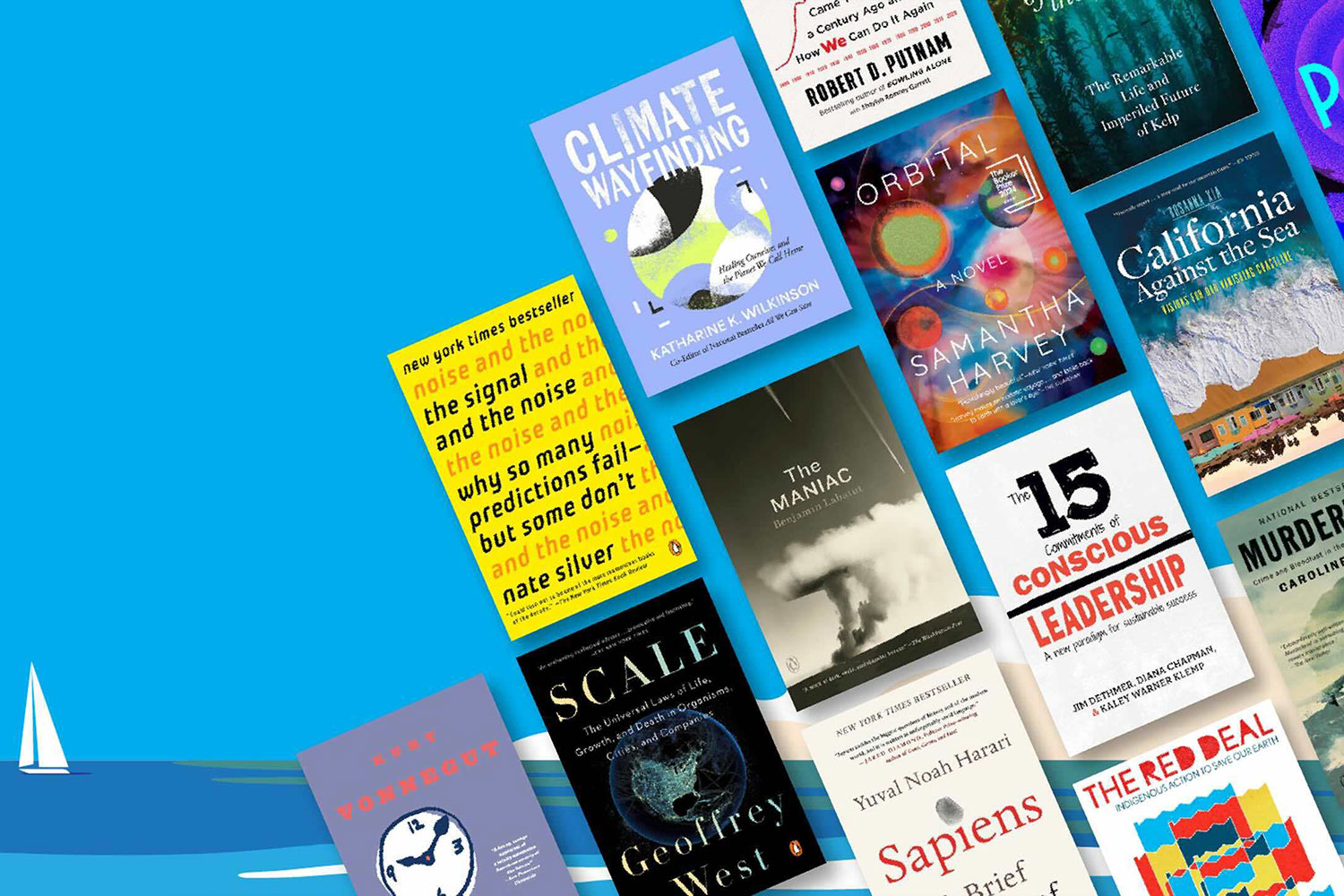
Looking for insightful summer reads about science and society? Here are 19 books and one short documentary series recommended by scholars at the Stanford Doerr School of Sustainability.
Explore underwater forests that few get to see, embrace nine human emotions associated with climate change, or ponder the fragile beauty of our planet through the eyes of an astronaut. Whether it’s a throwback title or a recent release, one of these suggestions is bound to offer a fresh perspective on our changing world.
Climate Wayfinding: Healing Ourselves and the Planet We Call Home by Katharine K. Wilkinson (2026)
“When maps come up short, and the path ahead is uncertain, how do we find our way? Visionary climate leader Katharine K. Wilkinson offers a compassionate and empowering guide to navigating from ache to action, doubt to possibility.” – From the publisher
Madalina Vlasceanu, assistant professor of environmental social sciences, described Climate Wayfinding as one of her favorite books and “a clear-eyed, compassionate, and beautifully written book for those of us looking for our place in the climate fight.”
Player Piano by Kurt Vonnegut (1952)
“Kurt Vonnegut’s first novel spins the chilling tale of engineer Paul Proteus, who must find a way to live in a world dominated by a supercomputer and run completely by machines. Paul’s rebellion is vintage Vonnegut – wildly funny, deadly serious, and terrifyingly close to reality.” – From the publisher
“For those of us who can’t stop thinking about where AI is leading us, I’d recommend Kurt Vonnegut’s Player Piano. It depicts a dystopian world in which machines supplant human labor and what is at stake when we equate efficiency with progress – eerily salient for a book written in 1952,” said Steve Davis, professor of Earth system science and, by courtesy, of energy science and engineering.
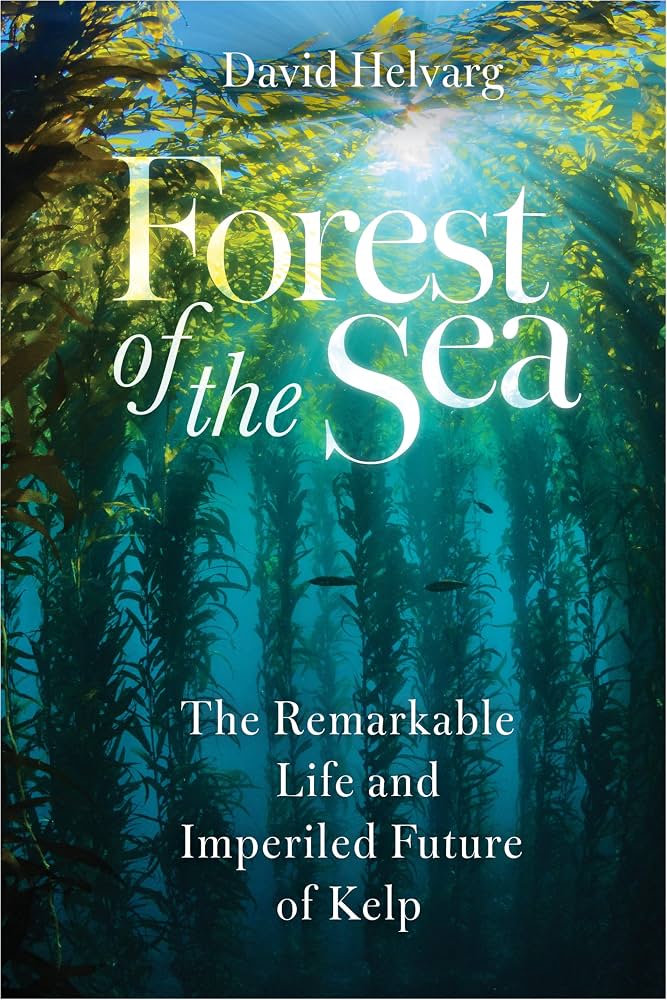
Forest of the Sea: The Remarkable Life and Imperiled Future of Kelp by David Helvarg (2026)
Barbara Block, the Charles and Elizabeth Prothro Professor of Marine Sciences and a professor of oceans and biology, called it an “informative book on a forest most of the world does not know about,” noting that the kelp forest ecosystem is also “situated close to Hopkins Marine Station at Monterey Bay.”
“David Helvarg's book takes you on a captivating historical and ecological journey through one of Earth's most remarkable underwater habitats: kelp forests,” added Brooke Weigel, assistant professor of oceans. “Discover the vital role these underwater forests have played in shaping both natural and human history, and gain a deeper appreciation for their beauty and importance.”
Traversal by Maria Popova (2026)
“By turns epic and intimate – as concerned with the physical laws binding atoms into molecules as with the psychic forces binding us to one another – Traversal explores the universe between cells and souls to reveal the world, and our lives, in a dazzling new light.” – From the publisher
“With fastidious research, brilliant insight, and an abiding affection for humanity and the art of learning, Popova explores the lives and work of some of our greatest explorers, thinkers, and writers – including James Cook, Mary Shelley, Walt Whitman, Alfred Wegener, and Frederick Douglass – while deftly integrating philosophy, history, and a profound knowledge of literature. This book is both a joy to read and breathtaking in its scope,” said Richard Nevle, co-director of the Earth Systems Program.
Playground by Richard Powers (2024)
“Set in the world’s largest ocean, this awe-filled book explores that last wild place we have yet to colonize in a still-unfolding oceanic game, and interweaves beautiful writing, rich characterization, profound themes of technology and the environment, and a deep exploration of our shared humanity in a way only Richard Powers can.” – From the publisher
Suggested by Stephen Monismith, the Obayashi Professor in the School of Engineering and a professor of oceans.
Scale: The Universal Laws of Life, Growth, and Death in Organisms, Cities, and Companies by Geoffrey West (2017)
“From one of the most influential scientists of our time, a dazzling exploration of the hidden laws that govern the life cycle of everything from plants and animals to the cities we live in.” – From the publisher
“This was an amazing book that changed how I think about the living and growing beings and cities around me,” said Jane Willenbring, associate professor of Earth and planetary sciences and, by courtesy, of Earth system science.
Sapiens: A Brief History of Humankind by Yuval Noah Harari (2011)
“What I found most fascinating about the book is Harari's argument that the real superpower of humans is not intelligence alone, but our ability to cooperate at scale through shared beliefs and institutions,” said Simona Onori, associate professor of energy science and engineering.
“As engineers, we are trained to think about physical systems, mathematical models, and measurable quantities. Yet many of the systems that have the greatest impact on society, such as economies, governments, corporations, and even research institutions, exist and function because people collectively agree on a common set of rules and objectives,” she added. “This perspective resonated with me because solving today's energy and sustainability challenges requires exactly this kind of large-scale cooperation. Technology alone is rarely enough.”
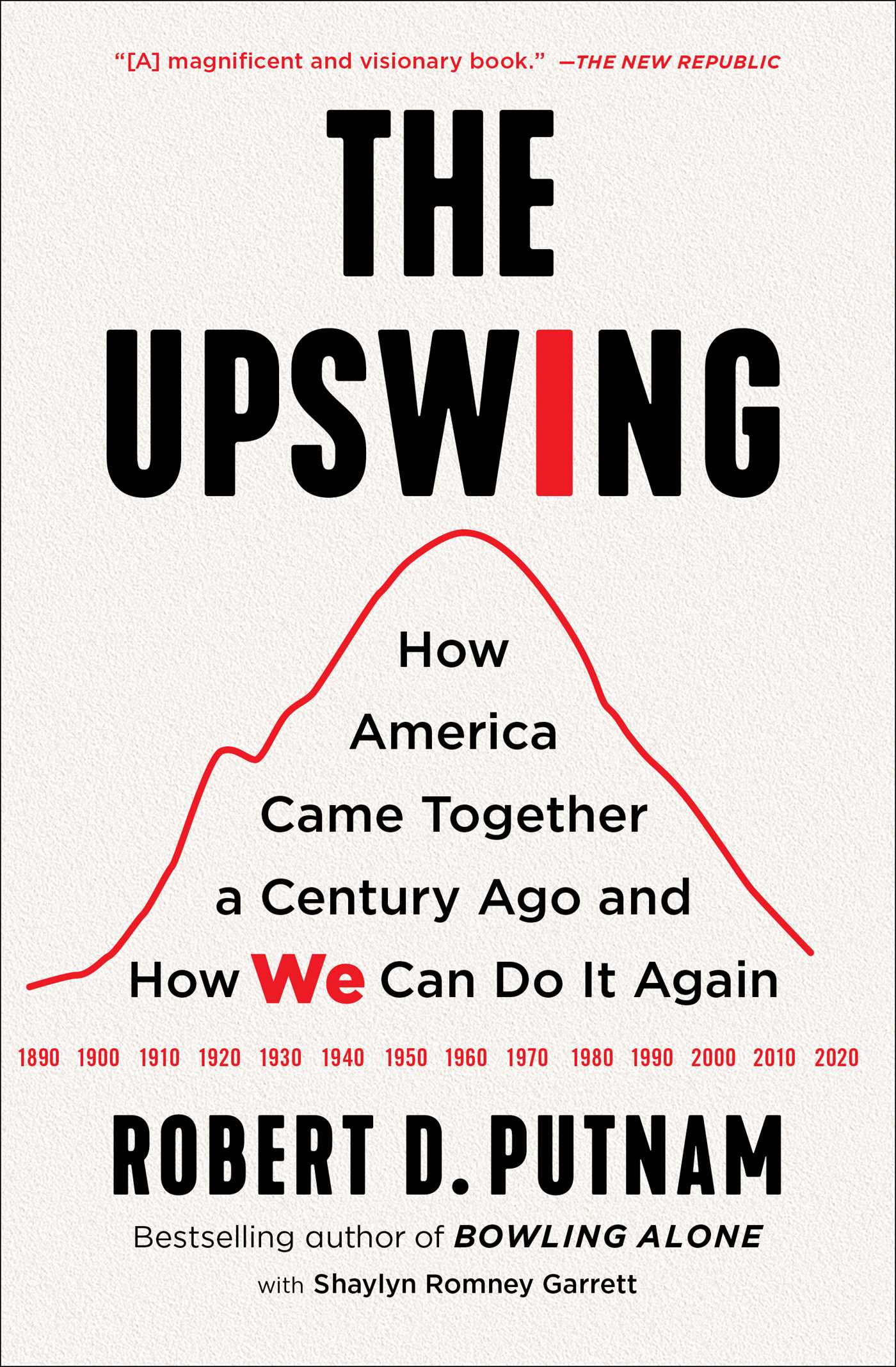
The Upswing: How America Came Together a Century Ago, and How We Can Do It Again by Robert D. Putnam with Shaylyn Romney Garrett (2020)
“A really interesting read which charts how American society shifted from an ‘I’ society that was individualistic, polarized, and vastly unequal during the Gilded Age to a ‘we’ society that was more communal and generous, and then shifted back. It offers a lot of insight into how we might shift again in the future,” said Jim Leape, the William and Eva Price Senior Fellow and co-director of the Center for Ocean Solutions at the Stanford Woods Institute for the Environment.
Here Comes the Sun: A Last Chance for the Climate and a Fresh Chance for Civilization by Bill McKibben (2025)
“Our climate, and our democracy, are melting down. But Bill McKibben, one of the first to sound the alarm about the climate crisis, insists the moment is also full of possibility.” – From the publisher
“This book is timely, given that we have only 5-10 years to seriously address the climate, air pollution, and energy security problems of the world,” said Mark Jacobson, professor of civil and environmental engineering.
Orbital by Samantha Harvey (2023)
“A singular new novel from Betty Trask Prize–winner Samantha Harvey, Orbital is an eloquent meditation on space and life on our planet through the eyes of six astronauts circling Earth in 24 hours.” – From the publisher
Chris Field, the Perry L. McCarty Director of the Stanford Woods Institute for the Environment and the Melvin and Joan Lane Professor of Interdisciplinary Environmental Studies, called it “a beautiful encouragement to think globally.”
The Maniac by Benjamín Labatut (2023)
“A prodigy whose gifts terrified the people around him, John von Neumann transformed every field he touched, inventing game theory and the first programmable computer, and pioneering AI, digital life, and cellular automata. Through a chorus of family members, friends, colleagues, and rivals, Labatut shows us the evolution of a mind unmatched and of a body of work that has unmoored the world in its wake.” – From the publisher
“This is a dark and wonderfully engrossing historical-fictional biography consisting of testimonies of people who knew John von Neumann, and offer their perspectives on his contributions to topics ranging from quantum mechanics to nuclear weaponry to game theory to computer architecture and artificial intelligence,” said Greg Beroza, the Wayne Loel Professor of Earth Science.
The Red Deal: Indigenous Action to Save Our Earth by The Red Nation (2021)
“This powerful book explains why what's good for Indigenous communities is not only good, but necessary, for everyone else, too, to achieve sustainability. It was by far the most popular assigned reading among the students who took the IntroSems class on land stewardship in winter 2026,” said Tad Fukami, professor of biology and Earth system science and faculty director of Jasper Ridge Biological Preserve ('Ootchamin 'Ooyakma).
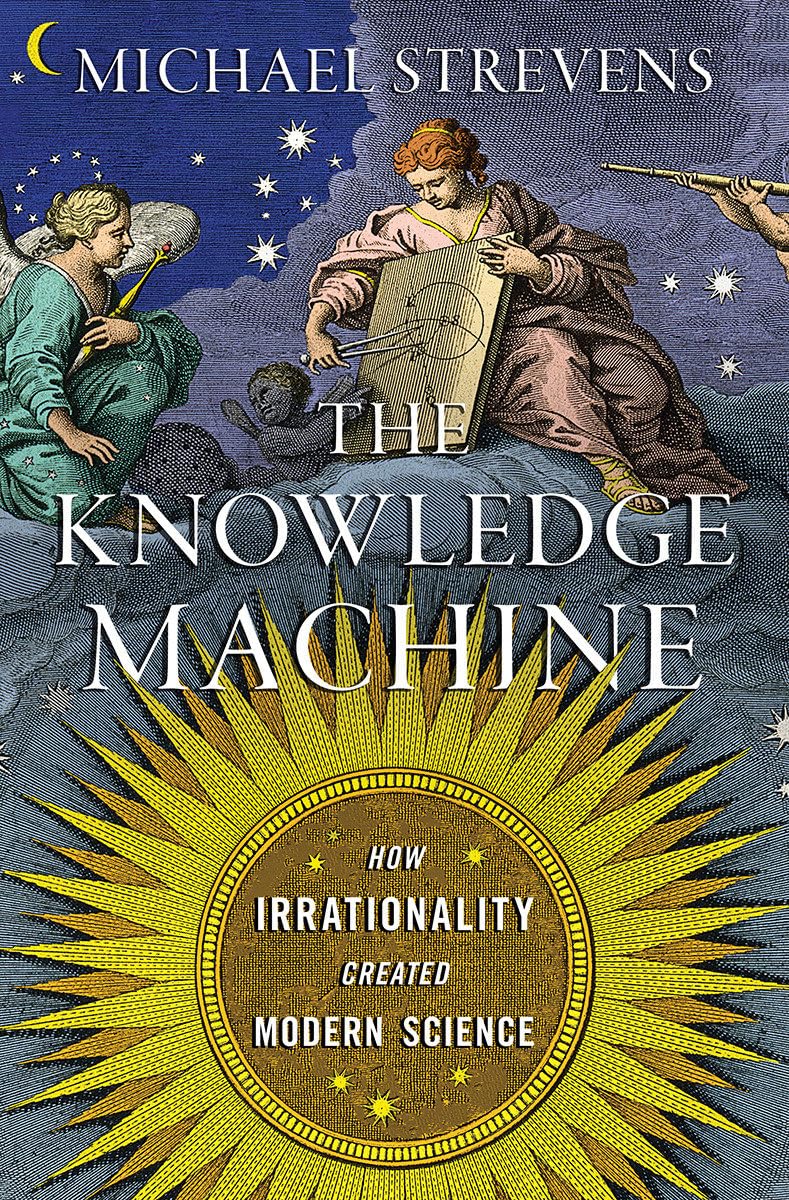
The Knowledge Machine: How Irrationality Created Modern Science by Michael Strevens (2020)
“Rich with illuminating and often delightfully quirky illustrations, The Knowledge Machine, written in a winningly accessible style that belies the import of its revisionist and groundbreaking concepts, radically reframes much of what we thought we knew about the origins of the modern world.” – From the publisher
“It’s an entertaining and informative journey through the history, philosophy, and sociology of science,” said Dustin Schroeder, associate professor of geophysics and of electrical engineering. “It’s also a reminder of the importance of pursuing curiosity and discovery for their own sakes.”
Pod by Laline Paull (2023)
“Pod takes the reader into the depths of the ocean – and into the world of its fascinating inhabitants – through the eyes of the beautiful Ea, a spinner dolphin.” – From the publisher
“Great fiction that allows us to see marine sustainability from a non-human perspective,” said Xavier Basurto, professor of environmental social sciences and, by courtesy, of oceans.
The Signal and the Noise: Why So Many Predictions Fail, but Some Don’t by Nate Silver (2012)
“Silver visits innovative forecasters in a range of areas, from hurricanes to baseball to global pandemics, from the poker table to the stock market, from Capitol Hill to the NBA. He discovers that what the most accurate ones have in common is a superior command of probability – as well as a healthy dose of humility.” – From the publisher
“This book highlights the importance of identifying meaningful signals amid overwhelming amounts of information, showing how probability and uncertainty remain essential for understanding and predicting complex real-world phenomena,” said Ettore Biondi, assistant professor of geophysics.
The 15 Commitments of Conscious Leadership: A New Paradigm for Sustainable Success by Jim Dethmer, Diana Chapman, and Kaley Klemp (2015)
“It is a powerful look at the essential commitments each of us needs to make to strengthen our leadership in ways that will enable us to find integrative, systemic strategies to achieve lasting, collective thriving,” said Julia Novy, director of the Sustainability Science and Practice Master’s Program and an advanced lecturer.
Our Planet An original documentary series (2019)
“This series will resonate with anyone who loves nature documentaries, wants to better understand environmental issues, or simply needs a reminder of why our planet is worth protecting. It balances the beauty of Mother Earth with honest and difficult truths about the impacts of climate change and human activity,” said Arun Majumdar, the Chester Naramore Dean of the Stanford Doerr School of Sustainability and the Jay Precourt Provostial Professor.
California Against the Sea: Visions for our Vanishing Coastline by Rosanna Xia (2023)
“Along California’s 1,200-mile coastline, the overheated Pacific Ocean is rising and pressing in, imperiling both wildlife and the maritime towns and cities that 27 million people call home. In California Against the Sea, Los Angeles Times coastal reporter Rosanna Xia asks: As climate chaos threatens the places we love so fiercely, will we finally grasp our collective capacity for change?” – From the publisher
Suggested by Christine Baker, assistant professor of civil and environmental engineering and, by courtesy, of oceans.
Human Nature: Nine Ways to Feel About Our Changing Climate by Kate Marvel (2025)
“A captivating exploration of climate change that uses nine different emotions to better understand the science, history, and future of our evolving planet.” – From the publisher
“This book is so beautifully crafted, drawing deep connections between the physical climate world and our inner human experience,” said Madalina Vlasceanu, assistant professor of environmental social sciences.
Murderland: Crime and Bloodlust in the Time of Serial Killers by Caroline Fraser (2025)
“At ground zero in Ted Bundy’s Tacoma stood one of the most poisonous lead, copper, and arsenic smelters in the world, but it was hardly unique in the West. As Fraser’s investigation inexorably proceeds, evidence mounts that the plumes of these smelters not only sickened and blighted millions of lives but also warped young minds, including some who grew up to become serial killers.” – From the publisher
“After a tough first chapter, I really enjoyed this book. The (untestable) hypothesis is that the heavy metal poisoning in the shadow of smelter contamination caused the Eastern Washington serial killer hot spot. If you dislike gore, skip this one,” said Jane Willenbring, associate professor of Earth and planetary sciences and, by courtesy, of Earth system science.
For more information
Block, Field, Jacobson, and Schroeder are senior fellows at the Stanford Woods Institute for the Environment. Davis, Field, Jacobson, Majumdar, and Onori are senior fellows at the Precourt Institute for Energy. Both institutes are in the Stanford Doerr School of Sustainability.
Field is also a professor of Earth system science in the Doerr School of Sustainability and of biology in the School of Humanities and Sciences. Majumdar is also a faculty member in the departments of mechanical engineering and energy science and engineering, and a senior fellow, by courtesy, of the Hoover Institution. He is also a faculty member in the department of photon science at the SLAC National Accelerator Laboratory.
This story was originally published by Stanford Doerr School of Sustainability.
Writer
Stanford Doerr School of Sustainability staff