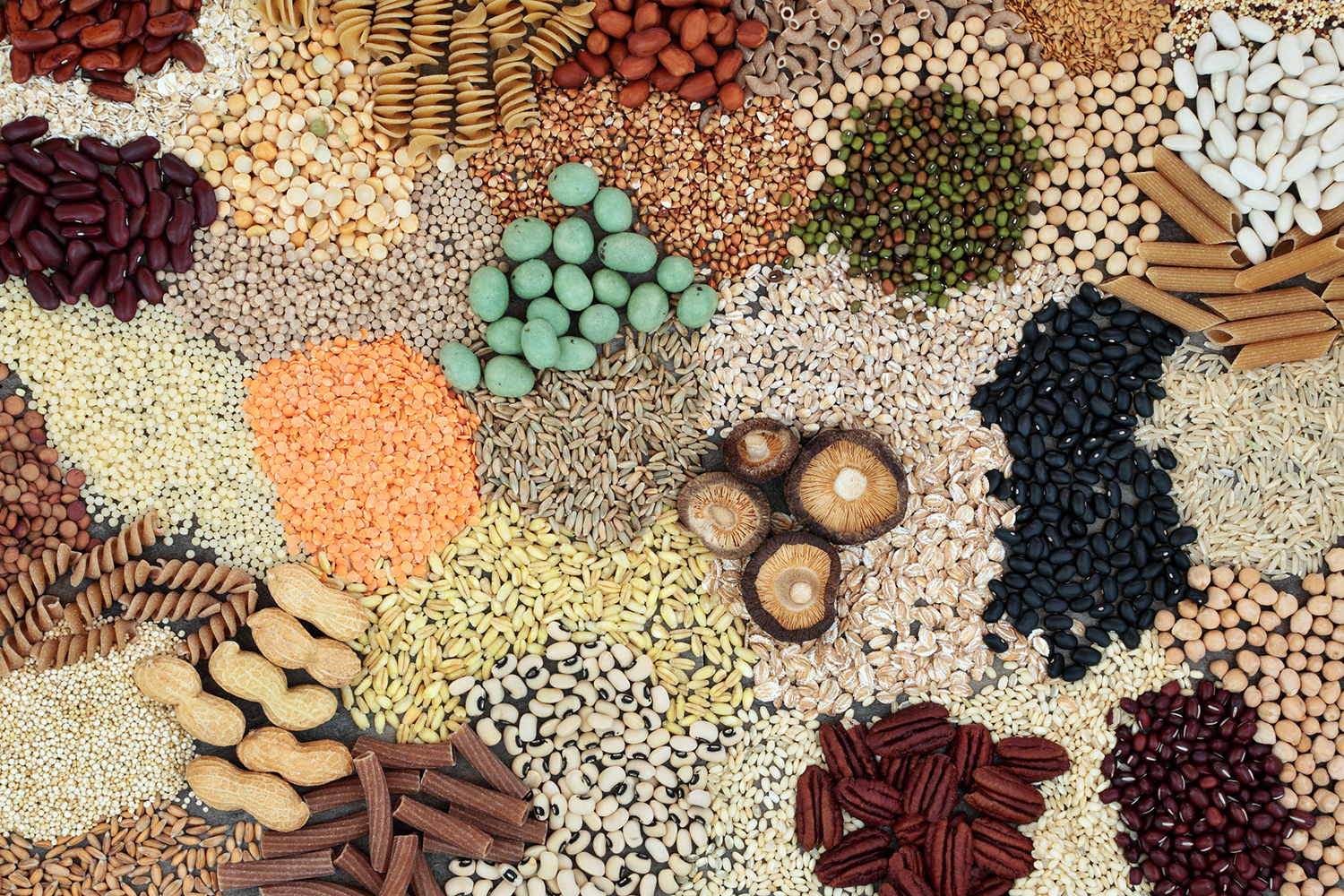
While researching dietary fiber for this article, I decided to eat a whole kiwi skin. I looked it up, and the skin adds about 1.5 grams of fiber to a serving of kiwi, about 6% of my total recommended dietary allowance – not a bad amount for such a small snack.
Many folks opt for the fruit plus skin – my own children eat skin-on kiwis all the time – but I couldn’t get through half the small fruit without gagging.
The good news: Choking down fruit peels is not required to get a healthy amount of fiber in your diet, say Stanford Medicine nutrition experts.
“With my clients, I try to change one thing at a time, because people don’t do well with complete overhauls,” said Marily Oppezzo, PhD, a dietician and instructor of medicine at the Stanford Prevention Research Center. “I had one client who ate a lot of dry Captain Crunch cereal as a snack. I said, ‘That’s cool, what if we just mix in some popcorn too?’”
These small choices – like adding popcorn or other whole grains to a snack, or serving your breakfast pastry with a side of strawberries – can add up to a decent amount of fiber over a day’s worth of meals. But most of us aren’t making such choices.
Only 5% of American adults meet the U.S. daily RDAs for fiber, which is 25 grams for women under 50 and 38 grams for men. Those amounts drop to 21 and 30 grams for women and men over 50. The average American eats only around 17 grams a day, and men consume less fiber than do women on average, despite having higher nutritional needs.
That’s a problem, says Oppezzo and other Stanford Medicine experts. We need the RDA of fiber for several reasons: It keeps our gut microbiomes happy and our bowel movements regular, and it lowers the risk of many common but deadly diseases, including type 2 diabetes, heart disease and several types of cancer, especially colorectal cancer.
Here are five things experts want you to know about why we should all be aiming for that full recommended amount, and how to boost our fiber intake – whether you enjoy the scratchy mouthfeel of a kiwi skin or not.
1. Carbs are not the enemy when it comes to fruit and whole grains
We might blame the rise of ultra-processed foods for Americans’ poor dietary fiber habits – and that likely has a lot to do with it, experts say. Many forms of processing strip out natural fibers. White bread, pasta and rice have much less fiber than their whole grain equivalents.
But not all ultra-processed food is low in fiber. Whole wheat bread and English muffins are great choices for many people, Oppezzo said. Several kinds of processed, packaged breakfast cereals (like All-Bran or Oat-Bran) pack a high-fiber punch, as do many nut-based energy bars. These foods are processed, but they retain fiber from the food source (for example, All-Bran cereal contains the bran from the whole wheat kernel). However, high-fiber processed foods with fiber added back in the form of inulin may not have the same gut health benefits.
Society’s demonization of carbohydrates shares a large part of the blame for our low-fiber habits, Oppezzo said. Carbs have gotten a bad rap over the past few decades, but in the form of whole grains, fruits and legumes they’re generally good for us. And fiber is a big part of the reason why. For one, it slows and evens out blood sugar spikes that follow a carb-heavy meal.
“If I empty a Pixie Stix on top of my oatmeal, which is a great source of fiber, I'm going to have a much slower release of that Pixie Stix sugar, as well as the sugar in the oatmeal, than I would if I were to just drink the Pixie Stix,” Oppezzo said.
2. It keeps our gut bugs happy
Unlike other parts of our diet, fiber is not actually food for us, at least not directly. It’s chow for our gut bacteria. Also known as the gut microbiome, these microbes colonize the large intestine and digest the parts of our diet that we can’t absorb – namely, fiber. Our gut bugs evolved to live off fiber precisely because we can’t digest it, said Erica Sonnenburg, PhD, a microbiologist who specializes in the gut microbiome.
We extract most of what we can digest from food in the stomach and small intestine, before the food hits the large intestine, which is where most of our gut microbes live. By the time the food gets to them, fiber is the main source of nutrition left.
“We have very few enzymes encoded within our genomes that can degrade all the complex carbohydrates that are found in various plants that we eat. It really appears to be a function that we farmed out to our gut bacteria,” Sonnenburg said. “They encode thousands of genes to degrade dietary fiber.”
Keeping our gut bacteria fed and happy is important for a number of reasons. When the microbes digest fiber, they excrete several health-promoting molecules, including short-chain fatty acids, which lower inflammation and seem to protect against a number of diseases, including cancer and type 2 diabetes.
And when the gut bugs don’t get enough to eat, they actually start to munch on the mucus lining of the intestine, which is about as uncomfortable as it sounds. Once that lining is degraded, our immune systems get very unhappy and kick off inflammatory reactions to try to keep the bacteria from breaching the intestinal wall and getting into the bloodstream.
Low-fiber diets are also associated with lower microbial diversity. Microbial diversity itself is important – while we don’t yet know exactly which bacterial species are the most important to cultivate, having more gut microbe species is correlated with better general health. And in a circular fashion, losing bacterial species by not consuming enough fiber means we get fewer health benefits from the fiber we do eat.
“If the diversity isn’t there, you just poop the fiber out, and that’s not what you want,” Sonnenburg said.
3. About those BMs: They’re not all created equal
You may have heard about soluble and insoluble fiber: Both kinds are good fuel for our microbiome, but they serve different purposes when it comes to our poop. Insoluble fiber comes in many whole grains and vegetables and acts as a bulking agent, keeping food moving down the digestive tract.
Soluble fiber is found in many different grains, legumes, fruits, and vegetables and, as the name implies, it dissolves in water, which allows it to be used more easily by our gut bacteria. A less discussed, but critical, property of most soluble fibers is their high viscosity – or their ability to form a gel-like substance in the intestine. This means they turn into a gooey consistency that helps stick undigested food together and slows down digestion.
The linings of our intestines absorb water from our food so, without fiber to hold onto some of that water, we’d end up with a bunch of dry matter that can’t slide down the chute – taking the movement out of bowel movements.
“If you don’t have the fiber holding onto the water, it never really gets in there to hydrate the poop,” said Sean Spencer, MD, PhD, a gastroenterologist and assistant professor of medicine. “That’s why when you don’t eat enough fiber, you’ll have dry, small poops. But what you want is the moist, big poops that make your day great.”
4. Not all fiber is created equal either
When it comes to processed foods and supplements, you may want to double-check the labels. Michael Snyder, PhD, professor of genetics, led a 2022 study that found that inulin, a type of fiber that is used in over-the-counter supplements and is sometimes added to processed foods, doesn’t seem to have the same blood sugar- and cholesterol-lowering effects as arabinoxylan, the fiber found in psyllium husk supplements and in many whole grains.
Snyder’s group also found that these effects are highly personal. Most people in the study didn’t get health benefits from inulin, but one person had nearly the opposite reaction to that particular fiber.
“You have to see what works best for you,” Snyder said. Currently, getting your cholesterol and blood sugar tested regularly at the doctor’s office is the best way to know if your diet is making a difference in your health. “In the future, we hope to have home testing for metabolic markers,” Snyder said.
The scientists still aren’t sure what causes different reactions to fibers, but Snyder suspects variations in the microbiome may be at play. Until more research is done on the cause and effect of different types of fiber, it’s probably best to get the majority of your fiber from whole foods, the experts said.
“Is it possible to live in a world in which we could figure out a fiber blend that you could add to a Twinkie and it would fix your gut?” asked Spencer. “I doubt it. We haven’t mastered the art of fiber supplementation for gut health yet. Until we do, the best thing we have is whole foods. The complex structure of whole foods makes them the perfect delivery vehicle to get fiber to our colons.”
We haven’t mastered the art of fiber supplementation for gut health yet. Until we do, the best thing we have is whole foods.Sean SpencerAssistant Professor of Medicine
5. Fiber-maxxing is likely fine – but could be uncomfortable
It may not have quite the reach of the social media trend of maximizing protein consumption, but fiber-maxxing is also having a moment. From protein bars to prebiotic sodas, added fiber is showing up more and more on grocery store shelves.
But besides considering whether you should get your extra fiber from naturally high-fiber sources or fiber-added foods, there may be risks to adding too much fiber to your diet, especially if you increase the fiber too quickly. In a word, that risk is diarrhea – which itself can have detrimental effects on your microbiome and can quickly dehydrate you.
“I think it frustrates a lot of people when we say, ‘Fiber is amazing, you have to eat plants, it’s going to make you feel great,’” Spencer said. “And then they objectively do not experience that at a personal level. They eat more fiber, and they feel worse.”
Part of that can be due to scaling up too quickly. Going from 15 grams of dietary fiber a day to 30 or 40 grams all at once may be too much for your intestines and your microbiome to handle. Increasing the quantity slowly allows you time to adjust. And there are some high-fiber foods that tend to be gentler on our guts than others, Spencer said. If a big bowl of bean-heavy vegetarian chili leaves you feeling awful, next time try oatmeal, sweet potatoes or fruit instead. He stressed the wide variety of fiber-filled foods available and to find one that works well with your gut.
But if your gut can handle it, there are likely no health downsides to going higher than the RDA amounts, Sonnenburg said. She and her colleagues have studied the diets and microbiomes of the Hadza hunter-gatherer community of Tanzania, who eat 100 to 150 grams of fiber a day, and found that they seem to be in excellent metabolic health. Sonnenburg herself aims for 40 to 50 grams of fiber a day.
“Getting 100 to 150 grams a day would be almost impossible in an American setting,” she said. “But I think the RDA is the minimum we should be eating.”
For more information
This story was originally published by Stanford Medicine.
Writer
Rachel Tompa