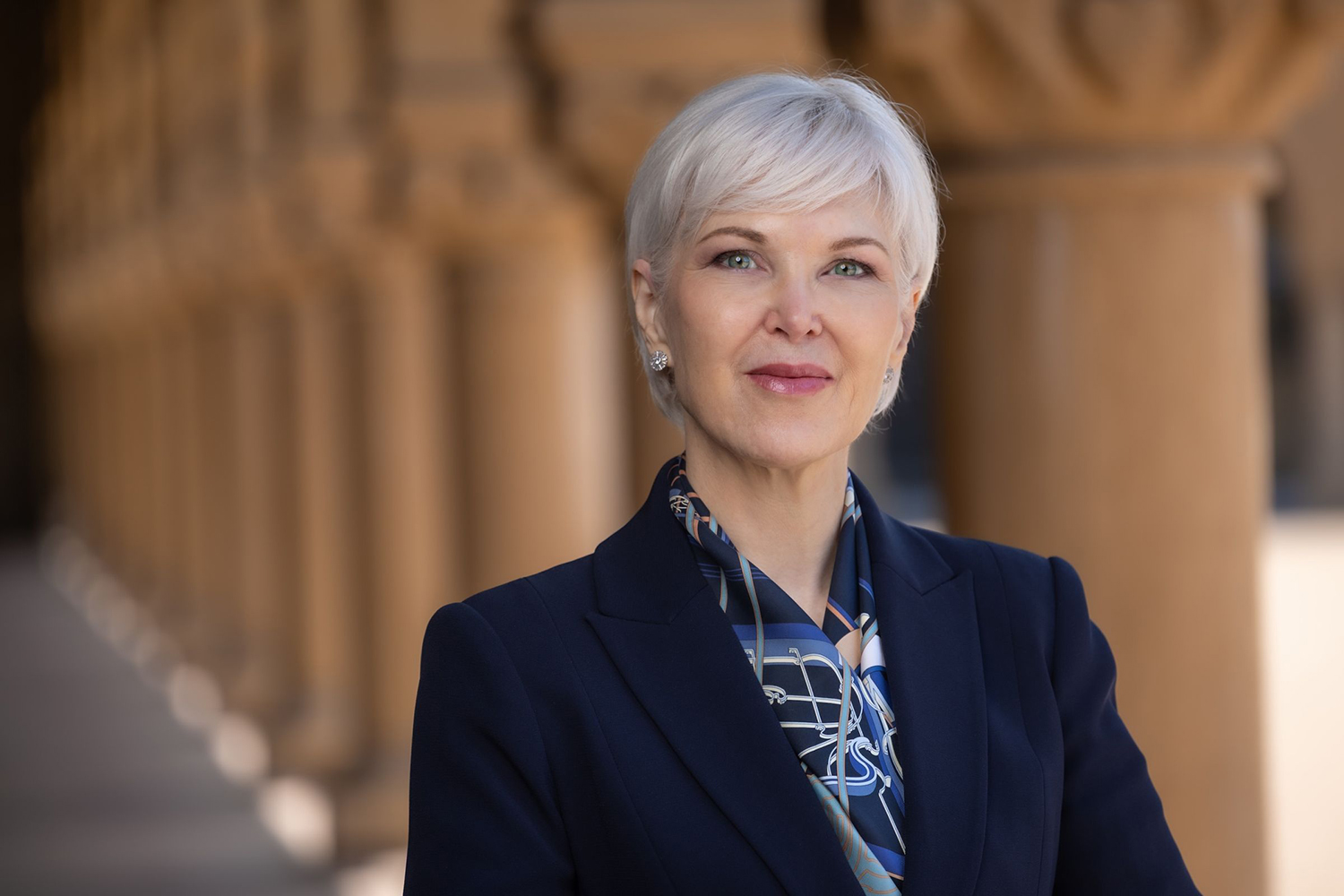
Leanne Williams, PhD, often tells her Stanford Medicine colleagues who aren’t in psychiatry that her field has no data-based markers to determine what’s wrong with a patient. And then she watches their jaws drop.
“They can’t believe it,” said Williams, the inaugural Vincent V.C. Woo Professor, a professor of psychiatry and behavioral sciences, and the founding director of the Stanford Center for Precision Mental Health. “It’s like walking in with an ankle injury and the doctor having no tools to assess whether it’s sprained or broken – instead they make that determination by asking you how you feel.”
Fortunately for Williams, and others advocating for a more precise approach to mental health, she is positioned to help initiate a paradigm shift. Williams was chosen to lead the Commission on Precision Mental Health, an international task force that will attempt to redefine and streamline the way conditions such as anxiety, depression, bipolar disorder, and schizophrenia are diagnosed, treated, and measured. A major focal point: imaging brain circuit function – and using those findings to guide diagnosis and intervention.
Depression affects more than 280 million people and is the leading cause of years lived with disability worldwide.
The commission is being developed in partnership with Nature Mental Health, which published a launch commentary May 18 from Wiliams and collaborators Lara Foland-Ross, PhD, a clinical assistant professor of psychiatry and behavioral sciences, and Max Wintermark, MD, chair of radiology at the University of Texas Medical Branch.
The commission’s core objective: “To redefine mental disorders through brain circuit function analysis, promoting stratified, circuit-informed care that enhances treatment accuracy and efficiency.” It’s an approach that mirrors advances in cardiovascular and cancer research, moving beyond trial-and-error toward targeted care. The goal is not to replace clinical expertise or psychological assessment, but to complement them with objective measures of brain function.
Williams will speak at the American Psychiatric Association conference about the goals of the commission – and about the advances her team at Stanford Medicine has made, with imaging in particular. “Measurable circuits of brain function provide the organizing architecture for mental illness and for guiding precision mental health care,” Williams and her co-authors wrote.
As she emphasizes when she’s talking to stunned colleagues: “It would be unacceptable in any other medical discipline not to start the diagnosis process with imaging of the affected organ. The brain is an essential starting place with these conditions.”
We talked to Williams about the commission, her work with the Stanford Center for Precision Mental Health, and the broader implications for finding quicker resolutions amid a growing crisis. Their paper notes that depression alone affects more than 280 million people and is the leading cause of years lived with disability worldwide, with a global economic burden exceeding $1 trillion annually. And Williams herself has a very personal story connected to untreated depression – the loss of her partner to suicide.
How does tracking brain circuit function differ from how we currently address mental health conditions?
We now understand from the research that we can approach mental health disorders as disorders of how the brain functions – that’s brain circuit science. We can draw analogies to cardiovascular medicine, for example. To understand the cause of chest pain or a heart condition and know what treatment is needed, we must measure heart function. Similarly, with Alzheimer’s disease, we scan the brain to get a better idea of who is at risk.
It would be unacceptable in any other medical discipline not to start the diagnosis process with imaging of the affected organ. The brain is an essential starting place with these conditions.
But in mental health, there is not a standard, routine assessment – which is really shocking if you think about it. Instead, we have relied on patients to describe their symptoms and used that self-reporting to make both diagnostic and treatment decisions. That’s what has led us to this moment. It takes way too long to work out the right treatment for people because it doesn’t give us a root-cause understanding.
We can now provide direct measures of brain function with advances in imaging technology. Then we can use computational power to really understand the complexity of how the brain functions but also make it interpretable.
Why haven’t biological measures such as imaging and genetic testing been part of mental health care?
When psychiatry branched off from neurology (in the mid-20th century), it was very much focused on understanding the person’s experience. I think it’s also related to an assumption that these mental health conditions cannot be pinpointed in terms of their biology. That has led to a stigma, the idea that people just need to psychologically try harder.
We can draw analogies to cardiovascular medicine. To understand the cause of chest pain … we must measure heart function. Similarly, with Alzheimer’s disease, we scan the brain.
The approach taken in mental health has been very much a bio-psycho-social one. And in the bio bucket, information has been limited to assessing physical health and asking, “Is there a risk in the family?”
How prepared are health systems to make these types of treatments standard?
That’s such a big question. I believe what’s changed in the last six months to a year – and it’s led to this commission – is the will of the health systems to do it. And that’s in direct relation to the will of the field, the families, the patients. What it will take, I believe, is grassroots work. Demonstrating it in action – which is what we’re proposing to do as part of the commission. So, there’ll be thought leaders like us, and other partner thought leaders, who demonstrate it in action, and then that leads to discussion around the bigger policy health care issues that surround it … reimbursement, payers, all of that. And we see if this can happen, if we can create that inflection point.
You’ve addressed the issue of stigma openly; do you sense that has softened?
Yes, and that’s a big part of creating the momentum to do something like this. A lot of my positivity about that is coming from young people, who are speaking openly about it. Athletes and other people in the public limelight, people who at one point maybe wouldn’t have spoken about it, are now speaking about it. You also see the explosion of health tech companies focusing on mental health, and that’s a big shift. I think the circuit part of circuit-based precision mental health is now seen as very important – and something people are genuinely excited about. There are more young people wanting to enter the field, which for many years was not the case. Now they see new, exciting progress in mental health care.
Breaking the silence on mental health
On the podcast Health Compass, Leanne Williams speaks with host Maya Adams about tackling the stigma around mental health challenges.
Your team has been testing these concepts clinically. What has inspired you about the results?
I’ve found that families, and patients, really respond to data that explains what is getting disrupted in their brain. They understand why we’re choosing a particular treatment. Having a scan helps us understand which options are likely to be effective. If we can match a particular person’s circuit type to a treatment, we can double the chance of their getting better. And that means you could get it right the first time, instead of playing whack-a-mole with meds, trying one and not really knowing if it will work when the patient is already in a state of deep distress.
But most of this work remains at the research level, so what you’re embarking upon is a mission to integrate it into clinical action, right?
The research side has made serious accelerations, so I think there’s been an implicit assumption that if you can get a good model, and a good predictor, it will somehow naturally make its way into practice. That has been the good-faith feeling among researchers. This is our effort to take these important developments and get them deployed clinically, to think through how to make that work, so that we don’t go any longer without putting them to good use.
For more information
This story was originally published by Stanford Medicine.
Media contact
Lisa Kim
Tel 650-723-6696
likim@stanfordhealthcare.org
Writer
Mark Conley