Tina Seelig has spent more than 25 years teaching leadership, entrepreneurship, and innovation at Stanford. Over that time, she noticed a pattern: Some people consistently identified and seized lucky opportunities, while others walked right past them.
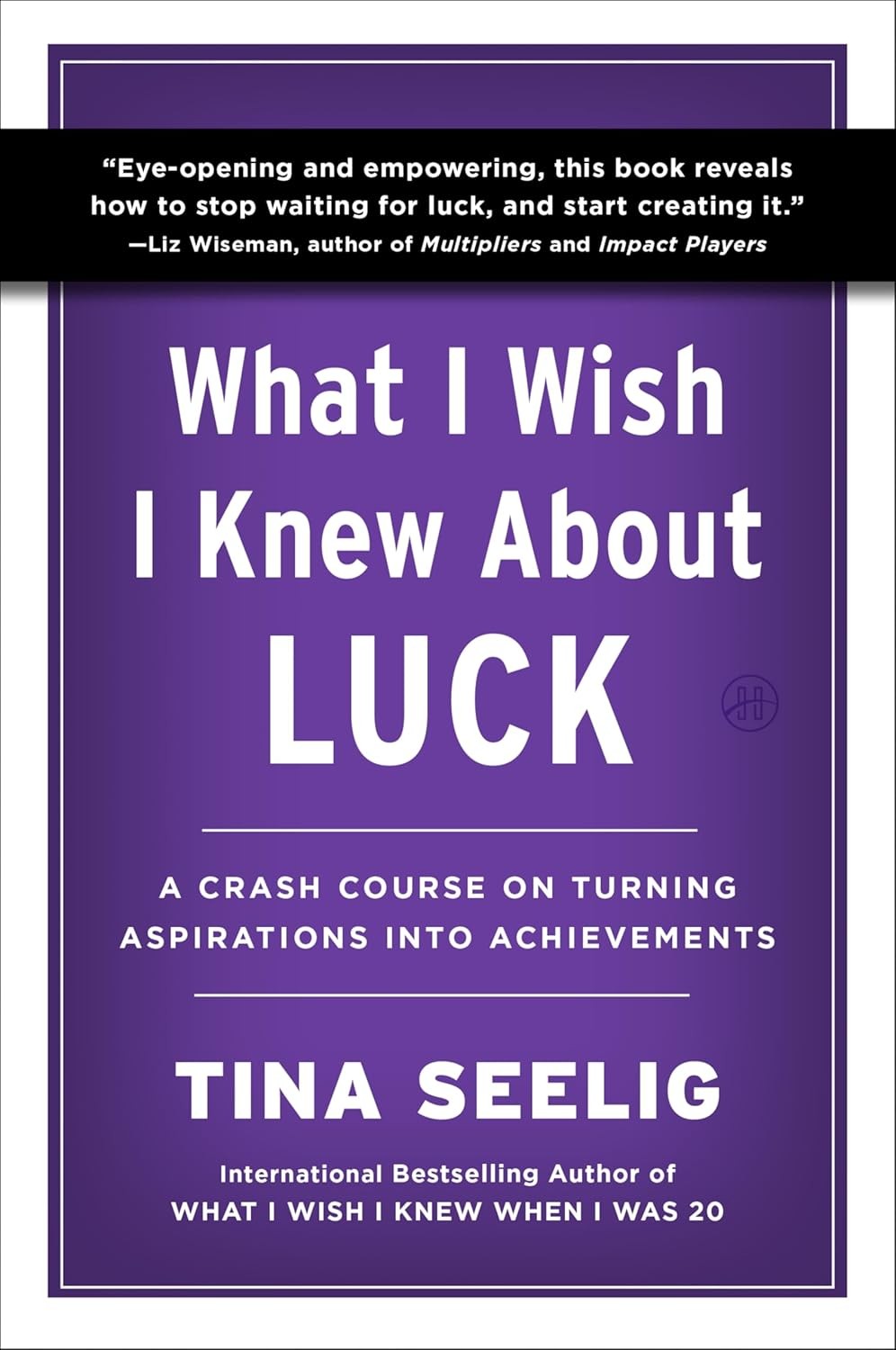
Her new book, What I Wish I Knew About Luck, organizes those observations around a sailing metaphor. Your ship is the foundational work, such as clarifying your values and shaping the story you tell about yourself. Your crew is your network of relationships that mediate most lucky breaks. And your sail is the action required to catch what Seelig calls “the winds of luck.”
“Opportunities for good luck are ubiquitous, but not always visible – like the wind,” said Seelig, executive director of Knight-Hennessy Scholars.
The book draws heavily on stories from Knight-Hennessy scholars and Stanford faculty. One scholar, Barkotel Zemenu from Ethiopia, taught himself English by learning five new words a day, read the entire Sherlock Holmes series to build his vocabulary, and went on to master five more languages, including Chinese. This led to the opportunity to teach astrophysics – his field of expertise – in rural China. His story, like many in the book, illustrates Seelig’s central argument: that luck isn’t a lightning strike. It’s the result of compounding effort.
Seelig discusses her new book below.
In the book, you draw a sharp distinction between luck and fortune. Why was that important to establish?
Fortune captures what is beyond our control, while luck is the result of the choices we make and the chances we take.
Things happen to us all day long. Some are wonderfully fortunate, such as having perfect weather for your birthday party or finding yourself in line for coffee next to someone you’ve been hoping to meet. Others are deeply unfortunate, such as a financial downturn that leads to layoffs at your company, or a canceled flight on the way to an important event.
Luck, on the other hand, emerges from how we respond to what happens to us. We are in a constant dance with the world, continually trading off who is leading and who is following. When you pause and reflect on how you respond to what comes your way, you begin to see just how much control you truly have.
“Opportunities for luck are ubiquitous.”
You open the book with your father’s arrival at Ellis Island in 1934, and how a lucky break prevented his family from being turned away at the border. How much did growing up with that story shape the book?
My father, who passed away in February, just shy of his 100th birthday, always told this story as an example of the role luck played in shaping his life. For decades, we debated the amount of agency we have in shaping our own future. He believed that good things just happened to him, and I pointed out all the things he did to set the stage for that good fortune.
Paradoxically, my father frequently said, “The harder I work, the luckier I get.” For many years, I interpreted that as meaning more effort at school or work. Over time, I realized that “hard work” is much more nuanced and encompassing. It includes a wide array of attitudes and actions that ultimately unlock lucky outcomes, including clarifying your core values, taking calculated risks, making yourself easy to help, building trusting relationships, resolving conflicts, cultivating resilience, and learning to prioritize. My new book unpacks dozens of the attitudes and actions that I’ve learned lead to lucky breaks.
What is the relationship between entrepreneurship, creativity, and luck?
There are lots of connections. For example, building a successful venture requires an abundance of luck since most new ventures fail. Entrepreneurs who understand how to harness luck dramatically increase their odds of success.
The language of luck: Why fortune favors those who pay attention
On the podcast Think Fast, Talk Smart, Tina Seelig chats with host Matt Abrahams about how communication creates luck.
Luck is also amplified by creative problem solving. The ability to reframe challenges, question assumptions, and generate novel solutions is a fast track to better outcomes. In this way, creativity, entrepreneurship, and luck are tightly intertwined, each strengthening the others.
Ultimately, luck is a powerful lever for unlocking opportunities in any setting, whether launching a new venture, advancing an idea, or simply finding a date on a Saturday night.
The book is populated with stories from Knight-Hennessy Scholars. Why did you draw so heavily on their experiences?
When I am writing a book, I am a magnet for stories that illustrate the points I want to make. Fortunately, I spend lots of time with inspiring students who provide a wealth of fabulous examples! When talking with Knight-Hennessy scholars in our formal programming or informally at Denning House, relevant experiences are abundant.
At first, it might not be immediately obvious how the attitudes and behaviors I describe lead to good luck, but careful observation shows how they do. My goal was to shine a light on all the ways that those in our community, who come from all over the world and a wide range of circumstances, trim their sails to harness good luck.
One of your central claims is that people can learn to be lucky. What do you say to the reader who feels like luck has passed them by?
There is a big difference between fortune and luck. Yes, some people are much less fortunate and are confronted with deeply unfortunate circumstances. However, we each get to choose how to respond to those circumstances.
One of my favorite quotes is, “It’s all good in the end. If it’s not good, it’s not the end.” It reminds me that we are always in the middle of the story and have the agency to influence the next chapter. This echoes the famous quote by Viktor Frankl, the psychotherapist and Holocaust survivor, “Between stimulus and response, there is a space. In that space is our power to choose our response. In our response lies our growth and our freedom.”
You write about both focusing on your goals and experimenting with new ideas. How do you balance the two?
There are lots of ways to respond to the winds of luck, from purely passive to passionate pursuit. For example, you can stay indoors and ignore the winds of luck; you can act like a wind vane and watch them passively; you can be like a hot air balloon and let opportunities take you where they may; you can be a windmill and harness lots of luck locally; or you can be a sailboat and seek out good luck over the horizon.
There are times when you will want to act in any one of these ways, depending upon what you are trying to achieve. By having this vocabulary, you are more prepared to harness the types of opportunities that reflect your current objectives.
You devote a full chapter to celebrating others as a strategy for generating luck. Why is appreciation so central to your framework?
One of the most important things you can do to increase your luck is to write thank-you notes. This might sound quaint, but it is far from it! Everything someone does for you is a gift. It is an investment of their time, energy, and goodwill. Showing appreciation for those gifts is one of the most underrated ways to boost your luck.
A sincere act of kindness, acknowledging someone’s efforts on your behalf, can have outsize effects. It strengthens relationships, reinforces goodwill, and keeps you top of mind. Those who express thanks are far more likely to receive help again in the future, and when new opportunities arise, they are often extended to those who have shown genuine appreciation in the past.
Writer
Ker Than