In brief
- A Stanford Law report reveals California’s insufficient oversight of water quality regulations in Confined Animal Facilities, risking public health and the environment.
- Research shows significant underreporting of manure at dairies, with one facility reporting roughly 200 times less waste than estimates indicate.
- California's large commercial dairies generate tens of millions of tons of manure annually, making effective oversight critical for protecting water resources statewide.
California is failing to adequately monitor and enforce water quality regulations governing Confined Animal Facilities (CAFs), according to a new report from Stanford Law School’s Environmental and Natural Resources Law & Policy Program (ENRLP) and the Climate and Energy Policy Program at Stanford Woods Institute for the Environment.
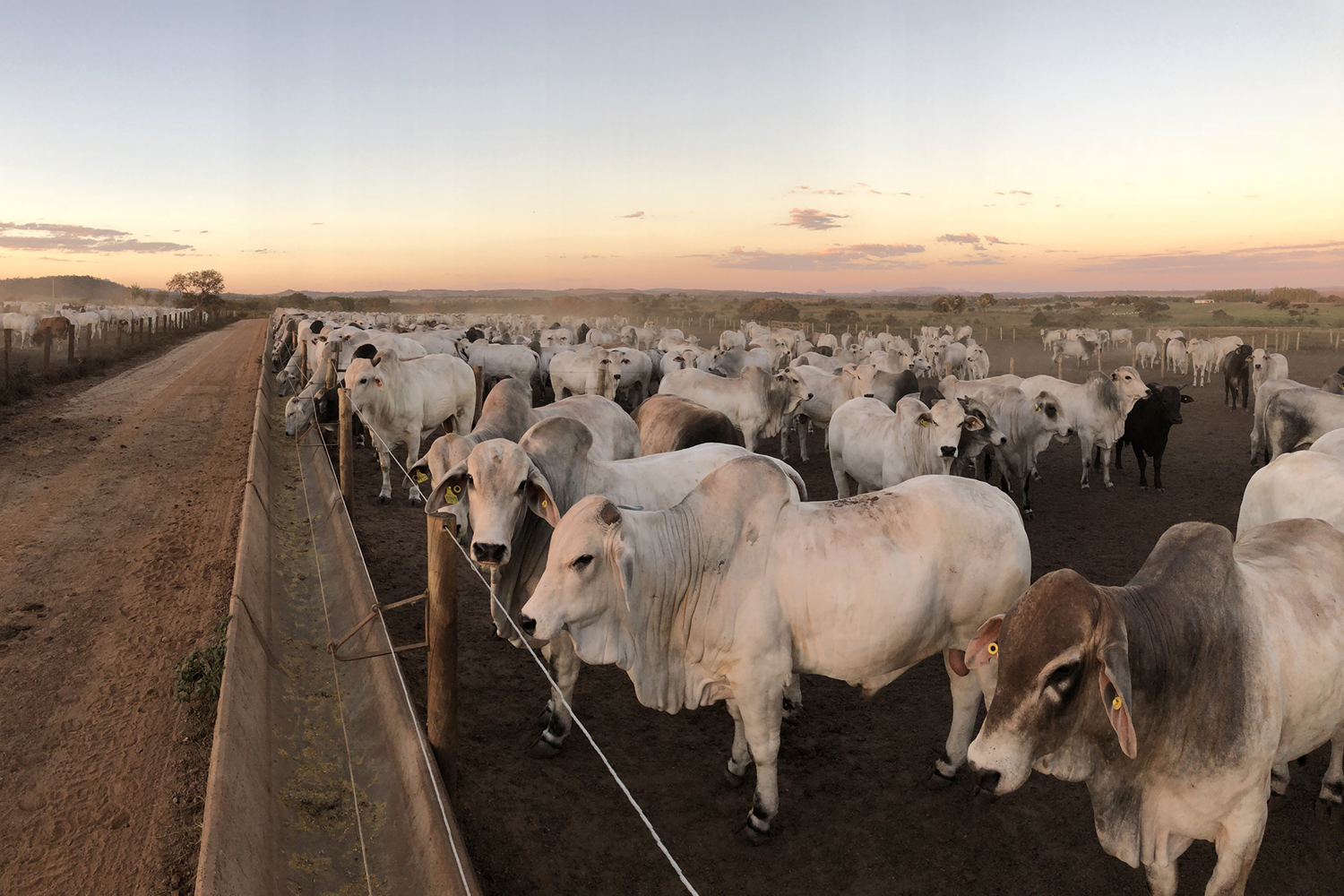
A CAF is a site, such as large commercial dairies and cattle feedlots, where animals are kept in corrals, pens, or other enclosed areas and fed by means other than grazing. Because these operations generate substantial volumes of manure and wastewater, they are required under the Porter-Cologne Water Quality Control Act to submit annual reports to Regional Water Quality Control Boards detailing herd size, manure production, wastewater generation, and waste management practices.
The report, “Confined Animal Facility Permitting and Reporting Under the Porter-Cologne Water Quality Control Act: An Analysis of Regional Board Activities,” concludes that widespread reporting gaps and limited regulatory follow-up mean that state and regional regulators often lack the information necessary to assess water quality risks or take corrective action when violations occur.
“California has more large commercial dairies than any other state, and those facilities generate tens of millions of tons of manure every year,” said Deborah A. Sivas, JD ’87, the Luke W. Cole Professor of Environmental Law at Stanford Law School and a co-author of the report. “When that waste is not properly managed, it can contaminate groundwater, pollute rivers and streams, contribute to harmful algal blooms, and pose real risks to nearby communities.”
Zoe Robertson, JD ’26, served as the report’s lead author. She began work on the project during her first year in Sivas’s law and policy lab and continued developing the research as an Environmental Law Clinic student in her second and third years. The research team also launched a companion interactive dashboard that allows policymakers, journalists, and community members to explore reporting data across regions.
Using AI to improve the environment
Read about Professor Daniel Ho’s 2019 AI-driven project that used pattern recognition in large datasets to identify industrial animal operations and help regulators assess the environmental risks associated with each facility.
The researchers analyzed 1,280 annual reports submitted in 2023 and 2024 to five Regional Water Quality Control Boards.
Their report identifies widespread underreporting of animal waste, including one facility that reported producing just 0.05 tons of manure per cow per year, roughly 200 times lower than estimates in federal agricultural data. Despite discrepancies of that magnitude, the relevant Regional Water Quality Control Board did not flag the report as a potential violation in the state’s enforcement database.
Among some of the other key findings:
- Chronic underreporting of manure production. Facilities frequently relied on conversion factors that diverged sharply from scientific benchmarks, leading to significant discrepancies in reported waste volumes.
- Incomplete or inconsistent wastewater reporting. Several regions do not explicitly require facilities to report wastewater generation, despite its substantial nutrient content.
- Failure to account for nutrient balances. Many reports did not reconcile nutrient inputs and outputs, raising questions about unaccounted-for nitrogen that could enter groundwater.
- Limited enforcement activity. According to the state’s California Integrated Water Quality System (CIWQS) database, some Regional Boards reported zero enforcement actions over a five-year period, despite apparent reporting violations.
Without stronger oversight, the report concludes, annual reporting risks becoming a procedural formality rather than a meaningful safeguard for California’s water quality.
For more information
This story was originally published by Stanford Law School.
Writer
Monica Schreiber