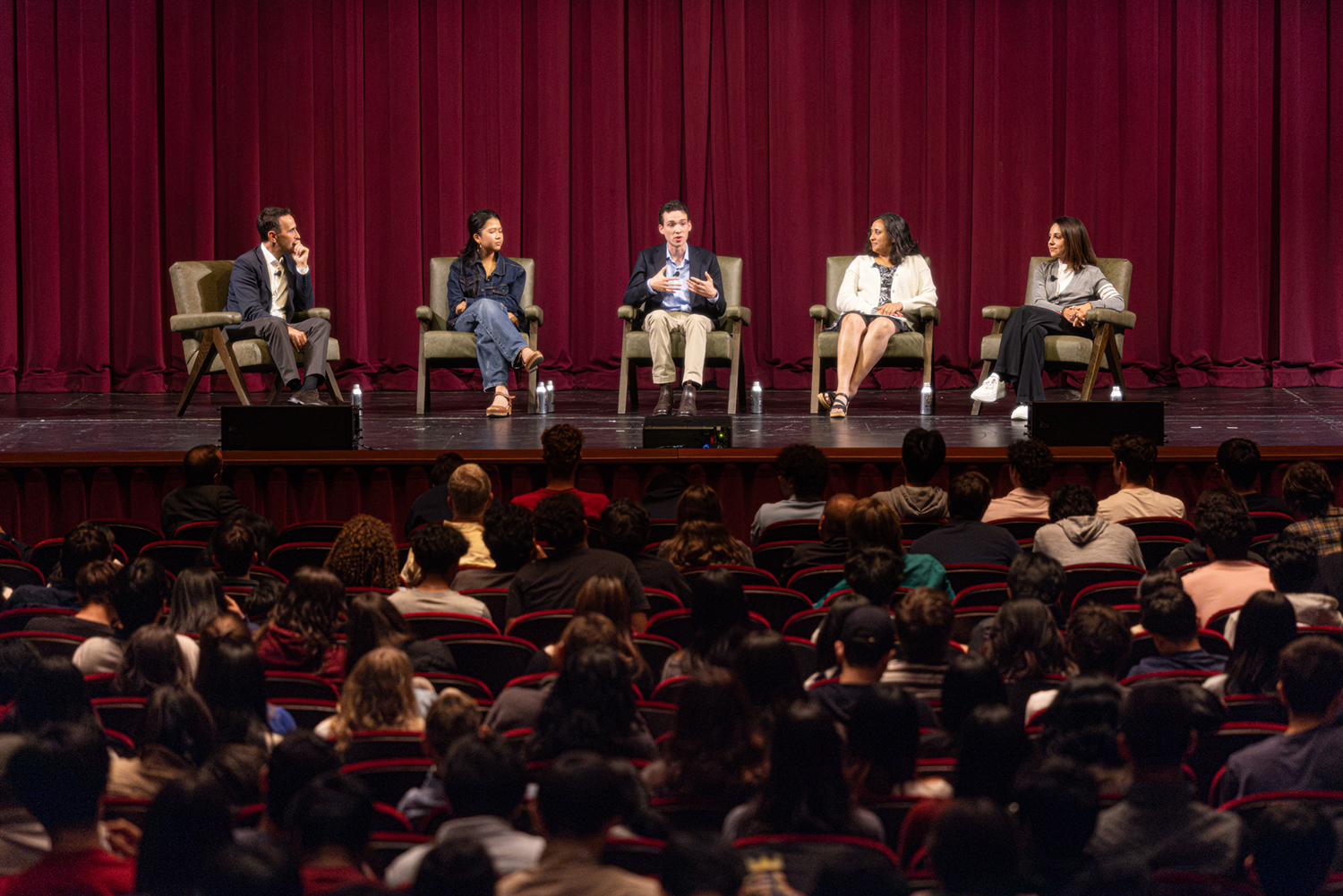
This fall, Stanford University enrolled 1,866 first-year undergraduate students, representing a larger class than in recent years as the university takes steps to expand access to a Stanford education.
In addition, Stanford enrolled the largest class of transfer students in recent memory, with 90 students coming from 76 colleges and universities, including 36 community colleges.
In all, Stanford enrolled 196 more first-year and transfer students compared to last year, in an intentional effort to increase the class size to give a greater number of talented, exceptionally well-qualified students the opportunity to earn a Stanford degree. University leaders are studying possibilities to further expand future undergraduate classes in a significant way, while also preserving the experience of being a Stanford student.
“I believe that in the coming years, we should find new and creative ways to open a Stanford education to more students,” said Jonathan Levin, Stanford’s president, in his 2024 inaugural address. “The potential is exceptional, and it spans the world.”
Commitment to affordability
Stanford maintains a need-blind admission process for domestic applicants, with a commitment to meeting the full demonstrated need of every admitted student. Eighty-six percent of students graduate without debt.
For the fall 2025 incoming class, the average university scholarship among those receiving aid is $69,415, and 19% are eligible for a federal Pell grant for lower-income students.
Families of undergraduates with annual incomes below $100,000 pay no tuition, room, or board, and those with incomes below $150,000 pay no tuition. Families with higher incomes also may receive aid based on their financial circumstances.
Varied backgrounds
The students composing the Class of 2029 took varied paths to arrive on campus: Two-thirds of domestic first-year students graduated from public high schools, and 20% of all new undergraduates are the first in their families to attend college. They speak 81 languages at home, and they represent all 50 states and 65 countries.
“Each student brings unique strengths, qualities, and aspirations to our campus community and we value the diversity of their contributions,” said Richard H. Shaw, dean of undergraduate admission and financial aid. “We want talented students from all walks of life to know that a Stanford education is affordable, and that we welcome excellent students from every corner of the country and globe to campus each fall.”
The percentage of first-year students who self-identify as Hispanic is 12.4%; Black, 5.8%; American Indian, 3.0%; Pacific Islander, 1.3%; Asian, 43.9%; White, 42.1%; and international, 12.7%. Another 0.7% declined to state. (Note that these numbers are calculated based on the “check all that apply” methodology, in which multiracial domestic students may select multiple races to describe their identity.)
Expanded outreach
Stanford recently hired regional outreach admission staff in six cities across the nation, who collectively put on nearly 250 programs attended by more than 7,000 students. The university also participates in the Small-Town and Rural Students (STARS) College Network, which works to create pathways to college for students who may not have exposure to the range of educational opportunities available to them.
Outreach to students applying for admission in fall 2026 and beyond has ramped up significantly. Over the past year, Stanford has engaged in over 1,100 events at high schools and community-based organizations for students who will enter college over the next several years. This is more than double the outreach efforts from last year, when students in the current first-year class were applying. At these events, the Stanford admission team has connected with more than 30,000 students, many of whom were not familiar with the benefits – or the affordability – of a Stanford education.
The university has also added more than 1,400 alumni ambassadors, many of whom volunteer their time to connect with students at college fairs, including in underserved communities. Alumni participation in college fairs has increased 223% this year.
“I’m thrilled that we were able to welcome more students to campus this fall, and I can’t wait to see what the Class of 2029 does with the opportunities and possibilities available to them on the Farm,” Shaw said.