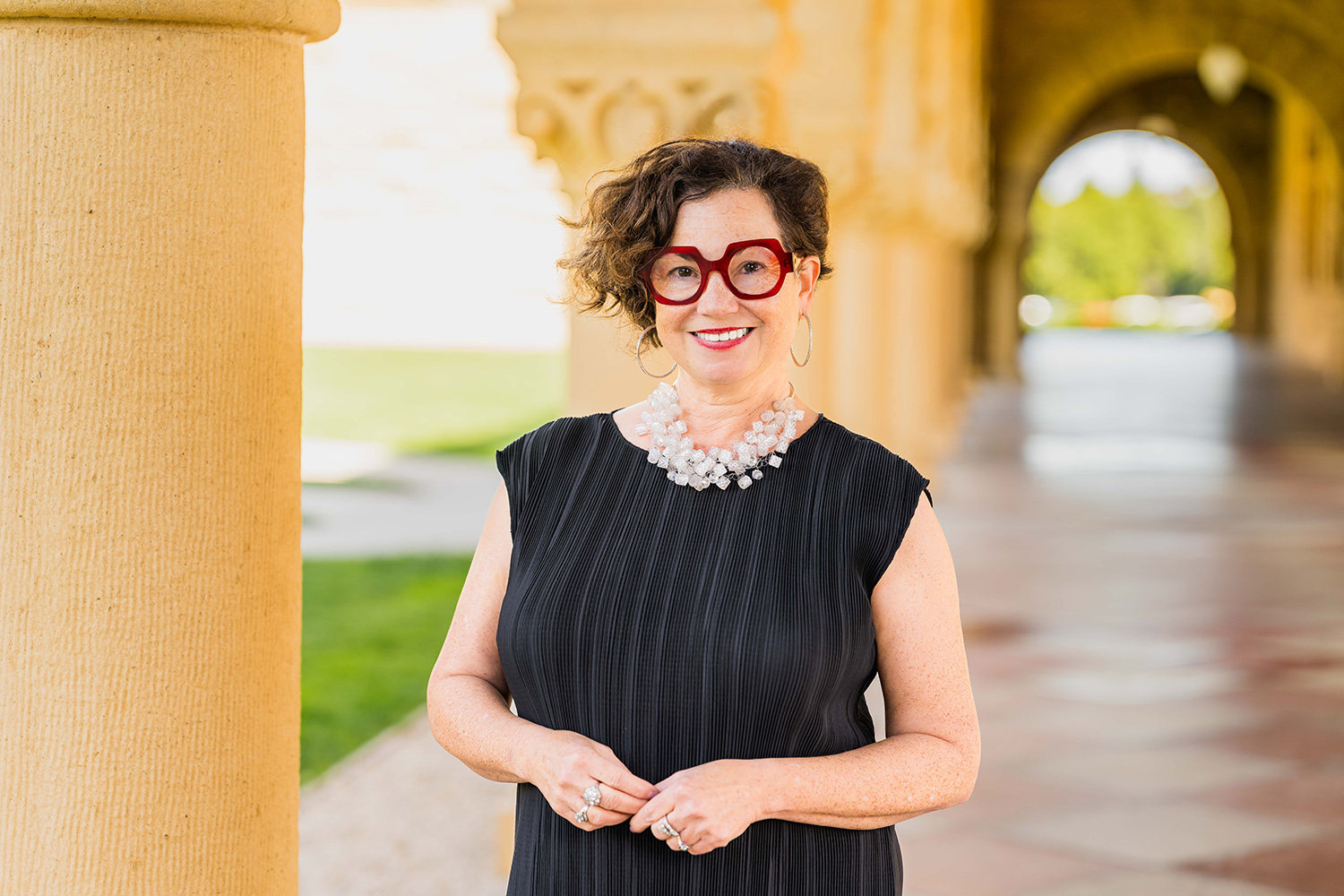
Philip Roth, the giant of American literature, has already been the subject of one authorized biography, albeit one mired in controversy – Philip Roth: The Biography by Blake Bailey was canceled by W.W. Norton just weeks after its publication and then quickly republished by Skyhorse. That was in 2021, and Steven J. Zipperstein, the Daniel E. Koshland Professor in Jewish Culture and History in the School of Humanities and Sciences, was already working on another Roth biography and had received encouragement from the man himself, who died in 2018.
Indeed, the author had introduced Zipperstein to some of the important people in his life and provided him with access to his papers. The end result is Philip Roth: Stung by Life (Yale University Press, 2025). Already dubbed “literary biography at its best” by historian Sean Wilentz, it is a full portrait of the man, a remarkable accomplishment given Roth’s own ambivalence toward biographers, as expressed through his characters in books such as Exit Ghost. “Once I was dead, who could protect the story of my life from Richard Kliman?” wonders the protagonist, Roth’s famous alter ego Nathan Zuckerman.

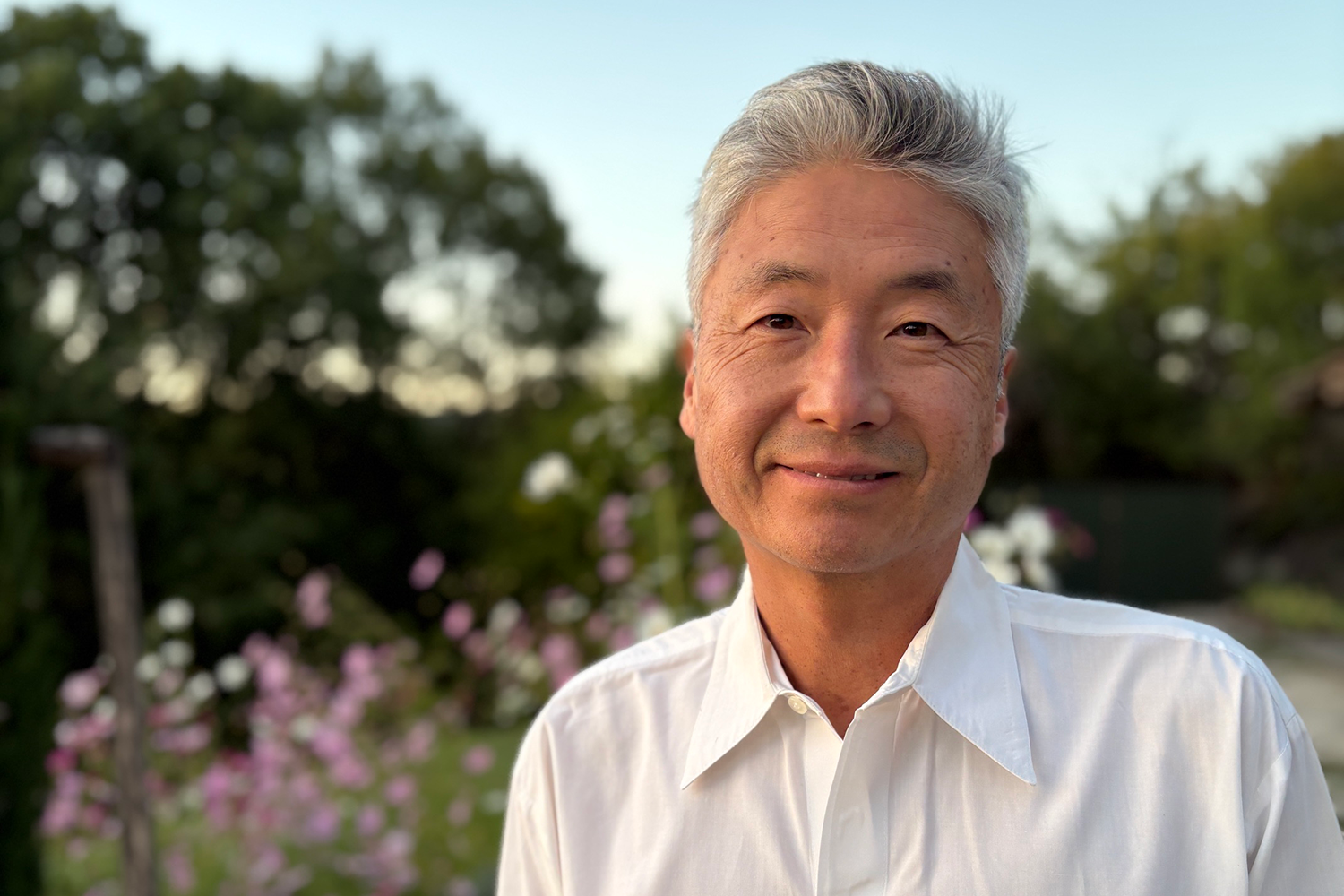
Steven J. Zipperstein | Nan Phelps
We spoke with Zipperstein about how Stanford supported his extensive research, what it was like to interact with Roth in person, and the challenges that go into capturing the life of such a brilliant, complicated man.
This Q&A has been edited for clarity and length.
Did anything surprise you in your research?
I wrote about Philip Roth, so that comes with the territory. What particularly surprised me was that I never tired of reading his work. Doing a biography built on the interplay between his life and his work and spending as much time as I did with his writing made me all the more impressed by his range, his depth, and that he was able to remove himself so often from his own inclinations. To be able to write with such empathy and depth about aspects of life that were so alien to him in many ways was perhaps the greatest surprise.
He was supportive of your work and provided you with some of your sources, right?
Yes. Unsurprisingly, he was someone who broke rules. He had signed an exclusive agreement with Blake Bailey and then cooperated with Claudia Roth Pierpoint in the writing of her book about his books. And then at the outset of my work, he offered to share all the sources that he shared with Bailey with me, and Bailey understandably refused. But eventually, with the implosion of Bailey’s book, I was able to review nearly all of these sources. And, in addition, he [Roth] opened up his entourage to me, which was immensely important because people that spoke with me, who otherwise might not have, were all the more open.
Were any of those sources especially rewarding for you?
Yes. Among the ones who stand out are Maletta Pfeiffer, his most long-standing lover. I spent three days with her in Stockholm, and she gave me her diaries, along with other material that I integrated into the book. There was also Maxine Groffsky, whom he wrote about in Goodbye, Columbus as Brenda Patimkin. She was more hesitant. I was the first person writing about Roth that she ever spoke with. She has some 200 love letters from Roth that he wrote over the course of their 2.5-year romance. I was always hoping that, at one point as I was sitting with her, she would say, “Well, here they are.” That never happened.
Was it difficult to sum up a life of 85 years, particularly one as full as Roth’s?
It was a major enterprise. At one point I ended up being so engrossed in writing the book that I forgot to renew my driver’s license. I forgot to renew our health insurance. I forgot my oldest son’s birthday.
For this book, I forced myself to write four or five pages every day when I wasn’t teaching. He wrote 31 books, there are probably 30,000 or 40,000 articles written about him, and I used probably 20 or 25 archival collections. In retrospect, I don’t miss any of it – and I miss all of it profoundly.

Philip Roth: Stung by Life, published Oct. 14, 2025, by Yale University Press as part of the Jewish Lives series.
I love the subtitle. It captures a lot in three elegant words. How did you choose it?
I came across the term in an obituary that Roth wrote for his friend Richard Stern and realized that it managed to capture a life as complicated as this is.
Book event
Wednesday, Nov. 19, at 5 p.m. at Stanford Humanities Center
Zipperstein will be in conversation about his new biography with fellow writers and Stanford colleagues on campus at the Stanford Humanities Center’s Levinthal Hall. RSVP.
What drew you to Roth initially?
I grew up in a Jewish orthodox milieu, but a very erudite one. My father built a building in the back of our house in Los Angeles that held some 30,000 books. I had access to all the books that I wanted to read with the understanding that I would remain an Orthodox Jew. But I was unable to satisfy the wager. It was reading “Whacking Off,” one of the chapters in Portnoy’s Complaint – the content was self-evident – just before I left for rabbinical school in Chicago at the age of 17 or 18, that left an enormous imprint on me. As I understood it then – and in retrospect, correctly – what Roth was writing about was a character, Alexander Portnoy, who had all the freedom one could ever expect, and yet he was neurotic. What that indicated to me was that while I was eager at that point to leave the world that I was reared in, what was on the other side of the wall was not panacea, was not utopia, and Roth brought that home to me in a way that I never, never forgot. It meant that I would challenge both the dogmatisms that I was raised in and also the dogmatisms that I was entering into. And that helped me, I think, intellectually and eventually as an historian. It helped me certainly as an eventual interpreter of his life.
How did the university support you in writing the book? You mention funding and assistance from Stanford in the acknowledgments.
I’m someone who is deeply grateful to Stanford, where I’ve loved being since 1991. I had the funding available to suddenly go to Stockholm. I was interviewing Maletta Pfeiffer on the phone, and she was taking material from a box in her living room. I described the interview to my wife, Susan, and she said, “Well, if she has material, why not go there?” I was about to go to Israel to keynote a conference and then just booked a flight to Sweden. I couldn’t have done that without the resources that Stanford provided. And a number of the archival collections are in rather more remote places. I was able to hire someone to review those papers and send them to me.
What was your sense of the man himself from your personal interactions with him?
When you’re writing a person’s biography, to what extent do you really know the person? In some ways, of course, it’s immensely helpful to have had the kind of conversations I had with him. But how helpful are they? Because, you know, invariably, he’s courting me, and he’s an immensely charming person. So there were the impressions I had in sitting with him, and then I rubbed those impressions against other [people’s] impressions. One of the shortcomings of writing a biography, perhaps especially literary biography, is the way in which some tend to spotlight one person as he or she walks through life. But all of us, even people who are as obsessive a writer as Roth, live in crowded rooms, and I wanted to bring him in contact with other people in my writing.
For more information
Zipperstein is also a professor in the Department of History and a faculty affiliate of the Jewish Studies Program in H&S.
This story was originally published by the School of Humanities and Sciences.
Writer
Paul L. Underwood