In brief
- Research by Dr. Nathan Lo and his team has led to new WHO recommendations that enhance vaccination protocols for typhoid and schistosomiasis.
- Research initiatives aim to combat neglected tropical diseases, benefiting communities in regions where these diseases are prevalent.
- Strategies emphasize reducing health disparities by ensuring access to essential treatments for underrepresented groups affected by infectious diseases.
Several years ago, Dr. Nathan Lo and his former PhD advisor Dr. Jason Andrews published a paper based on their evidence showing that a new typhoid vaccine would be highly cost-effective in countries where the disease occurred regularly.
Their recommendation was groundbreaking because previous typhoid vaccines had been used not to protect people living in endemic countries but to protect people from more developed parts of the world who were traveling to those countries. Based on research by Lo, Andrews, and others, in 2018, the World Health Organization (WHO) recommended use of the new vaccine in countries where typhoid fever is endemic or epidemic.
Now, thanks in part to funding from the Stanford King Center on Global Development, Lo is a member of a multi-institution team helping WHO determine whether boosters of the vaccine are necessary. At Stanford, the ongoing research is led by Tigist (Tiggy) Menkir, a postdoctoral scholar studying infectious diseases.
When WHO requests help, “of course you answer that call,” Lo says. “We need to think about continuing to support the rollout of this vaccine.”
Lo, a King Center faculty affiliate who leads a lab in Stanford’s Division of Infectious Diseases and Geographic Medicine, earned his MD and PhD at Stanford before completing his residency at the University of California, San Francisco (UCSF), where he worked during the height of the COVID-19 pandemic both as a physician and as a researcher studying vaccine prioritization and testing strategies. He started his research lab at UCSF, bringing it with him when he returned to Stanford in 2023.
Lo and his team study vaccines in the United States (a recent paper modeled how declining vaccination rates may affect outbreaks and reemergence of previously eliminated infectious diseases, including measles, rubella, and diphtheria) and neglected global infectious diseases. Some of his most influential work has come in the study of schistosomiasis, a disease caused by parasitic worms that can cause abdominal pain, fatigue, anemia, and even death.
Lo began researching the disease in 2013; that work became the basis for his PhD thesis at Stanford and, in 2022, led to the creation of new WHO guidelines for which Lo served as lead author (the prior guidelines had been issued two decades earlier). The document announced a major change in recommended treatment of schistosomiasis: mass administration of the relevant drug not just to children between the ages of 5 and 14, as previously recommended, but also to young children and adults. Lo’s guidelines also called for annual treatment at a lower threshold of disease in the community. The strategy was recently featured in a New York Times article about the disease in Nigeria.
“We found that expanding treatment to the whole community had a lot of benefit,” he says. Over time, he thinks “ this will effectively mitigate the disease burden better in high-prevalence areas.”
Lo says the guidelines were the first phase of his work on schistosomiasis; now he and his team are trying to figure out how to detect hot spots and to offer guidance for the development of any potential new medications.
“Having gone through the guidelines process and identified all these critical issues, it would feel like a real disservice not to improve scientific understanding in the area so that the next time someone writes the guidelines these data gaps aren’t there,” he says.
Because of Lo’s work on the schistosomiasis guidelines, WHO asked him to create the first-ever guidelines for another neglected tropical disease: strongyloidiasis, a chronic parasitic disease estimated to infect between 300 and 600 million people, including in Southeast Asia, African and Western Pacific regions, and South and Central America. Lo led a team that issued a conditional recommendation for an annual mass drug administration to everyone older than 5 years old in places where the disease has infected more than 5 percent of the population. Those guidelines were published last year.
Having gone through the guidelines process and identified all these critical issues, it would feel like a real disservice not to improve scientific understanding in the area so that the next time someone writes the guidelines these data gaps aren’t there.Dr. Nathan Lo
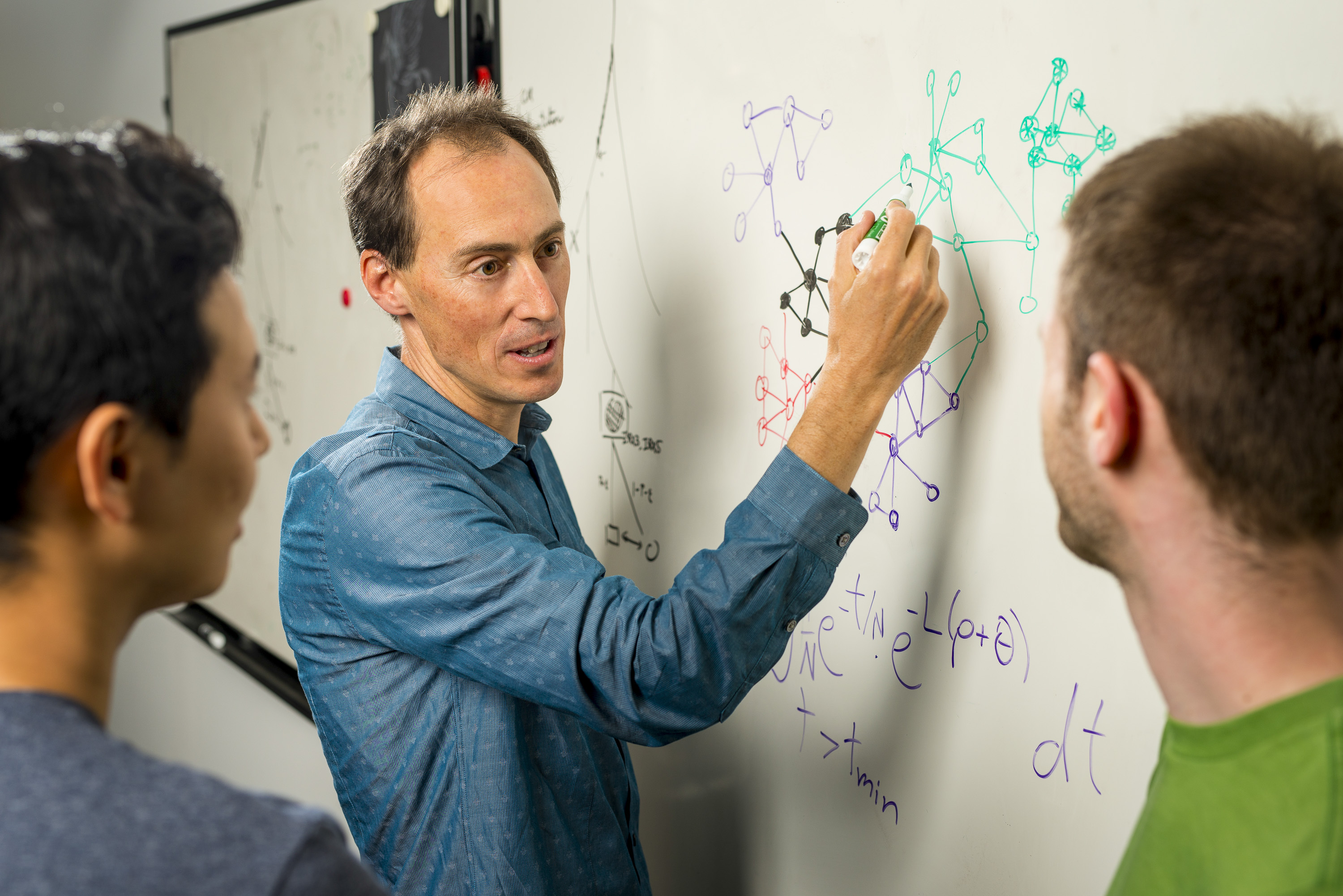
Lo says he has an “internal checklist” for taking on new projects: A disease must be either affecting a lot of people or impacting a unique or marginalized population; it must be well suited to the types of methods he applies, including computational methodologies such as statistical modeling; the questions presented must be answerable; and there should be a health equity focus. His goal is not necessarily to change policy but to inform it, he says.
“A large part of my motivation for research is the same motivation for being a physician,” he says. “To improve the health of and quality of life for people.”
Lo’s current work on the typhoid vaccine also came at the request of WHO. After initial funding fell through, the King Center offered stopgap funding.
“They provided really helpful support to keep this project on track,” he says. “It was critical.”
Lo says the King Center has provided him with an intellectual community – a “really great home” – since he returned to Stanford in 2023.
“The King Center is a very intuitive center for people interested in global health and international development,” he says. “I’m excited to learn from all these great people.”
Although increased vaccine hesitancy in the United States and declining support for research projects abroad are “disheartening,” Lo says he feels “privileged” to have the opportunity to “make a difference.”
“We are in a position to contribute really important scientific data and studies,” he says. “Science can influence policy, and it’s our job to generate important scientific work and make sure the right people hear about it.”
For more information
This story was originally published by Stanford King Center on Global Development.
Writer
Rebecca Beyer