When Noah Diffenbaugh, ’96, MS ’97, was an Earth sciences major at Stanford, he dreaded one required course and put off taking it until his final quarter.
But the course he was so intimidated by – an introduction to the fundamentals of computer programming, CS106: Programming Methodology – ended up being transformative. “It was phenomenal,” said Diffenbaugh. “It changed my life at the very last moment before graduation. I think the lesson is how important it is not to not do something because it’s scary.”
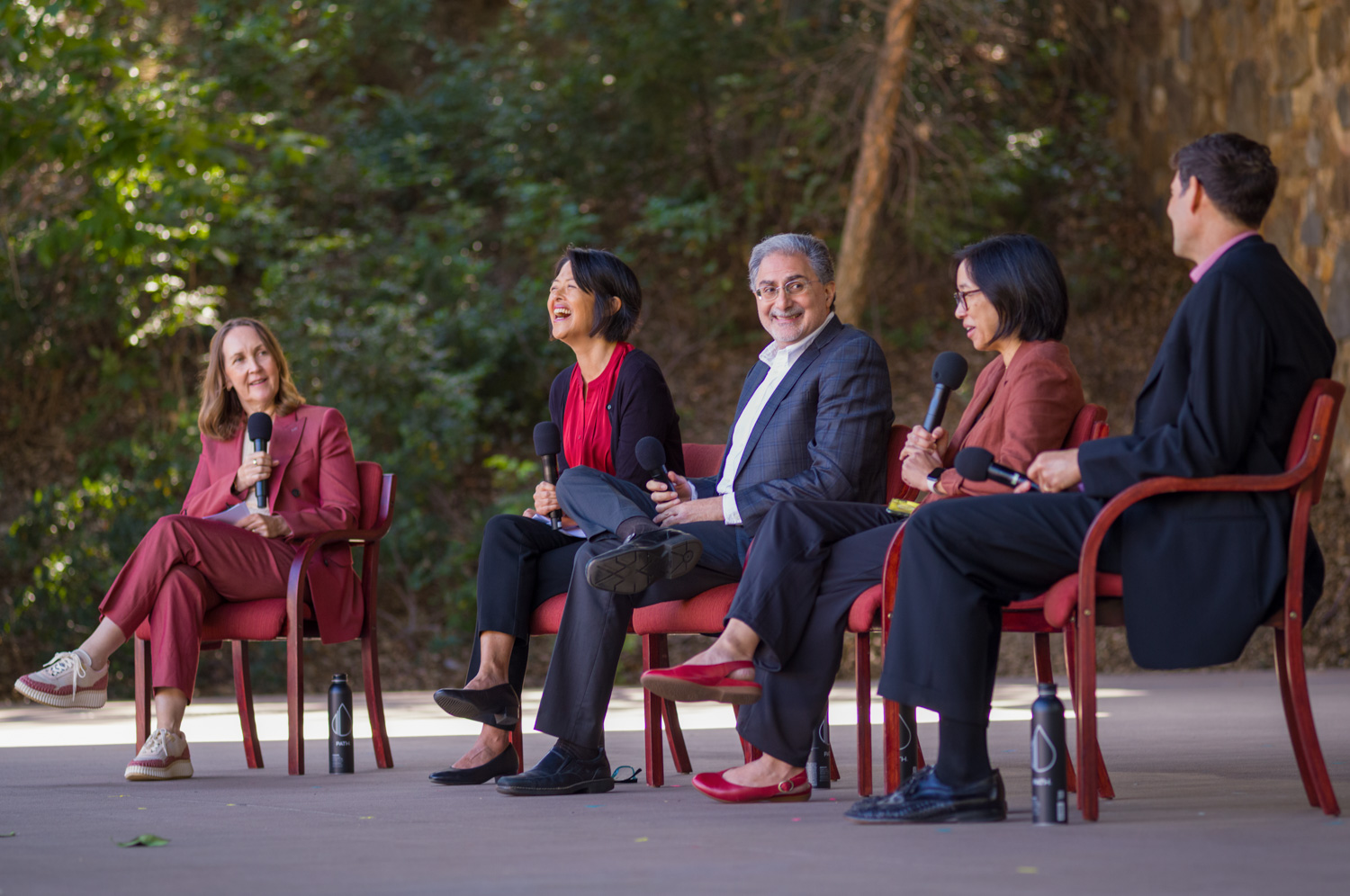
Diffenbaugh spoke during New Student Orientation in a panel discussion moderated by Stanford Provost Jenny Martinez and joined by psychologist Jeanne Tsai, ’91, and Diffenbaugh’s former CS 106 instructor, Mehran Sahami, ’92, MS ’93, PhD ’99.
Sahami reminded students that while Stanford can feel intimidating, the point is to dive in: “You will find something here that will blow your mind at some point,” Sahami said.
He noted the best way to arrive at that experience is to put aside any expectations, pressures, and demands they may feel. “Just say, ‘I’m here to learn. It doesn’t matter what I did before, and it certainly doesn’t matter what anyone else does, I’m just going to be open to learning new things,’” Sahami said.
Here are some of the other pieces of advice shared with the incoming class of 2029 and transfers.
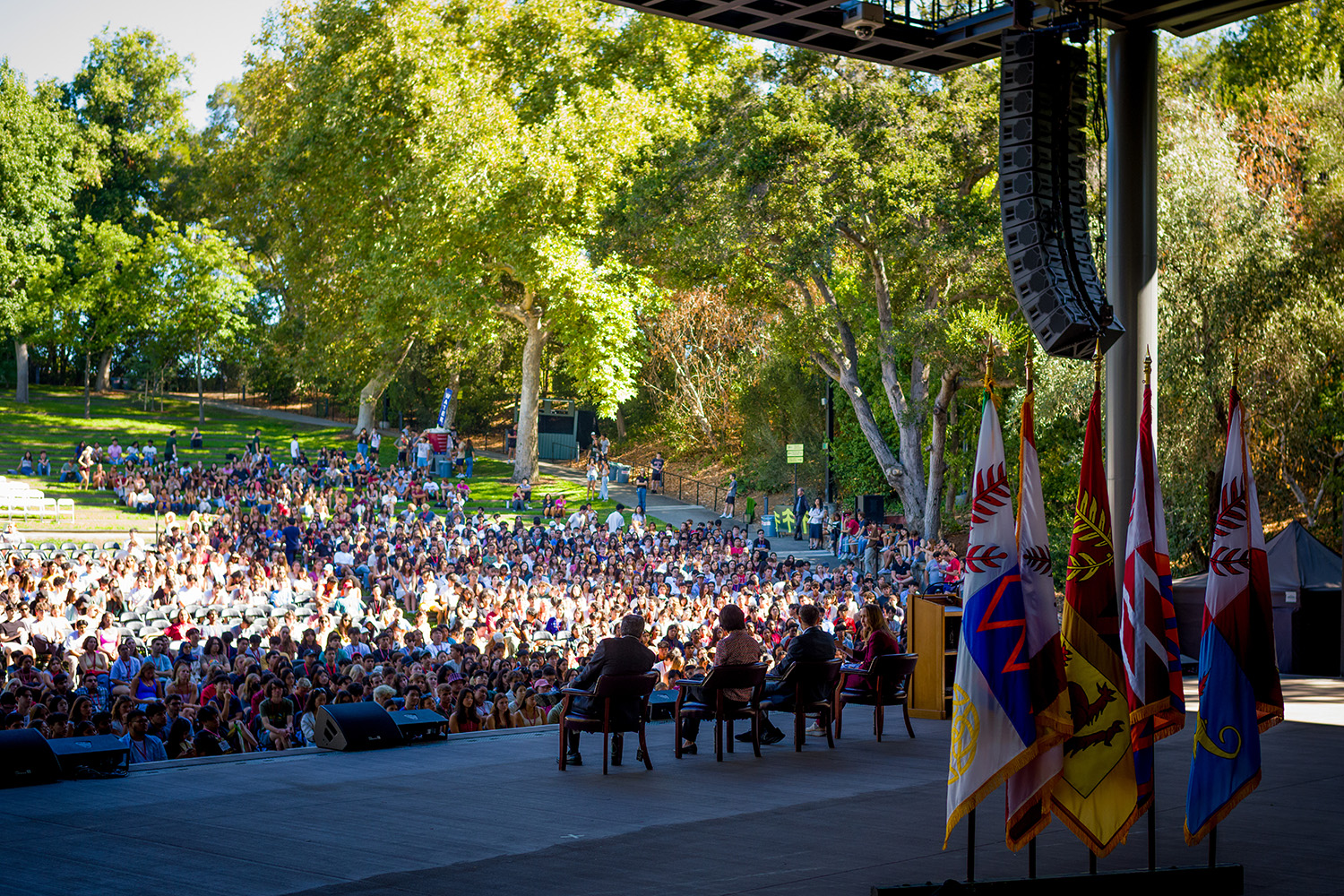
During the discussion, panelists discussed their time as students and gave tips on how to thrive intellectually in college and beyond. | Aaron Kehoe
1. Be curious
Board of Trustees chair and alum Lily Sarafan, ’03, MS ’03, who introduced the panel, encouraged students to let curiosity guide them. Through the Stanford Alumni Association, she recently took Stanford’s Civic, Liberal, and Global Education (COLLEGE) program, the first-year undergraduate requirement. Drawing from that experience, Sarafan urged students to assume good intent in discussions: “Begin with the premise that your classmates, your professors, and your peers are motivated by genuine curiosity and the pursuit of understanding, even when you disagree. When you do that, disagreement becomes generative instead of divisive.”
2. Speak – and think – freely
Martinez stressed the importance of engaging with ideas different from one’s own. Quoting Judge Learned Hand, she reminded students that “the spirit of liberty is the spirit which is not too sure that it is right.”
Speaking on Constitution Day, as a professor of constitutional law, Martinez highlighted the importance of the First Amendment. Broad protections for free speech in America reflect the judgment that the long-term benefits of prohibiting the government from restricting speech outweigh the costs of allowing some offensive speech. She noted the role of free speech and open inquiry at the university in the pursuit of knowledge. She also warned of the danger of stifling speech we disagree with “because if we embrace restrictions on freedom of speech for speech that we don’t like [today], then those restrictions may be used in the future to prevent the speech that we think is important.”
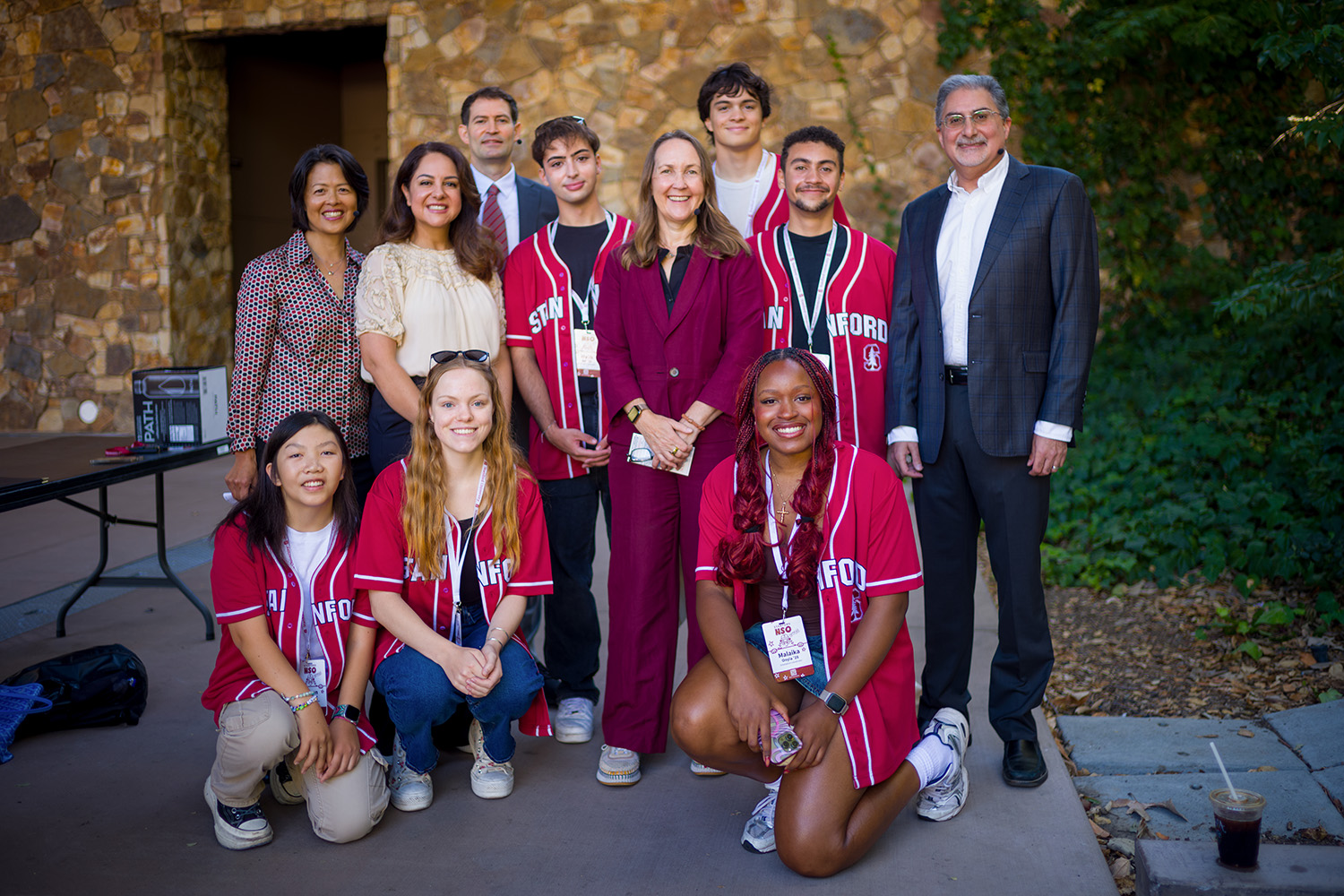
Provost Jenny Martinez and panelists with student orientation coordinators. | Aaron Kehoe
3. Be willing to change direction
Tsai shared that she came to Stanford intending to pursue a career in health care. She wanted to understand the human condition and believed studying medicine would provide the answers she sought.
But after Albert Hastorf, a pioneer in social psychology, delivered a series of guest lectures in her human biology class, Tsai found herself pulled in an exciting, new direction.
“It was the first time I really understood that you could study human behavior using scientific methods,” Tsai said. Tsai went on to pursue a scholarly career in psychology. She is now the Dunlevie Family Professor in the Department of Psychology in the School of Humanities and Sciences (H&S), where she runs her own lab.
4. Question assumptions
Tsai described how challenging theories that conflicted with her experiences led her into cultural psychology. “A lot of what we do as scholars and scientists is question our assumptions,” Tsai said. “We question our assumptions, we question other people’s assumptions, we question the field’s assumptions.”
As she studied theories about human behavior, she found they didn’t always match her own lived experiences. Challenging those widely held beliefs led her into an emerging subfield – cultural psychology – which she has helped shape through her own scholarly inquiry.
A lot of what we do as scholars and scientists is question our assumptions. We question our assumptions, we question other people’s assumptions, we question the field’s assumptions.Jeanne Tsai Professor of Psychology
5. Find mentors
Mentorship, the panelists agreed, can define a student’s academic and personal path.
“I just think mentorship is one of the most important things that you should be trying to get out of your education here,” Tsai said. Mentors can be professors, but also graduate students, postdocs, teaching assistants, or even peers. “You’re trying to get information and learn from other people about where to go with your interests, what you could do, what opportunities are out there.”
Sahami echoed her point: “Mentors changed my life. If I didn’t have the mentors I had, I certainly wouldn’t be here.” He encouraged students to think broadly about mentorship, not just academically but personally and professionally. “There is your career, there is you developing as a person, there’s all kinds of things.”
6. Participate in undergraduate research
Diffenbaugh stressed that Stanford’s support for undergraduate research is rare and something students should take advantage of early. “I was really lucky that I got to do undergraduate research and [it’s where] I ended up kind of having my first real intellectual mentoring experience.”
Working in a genetics lab on corn, far from his eventual field of climate science, taught him to be skeptical and self-critical – important skills for any scientist. Having that day-to-day relationship with experts in the lab was “really formative,” Diffenbaugh said.
7. Go to office hours
All three panelists were emphatic about this point. “Definitely go into office hours,” Tsai said. If you don’t know what to ask, she added, just introduce yourself or talk about something you learned in the class. “That’s the way to start forming these relationships.”
Sahami gave students a fallback: “If you need a question, I’ll give you a five-word one. It’s always guaranteed to give you an endless answer: ‘Tell me about your research.’”
He also reminded students not to be intimidated. “We’re just regular people,” he said, laughing. “I’ve had students talk about class, about relationships, about breaking up with their boyfriend or girlfriend back home.” One student even brought him a homemade burrito. “That person actually came to our house for a barbecue later on, and my kids were like, ‘Oh, it’s the burrito guy,’” Sahami said.
The point, he stressed, is that office hours are for connection, not just academics.
If you need a question, I’ll give you a five-word one. It’s always guaranteed to give you an endless answer: ‘Tell me about your research.’Mehran SahamiProfessor of Computer Science
8. Use AI to augment learning, not replace it
AI is a powerful tool “that can either augment learning or short-circuit it,” Sahami warned.
“It’s pretty good at doing assignments. We’re also pretty good at finding the assignments that it does for you.”
He urged students to reflect on what they truly want from their education. “You should all ask yourselves, ‘Why are you here?’ Deeply think about that at some point,” he urged.
9. Make time for relationships and reflection
Some of the biggest transformations can come from outside of the classroom.
Sahami recalled being in a relationship with someone who was deeply religious. Their conversations forced him to ask questions about his own attitudes and beliefs that he had never considered before. This in turn led him on a journey through religious and spiritual materials, ranging from the Quran and the Bible to Confucianism and Buddhism.
“Part of the experience here is about expanding your mind and your belief and your personhood,” Sahami said.
10. Take advantage of learning opportunities unique to Stanford
There are some courses you can find anywhere, Tsai noted, but then there are others that are unique experiences because of the person teaching them – such as a class taught by the renowned biologist and neuroscientist Robert Sapolsky. “I would just encourage you to take those classes that you can only take at Stanford,” she said. “They’re just phenomenal classes and you’ll talk about them and think about them for the rest of your life.”
11. Have fun with Stanford traditions
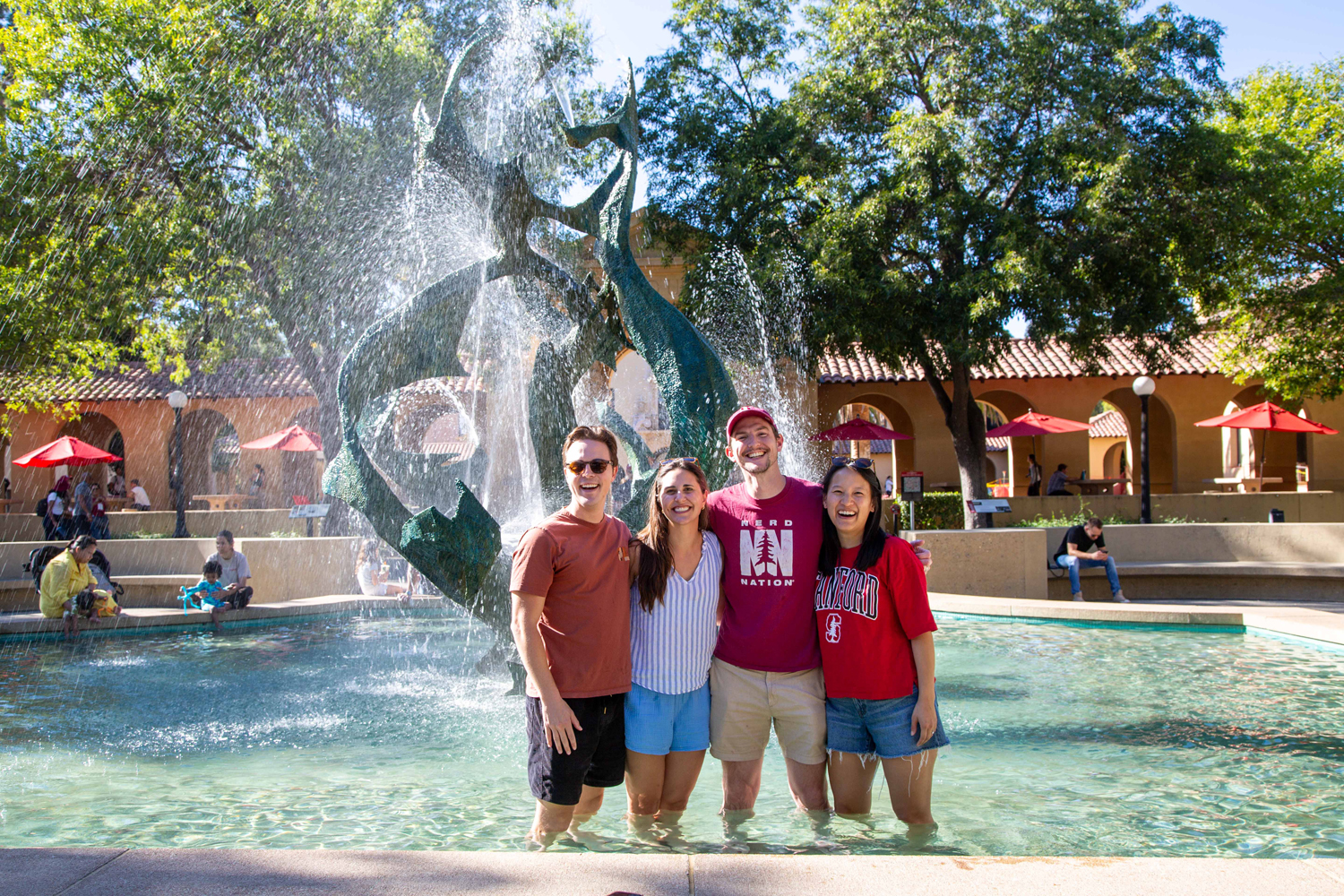
Fountain hopping, walking the Dish, or going to the Big Game – there are many traditions students can participate in.
For Diffenbaugh, a key tradition is joining the Leland Stanford Junior University Marching Band in unison for a jump during the song “All Right Now.”
He pointed students to a recent demonstration by Andrew Luck, ’12, MA ’23, now Stanford football’s general manager, after the team’s recent win against Boston College.
“Andrew does it correctly,” he said.
Tsai thought students should partake in as many traditions as they can. “You’re here for four years at least,” she said. “You don’t want to, after you leave Stanford, to be the person that says, ‘Oh, I never went to the Big Game.’ So I think you should do almost all of them.”
For more information
Diffenbaugh is the Kara J Foundation Professor and Kimmelman Family Senior Fellow in the Stanford Doerr School of Sustainability, and the Olivier Nomellini Family University Fellow in Undergraduate Education.
Sahami is the Tencent Chair of the Computer Science Department and the James and Ellenor Chesebrough Professor in the School of Engineering.
Writer
Melissa De Witte