In brief
- Analysis of data from 21 countries shows dengue fever cases rise as temperatures increase.
- Higher temperatures from climate change were responsible for more than 4.6 million extra infections annually in the countries studied.
- Projections suggest future warming could raise dengue incidence by 49%–76%.
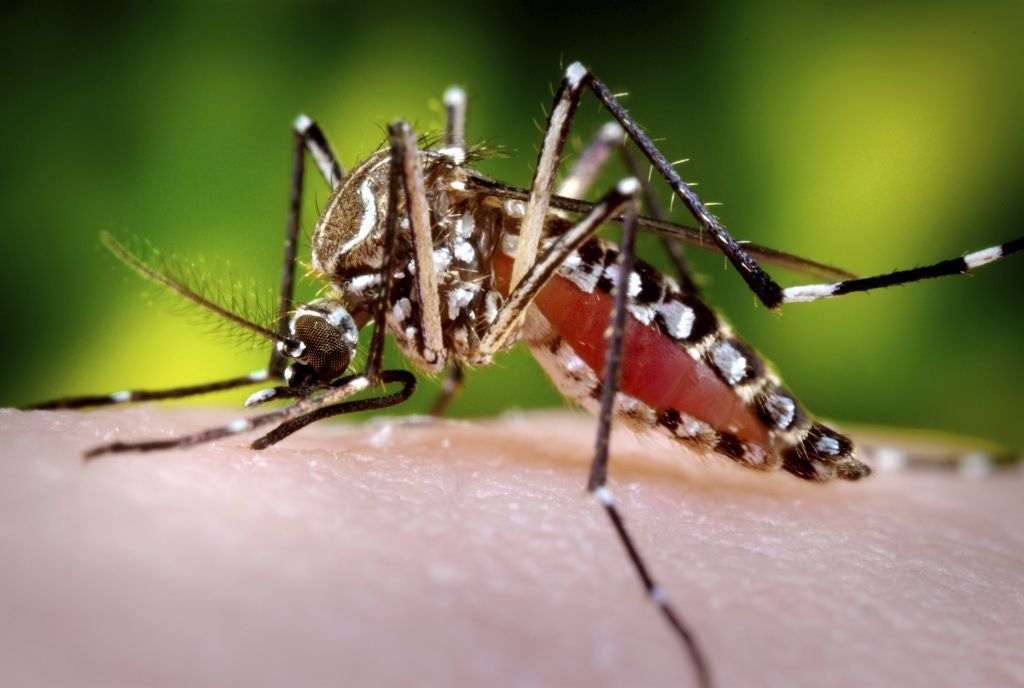
Warmer weather across the globe is reshaping the landscape of human health. Case in point: dengue fever, a mosquito-borne disease once confined largely to the tropics which often brings flu-like symptoms and without proper medical care can escalate to severe bleeding, organ failure, and even death. Cases of dengue could rise as much as 76% across a large swath of Asia and the Americas by 2050, according to a new study by researchers at Stanford, Harvard, Arizona State University, and the National Bureau of Economic Research. The analysis, published Sept. 9 in Proceedings of the National Academy of Sciences, is the most comprehensive estimate yet of how temperature shifts affect dengue’s spread. It provides the first direct evidence that a warming climate has already increased the disease’s toll.
“The effects of temperature were much larger than I expected. Even small shifts in temperature can have a big impact for dengue transmission, and we’re already seeing the fingerprint of climate warming,” said Marissa Childs, lead author and assistant professor of environmental health at the University of Washington.
A dangerous sweet spot
The study analyzed over 1.4 million observations of local dengue incidence across 21 countries in Central and South America and Southeast and South Asia, capturing both epidemic spikes and background levels of infection. Dengue thrives in a “Goldilocks zone” of temperatures – incidence peaks at about 27.8 C (82 F), rising sharply as cooler regions warm but dropping slightly when already-hot areas exceed the optimal range. As a result, some of the largest increases are projected for cooler, high-population regions in countries such as Mexico, Peru, and Brazil. Many other endemic regions will continue to experience larger, warming-fueled dengue burdens. By contrast, a few of the hottest lowland areas may see slight declines. Still, the net global effect is a steep rise in disease.
The findings suggest that higher temperatures from climate change were responsible for an average 18% of dengue incidence across 21 countries in Asia and the Americas from 1995 to 2014 – translating to more than 4.6 million extra infections annually, based on current incidence estimates. Cases could climb another 49% to 76% by 2050, depending on greenhouse gas emissions levels, according to the study. At the higher end of the projections, incidence of dengue would more than double in many cooler locations, including areas in the study countries that are already home to over 260 million people.
“This is not just hypothetical future change but a large amount of human suffering that has already happened because of warming-driven dengue transmission,” said Erin Mordecai, senior author and professor of biology in the Stanford School of Humanities and Sciences.
Combating a disease on the move
The researchers cautioned that their estimates are likely conservative. They do not account for regions where dengue transmission is sporadic or poorly reported, nor do they include large endemic areas such as India or Africa where detailed data is lacking or not publicly available. The researchers highlight recent locally acquired cases in California, Texas, Hawaii, Florida, and in Europe – a signal of the expanding range of dengue. Urbanization, human migration, and the evolution of the virus could amplify risks, while medical advances may help blunt them, making projections uncertain.
Aggressive climate mitigation would significantly reduce the dengue disease burden, according to the study. At the same time, adaptation will be essential: better mosquito control, stronger health systems, and potential widespread use of new dengue vaccines.
In the meantime, the findings could help guide public health planning and strengthen efforts to hold governments and fossil fuel companies accountable for the damages of climate change. Attribution studies like this one are increasingly entering courtrooms and policy debates, used to assign responsibility for climate damages and to support funds compensating countries most affected.
“Climate change is not just affecting the weather – it has cascading consequences for human health, including fueling disease transmission by mosquitoes,” Mordecai said.
For more information
Mordecai is also is also a senior fellow at the Stanford Woods Institute for the Environment, member of Bio-X, a faculty affiliate of the Stanford Institute for Human-Centered Artificial Intelligence and the Stanford Center for Human and Planetary Health, and a faculty fellow at the Stanford Center for Innovation in Global Health and the Stanford King Center on Global Development. She co-directs the Disease Ecology in a Changing World program at Stanford, which works to identify and mitigate the drivers of rural dengue and other diseases associated with environmental degradation.
Co-authors of the study also include Kelsey Lyberger, an assistant professor at Arizona State University who conducted research for the study as a National Science Foundation postdoctoral fellow in biology at Stanford; Mallory Harris, a postdoctoral scholar at the University of Maryland who conducted much of the research while a PhD student in biology at Stanford; and Marshall Burke, an associate professor of environmental social sciences at the Stanford Doerr School of Sustainability and a fellow at the Center on Food Security and the Environment, the Freeman Spogli Institute for International Studies, the Stanford Woods Institute for the Environment, the Stanford Institute for Economic Policy Research, and the National Bureau of Economic Research.
The research was funded by the Illich-Sadowsky Fellowship through the Interdisciplinary Graduate Fellowship program at Stanford University, an Environmental Fellowship at the Harvard University Center for the Environment, the National Institutes of Health, the National Science Foundation (with the Fogarty International Center), the Stanford Center for Innovation in Global Health, the Stanford King Center on Global Development, and the Stanford Woods Institute for the Environment.
This story was originally published by the Stanford Woods Institute for the Environment.
Writer
Rob Jordan