


Stanford President Jonathan Levin urged new undergraduates to be explorers and foster a “culture of dignity” as they begin their college journey, in remarks Tuesday evening at the university’s 135th Convocation ceremony.
Levin opened by welcoming families, noting that he and his wife had just dropped off one of their own children at college a few weeks ago. He spoke of the “pride tinged with sadness” of that moment before sharing a memory from his own freshman year at Stanford 35 years earlier.
He recalled a trip to the Sierra Nevada foothills with dorm mates to bungee jump off a bridge – still a new activity in the U.S. at the time. “What I remember about that day was not the jumping. It was the feeling of trying something new, and the camaraderie of doing it with a group of new friends,” Levin recalled. “In that sense, it is very much a metaphor for starting college.”
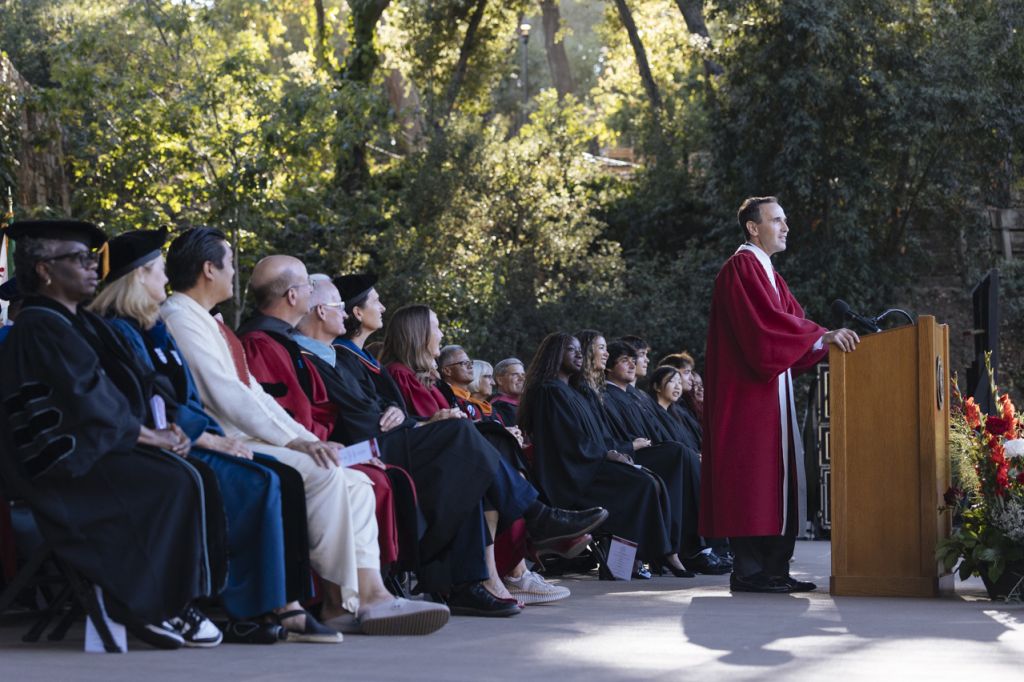
Levin told new students that they are entering a world of new ideas, challenges, and opportunities. “In short, you are an explorer,” he said, adding that exploration means the freedom to choose classes, majors, and clubs, but also the deeper academic freedom to ask questions, speak openly, and form one’s own views. Protecting that freedom, he noted, has been central to Stanford’s mission since its founding, captured in the university’s motto: “The wind of freedom blows.”
Part of New Student Orientation, Convocation is an annual celebration that welcomes new undergraduates to the campus community. Tuesday’s gathering took place at Frost Amphitheater and marked the start of the new academic year. Earlier in the day, new undergraduates arrived on campus with suitcases and boxes as they moved into their campus residences.
The ceremony kicked off with a formal procession, followed by remarks from the Rev. Dr. Tiffany Steinwert, dean for religious and spiritual life; Richard H. Shaw, dean of undergraduate admission and financial aid; and James T. Hamilton, vice provost for undergraduate education.
Images by Andrew Brodhead
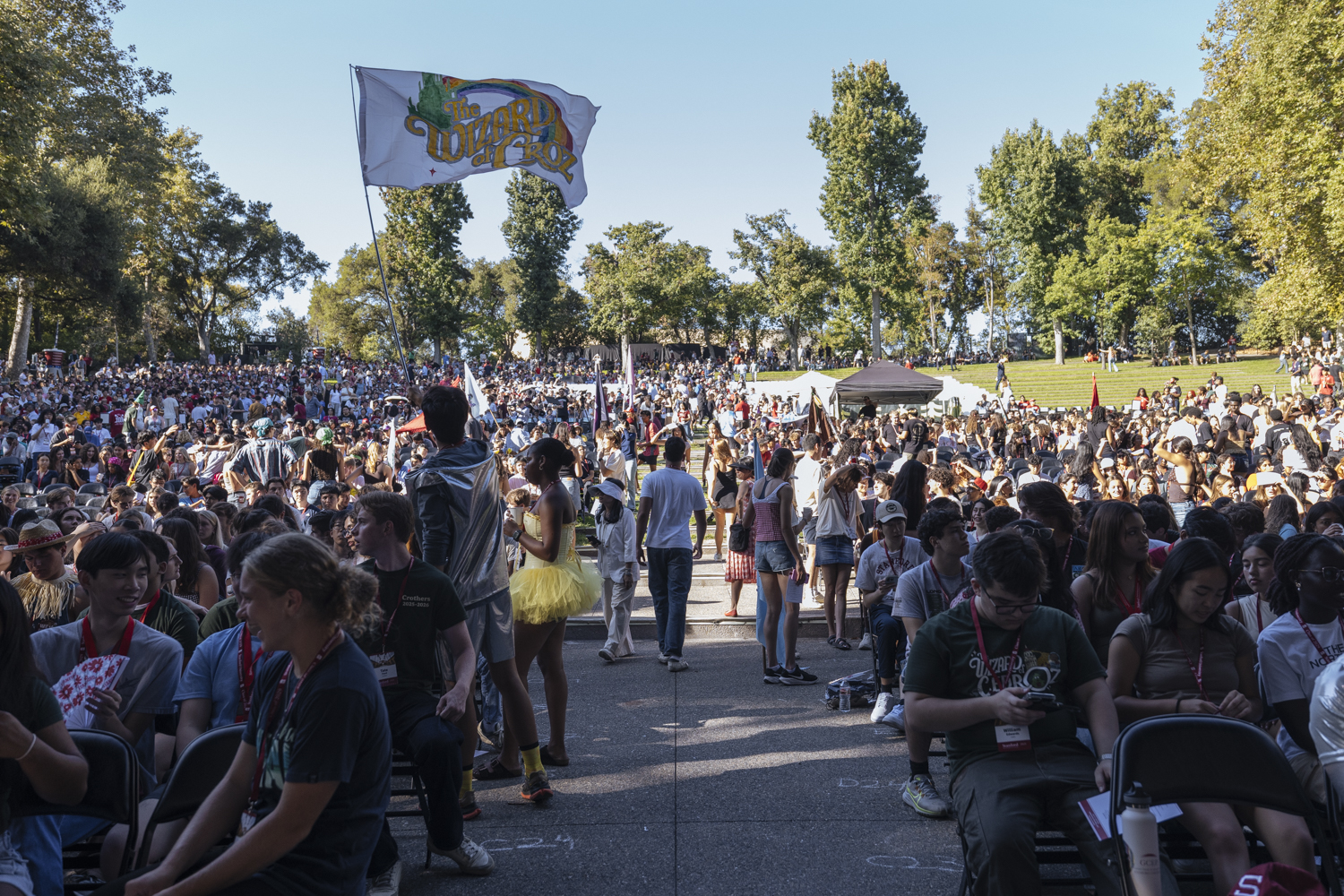
New first-year and transfer students filled Frost Amphitheater Tuesday evening for Stanford’s 135th Opening Convocation Ceremony. The annual celebration welcomes new undergraduates and marks the formal start of the academic year.

The Class of 2029 includes 1,870 first-year students from all 50 states and 64 countries, and 90 transfer students from 76 colleges, universities, and community colleges.
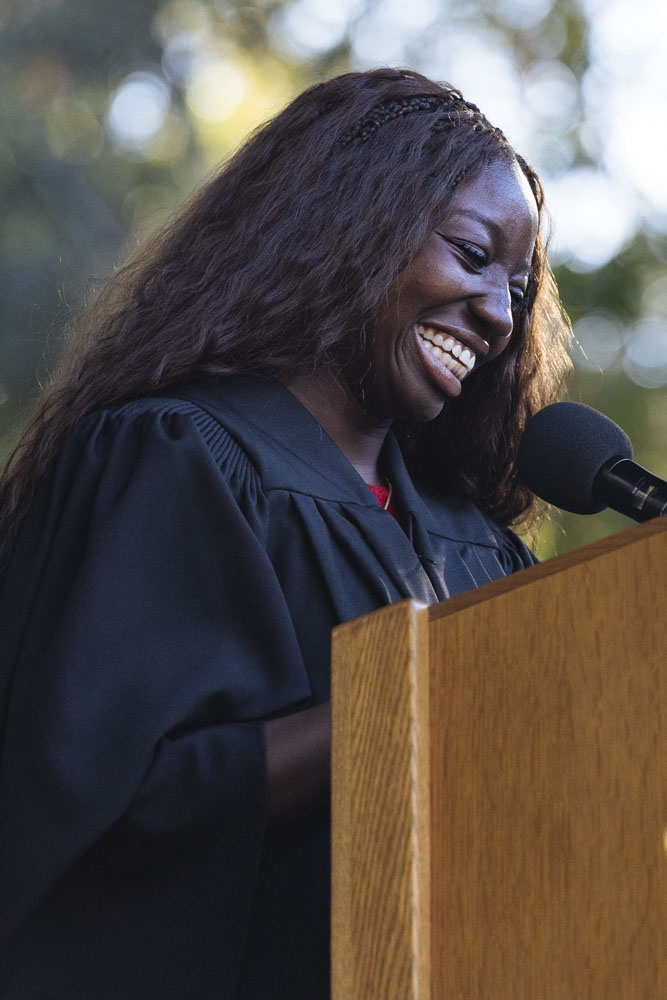
Stanford senior Bennie Nkwantabisa emphasized the importance of leaning on community. “Your success here will be shaped not just by what you accomplish, but by the people who will walk alongside you,” she said.
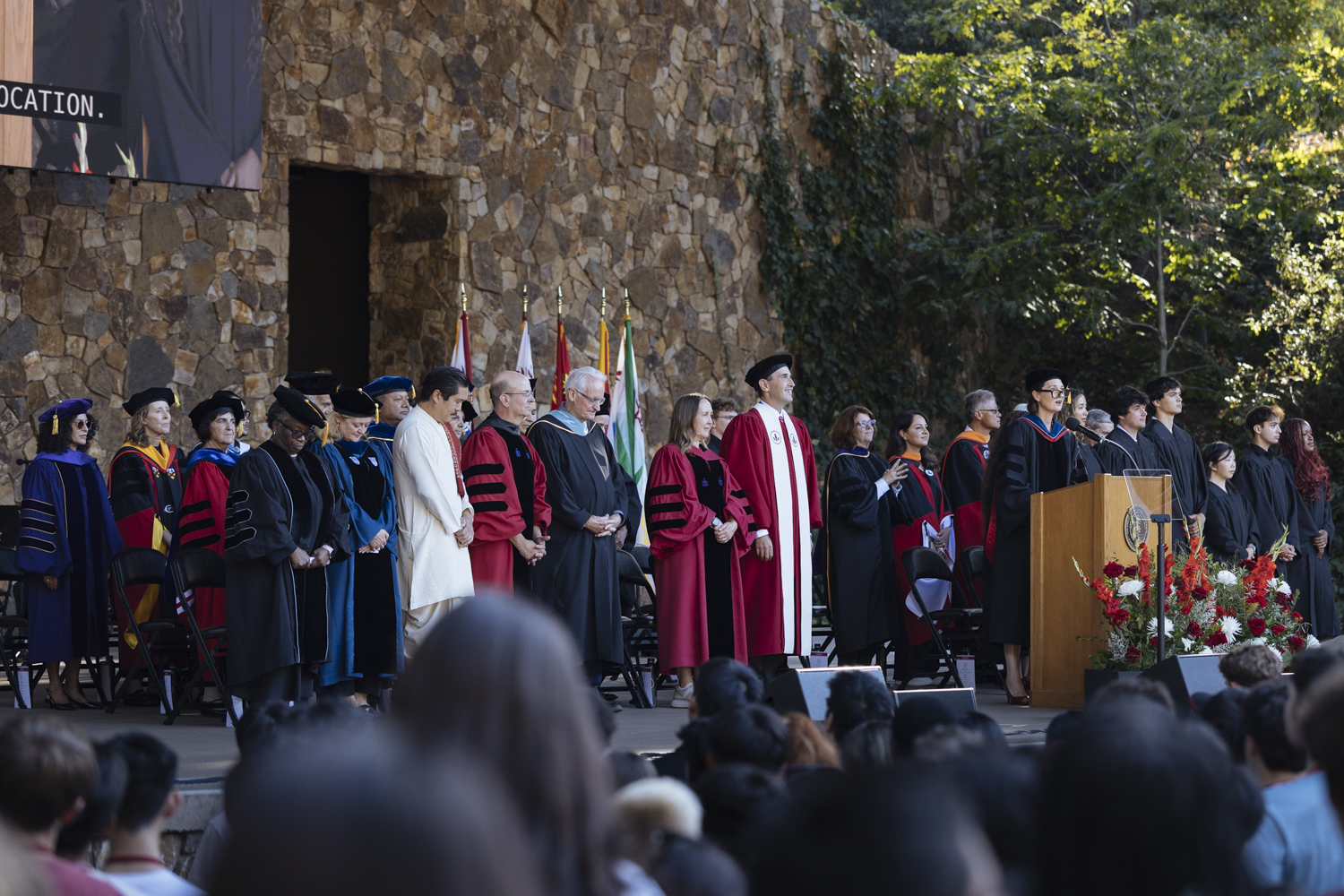
The Rev. Dr. Tiffany Steinwert, dean for religious and spiritual life, opened the ceremony.
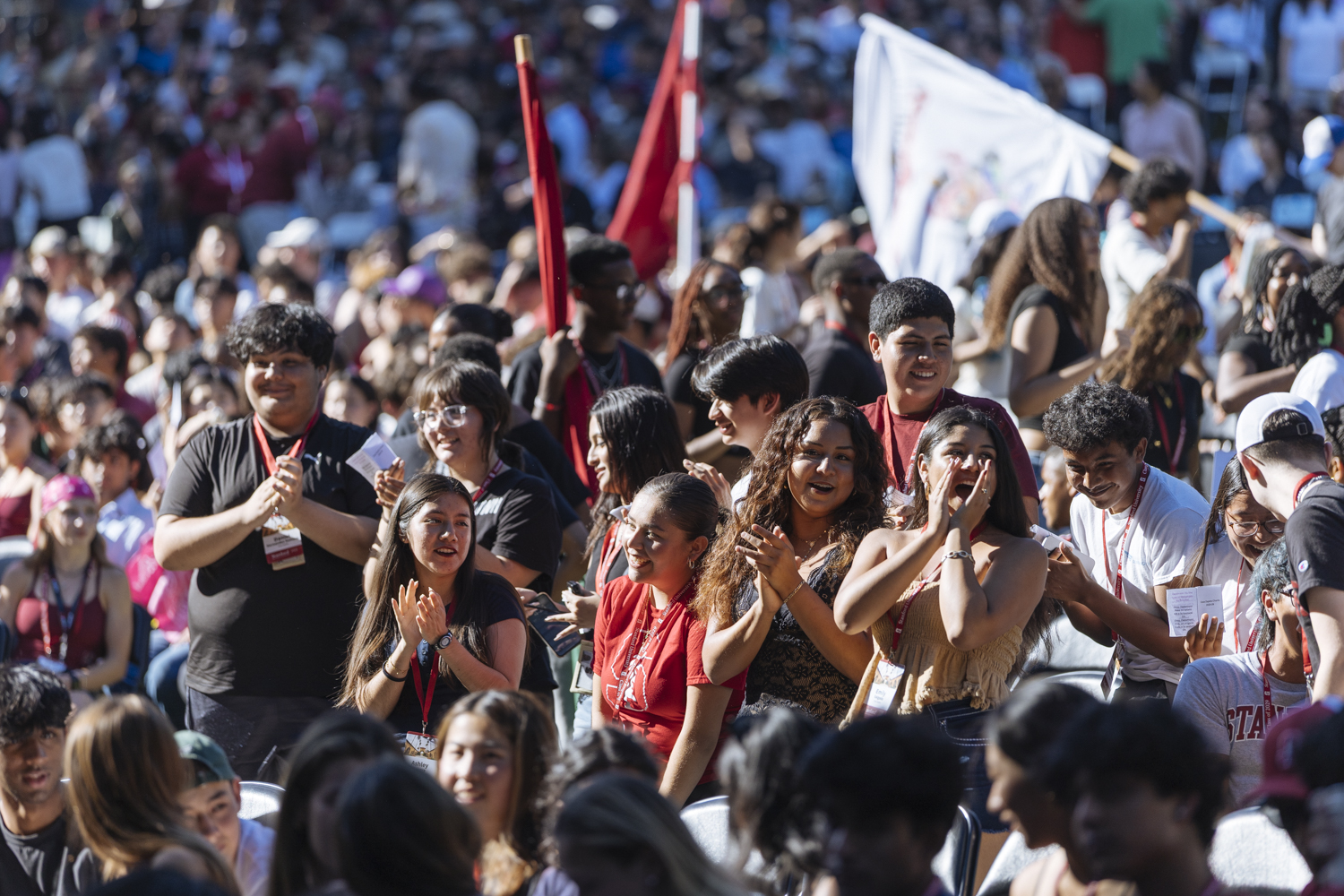
Students showed spirit with new dorm chants.
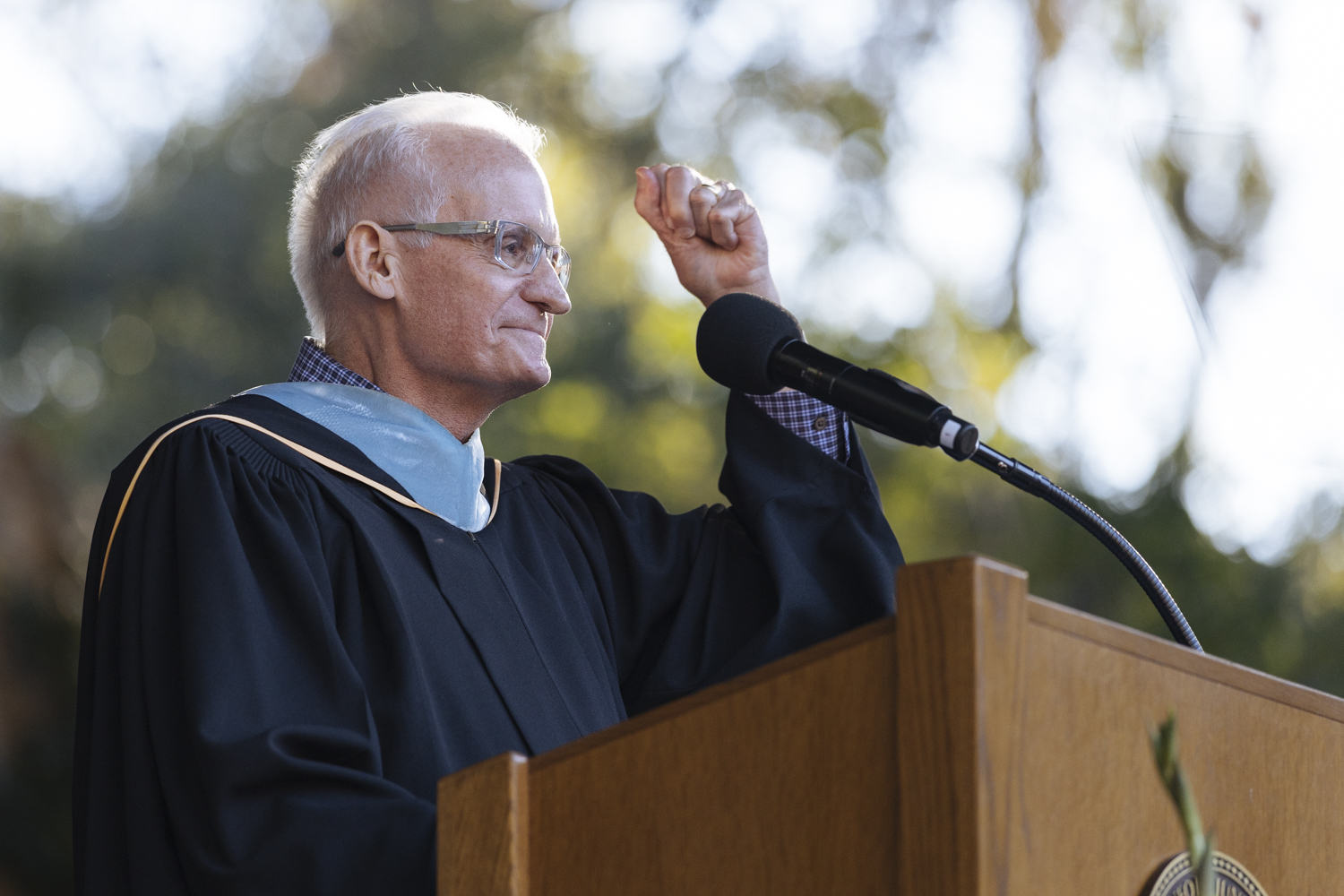
Richard H. Shaw, dean of undergraduate admission and financial aid, led new students in a “Go Stanford! Go Cardinal!” cheer.
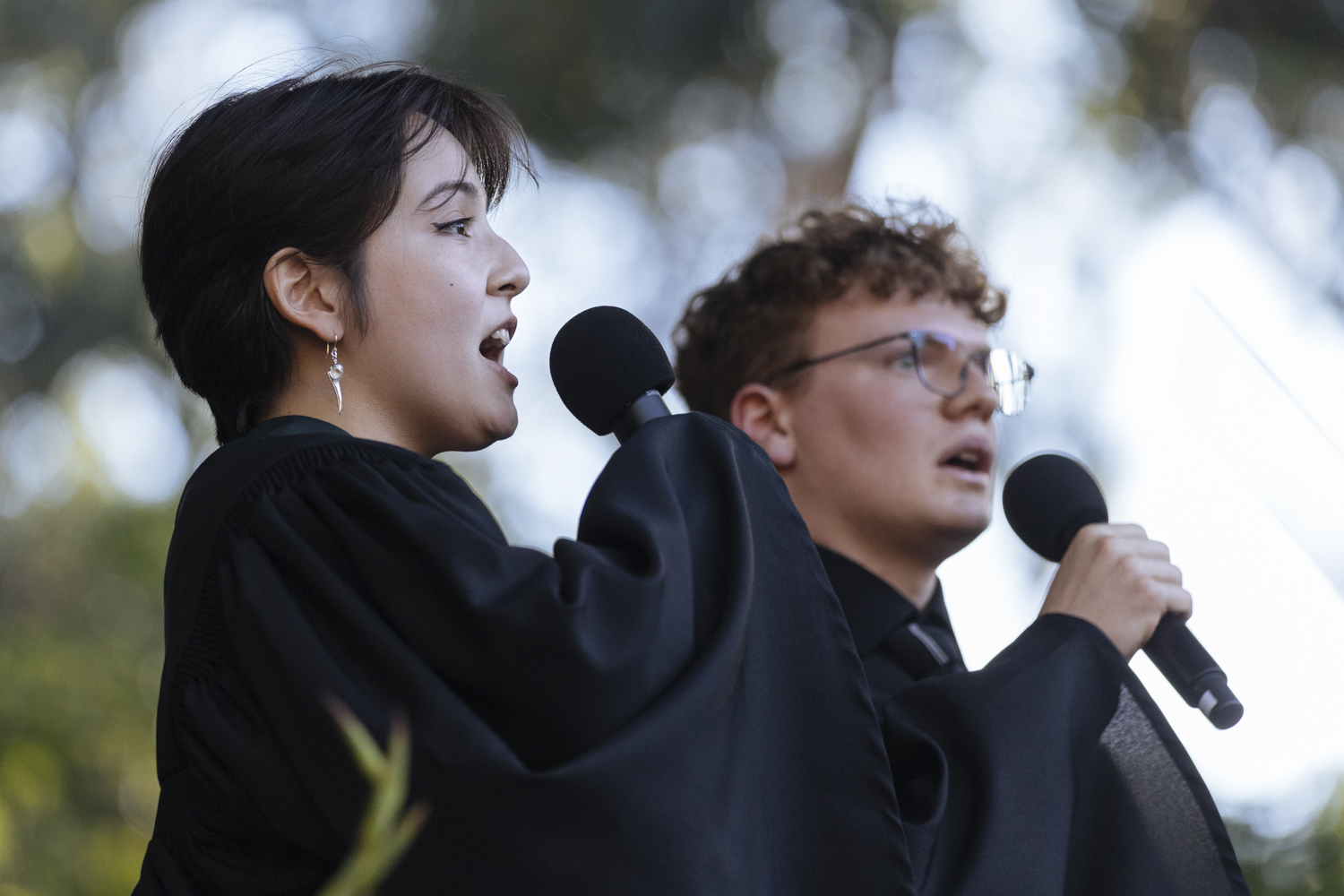
Student soloists Clarissa Daniel and Garrett Davidson sang the Stanford Hymn, “Hail, Stanford, Hail!”
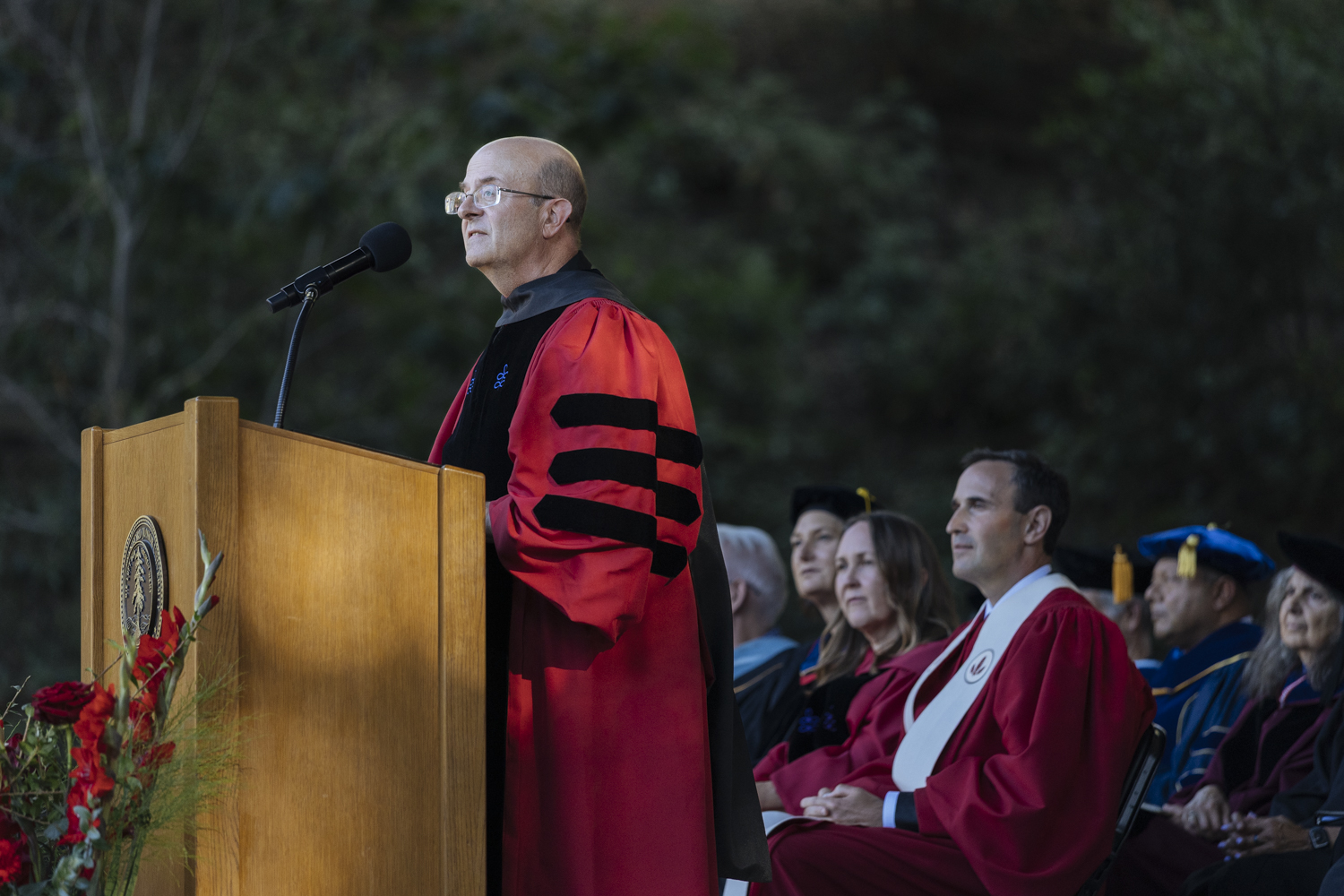
Vice Provost for Undergraduate Education Jay Hamilton quoted Mary Oliver’s poem “Sometimes” as he spoke of the challenges of learning to think critically with – and without – generative AI: “Pay attention. Be astonished. Tell about it.”
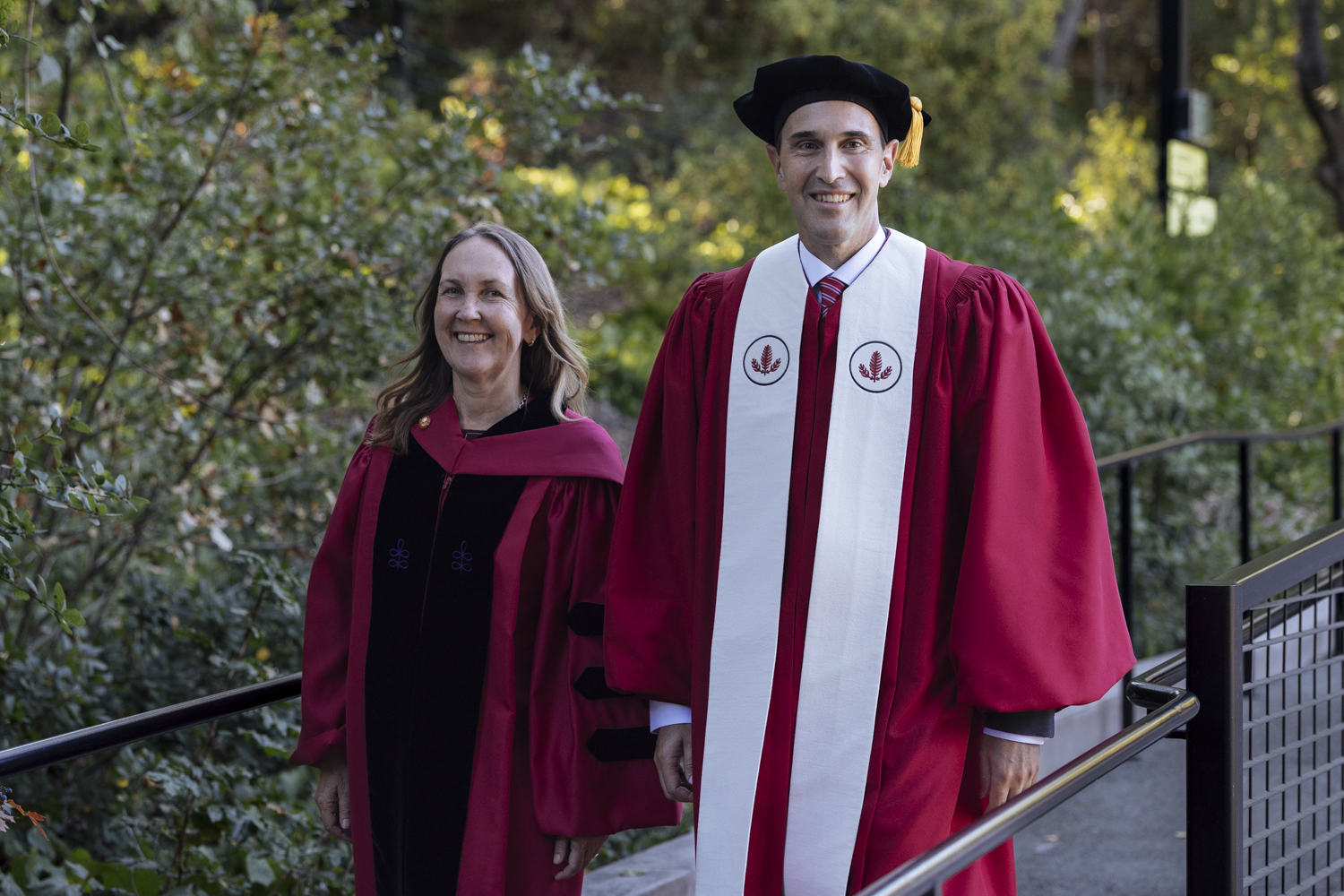
Provost Jenny Martinez and President Jonathan Levin after the ceremony.
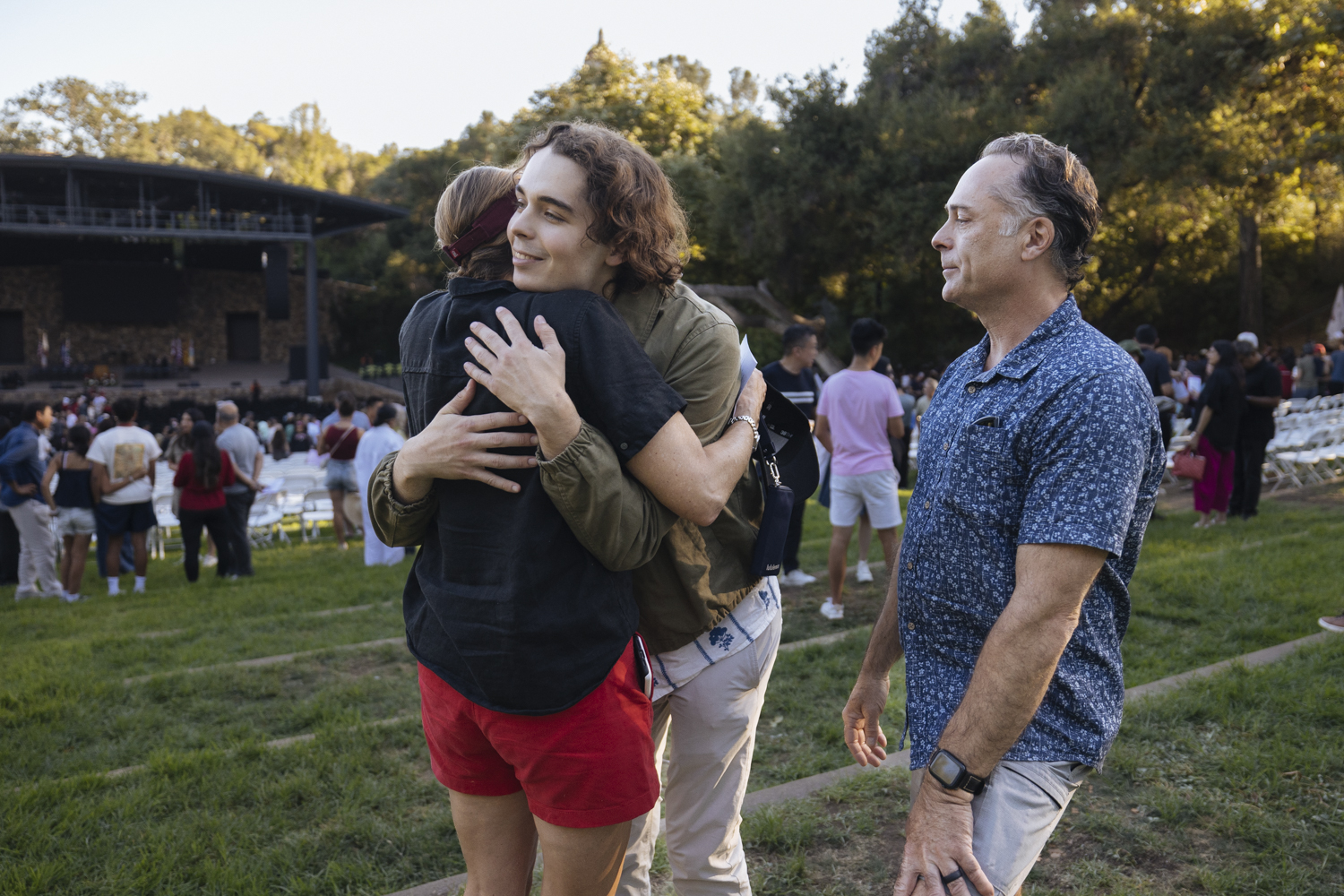
The lawn was the scene of big hugs and farewells as families said goodbye to students after the ceremony.

New students celebrate the beginning of their Stanford journey.
A culture of dignity
In his address, Levin told new students that they are taking on a responsibility to nurture Stanford as an environment for discovery and learning. To do so successfully, he offered three pieces of advice. First, to be curious and open-minded, like the members of the Stanford faculty, who are highly curious and conscious of what they don’t know. “College is much more about asking questions than about knowing all the answers,” he said.
Being open-minded is essential on a pluralistic campus, he said, urging students to create a “culture of dignity,” where people engage with others through dialogue. “In a culture of dignity, there is forgiveness for mistakes,” Levin said. “Differences of opinion and even of values are an opportunity to learn more about others and perhaps yourself.”
Second, he encouraged students to take risks by trying things that might seem hard, unfamiliar, or uncomfortable, such as taking a difficult class or connecting with someone from a different background. “Make an effort to get to know people even if at first it seems you have little in common.”
The pressure to be perfect, he acknowledged, can be intense. But quoting tennis legend Billie Jean King, he reminded students that “pressure is a privilege.”
Lastly, he called on students to be problem-solvers. Stanford’s founders wanted the university to stand out and be different. They wanted its students to think broadly but also gain practical knowledge and use it to serve the global community. He noted that decades ago, Stanford built up its research capacity and figured out how to let ideas transform into entrepreneurial firms that led to the creation of Silicon Valley.
“Today, universities and the world face new challenges, and here at Stanford, we will apply that same creativity and problem-solving mindset to tackle them,” Levin said. “That’s good advice for you as well. When you encounter challenges here, which will surely happen, think about how to be a problem-solver.”
As he closed, Levin invited students to pause and take in their surroundings: “Look up at the broad blue California sky. That’s the freedom of Stanford. Look around you. Those are your fellow explorers.”
“This community takes care of its own”
While delivering the student address, senior Bennie Nkwantabisa recounted her first year at Stanford, during which she said yes to every opportunity – classes, clubs, study groups – to prove to herself that she belonged here. But by her sophomore year, she was overwhelmed.
“It felt natural to think working harder and trying to achieve more would help me find my footing,” she recalled. “But what actually helped me feel grounded at Stanford wasn’t pushing myself well beyond healthy limits. It was leaning on community for peace and reassurance.”
She reminded new students that “nobody gets anywhere alone” and encouraged them to lean on their peers, teaching assistants, professors, and others for support. “I’ve also come to learn that this community takes care of its own, no matter which corner of it you might find yourself in,” she said.
During her Stanford journey, Nkwantabisa learned to redefine success and see it not as a superficial laundry list, but as a balance of effort, growth, health, and connection. “I hope you truly understand that your success here will be shaped not just by what you accomplish, but by the people who will walk alongside you.”
By the numbers
The Class of 2029 includes 1,870 first-years from all 50 states and 64 countries, alongside 90 transfers from 76 colleges and universities, including 36 community colleges.
Other highlights:
- 21% are the first in their families to attend a four-year university.
- 13% are international citizens.
- 11 are military veterans.
- 66% of U.S. first-years attended public high schools, and the remainder attended private, parochial, and home schools.
- Students’ households speak 80 different languages.
A livestream recording of Tuesday’s Convocation ceremony is available to watch online.
Writer
Alex Kekauoha
Videographers
Kurt Hickman
Harry Gregory