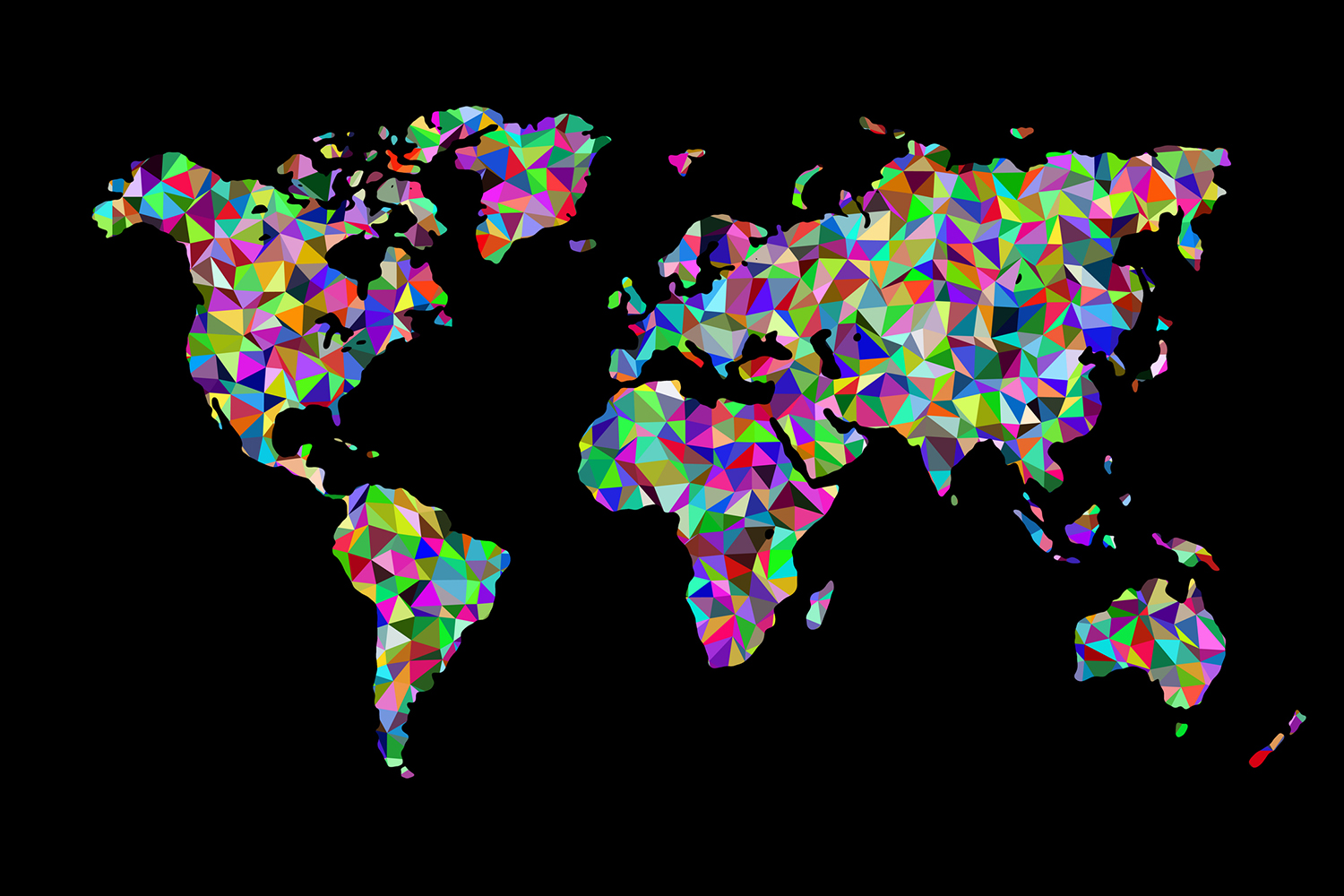
Imagine Earth as a spaceship, with humans as its passengers. Now imagine those passengers dismantling each of the carefully calibrated systems needed to sustain life within the ship.
This scenario is not so far-fetched: Human-driven changes are disrupting many of the Earth’s finely tuned and life-sustaining operating systems, causing climate change, biodiversity loss, pollution, ocean acidification, and other disruptions that gravely threaten human health.
A new expert commentary in The Lancet calls for researchers studying Earth’s systems and human health to collaborate to understand, raise awareness, and mitigate the human health impacts that occur when Earth’s core functions are thrown out of balance. Specifically, they call for closer alignment and collaboration between Earth system scientists studying “planetary boundaries” – processes such as climate change and freshwater cycles that regulate Earth’s habitability – and researchers studying “planetary health.” Planetary health is a field that studies the health and well-being of humans in relation to their environment.
“Making the overlap between planetary boundaries and planetary health explicit is essential for showing how the resilience of our planet is directly connected to human health and well-being, and for identifying synergistic solutions,” says Nathalie Lambrecht, PhD, a Stanford-LSHTM Human and Planetary Health Postdoctoral Scholar based at the Stanford Center for Innovation in Global Health and Center for Human and Planetary Health and a co-author on the commentary. The commentary was authored by an international, interdisciplinary team of leaders in planetary boundaries and planetary health, led by Sam Myers, MD, of the Johns Hopkins Institute for Planetary Health.
Making the overlap between planetary boundaries and planetary health explicit is essential for showing how the resilience of our planet is directly connected to human health and well-being, and for identifying synergistic solutions.Nathalie LambrechtCo-author, Stanford Center for Innovation in Global Health
Earth system scientists developed the planetary boundaries framework in 2009 to measure changes to the resilience and stability of Earth’s systems resulting from human behavior. This framework names nine critical global processes (freshwater change, ocean acidification, land systems change, climate change, etc.) that must remain within certain boundaries in order to maintain conditions needed to sustain human life as we know it. Experts believe six of those nine boundaries have now been transgressed, meaning they’ve crossed a point of potentially irreversible damage that could result in widespread harm to both the environment and human health.

At the same time, health scientists are concerned that changes to Earth’s systems are eroding foundational conditions for human health and well-being. These concerns have given rise to Planetary Health – a “solutions-oriented, transdisciplinary field and social movement focused on analyzing and addressing the impacts of destabilized natural systems on human health and all life on Earth.”
Connecting these frameworks can be an effective way to communicate the dire consequences of environmental changes brought about by human activity, experts say.
“Positioning planetary boundaries within the planetary health framework (and vice versa) explains why crossing planetary boundaries is a direct and grievous health threat to all of humanity, and an effective way to drive home the need for transformational change,” said Britt Wray, PhD, a Stanford Instructor of Psychiatry and Behavioral Sciences, a former Stanford-LSHTM Planetary Health Postdoctoral Fellow, and an author on the publication. “Our paper shows that there can be no lasting human health without upholding and protecting the integrity of our planet’s health,” she said.
Wray added that protecting the planet’s health means staying within planetary boundaries, which define the safe operating space for humanity within the Earth’s biophysical systems.
Our paper shows that there can be no lasting human health without upholding and protecting the integrity of our planet’s health.Britt WrayCo-author, Department of Psychiatry and Behavioral Sciences, Stanford Medicine
Lambrecht, a food systems researcher, says she sees the inherent connection of these frameworks in her daily work.
“Our food system is a leading driver of the transgression of several planetary boundaries. Increasing pressures on these boundaries will only worsen diet-related health risks from crossing planetary thresholds, such as food insecurity and malnutrition,” she said.
She added that many of the solutions that will benefit the planet’s operating systems are win-win solutions that also benefit human health. For instance, Lambrecht’s research studies shifting food consumption to plant-forward diets, which are rich in plant-based foods and include only moderate amounts of meat, fish, and other animal products.
“Combining a dietary shift with more sustainable agricultural practices could help us improve on nearly all the planetary boundaries and contribute to better health for populations both now and in the future,” she said.
The publication, which comes 10 years after the landmark publication of the Lancet Commission on planetary health, serves as a call to action for researchers and actors across society to explicitly recognize the connection between human well-being and planetary resilience.
The Lancet Comment pushes for shifts in research, policy, and communication based around four cornerstones of action:
Earth system and human health monitoring: Systematic investigation of health impacts from Earth system changes.
Justice-centered policy: Ensuring access to essential resources for everyone while addressing the disproportionate impact of Earth system changes on future generations, Indigenous peoples, and marginalized communities.
True cost and benefit accounting: Revealing the hidden health costs of environmental destruction and the true benefits of safeguarding nature’s contributions to people to identify efficient changes.
Integrated communication: Advancing the understanding that environmental problems threaten everyone’s health, security, and prosperity.
For more information
To learn more, read the publication and the Johns Hopkins press release.
This story was originally published by the Stanford Center for Innovation in Global Health.
Media contact
Jamie Hansen, Global Health Communications Manager: jmhansen@stanford.edu
Writer
Jamie Hansen