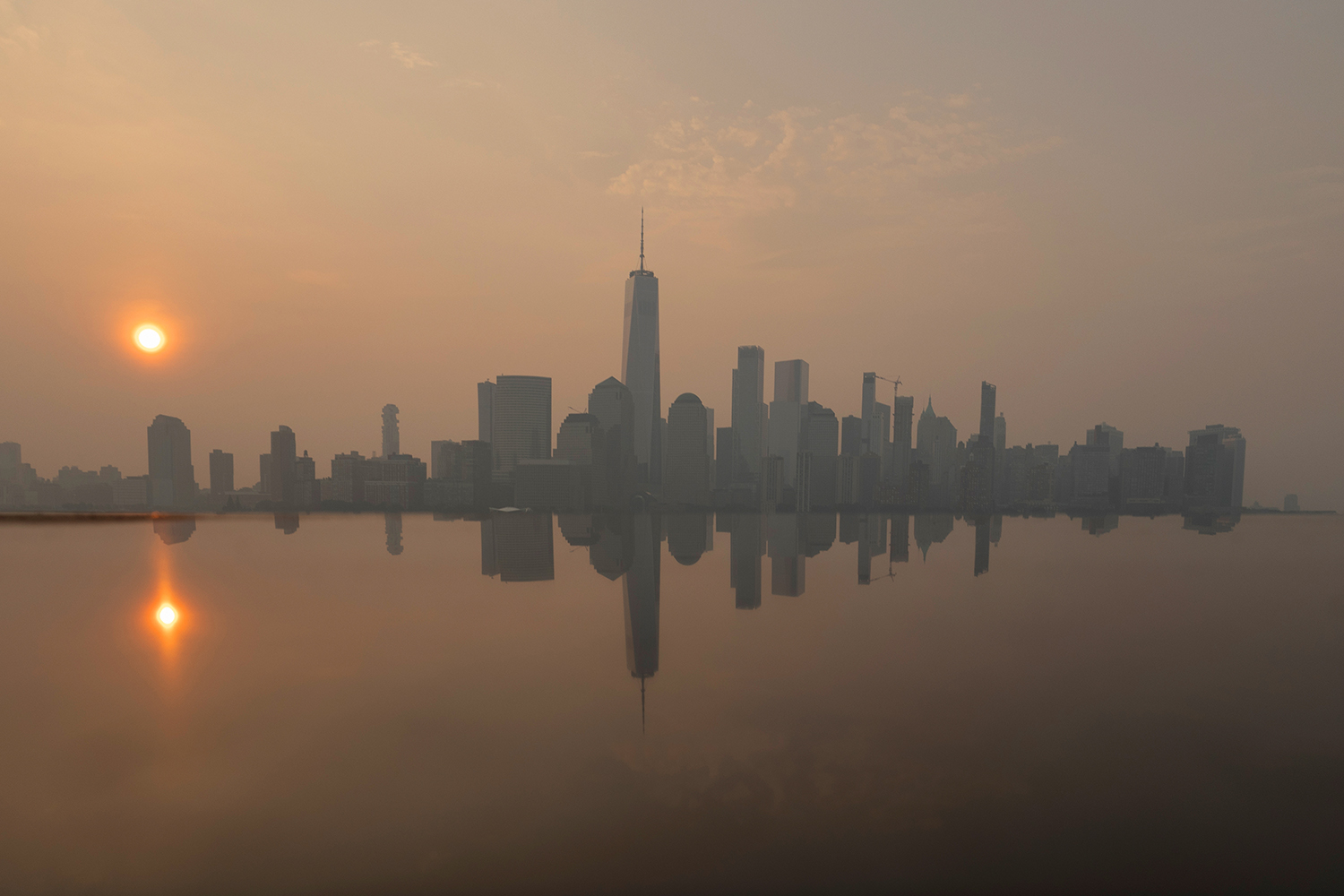
This summer, wildfires have once again raged across the western United States while more smoke has traveled from Canadian wildfires across large swaths of the midwestern and northeastern U.S. Major fires have burned throughout Europe and other parts of the world. Smoke from these fires can travel hundreds or even thousands of miles, degrading air quality far from the flames.
The effects extend beyond irritated eyes and lungs. Wildfire smoke exposure is known to have a link to respiratory and cardiovascular problems and other health effects, and Stanford Medicine-led studies have uncovered links to pregnancy complications and direct impacts on the immune system.
Stanford experts Sharon Chinthrajah, MD, a professor of pediatric food allergy, immunology, and asthma, and of pediatrics, and Marshall Burke, PhD, a professor of global environmental policy in the Doerr School of Sustainability who studies wildfire smoke exposure and health, explain what happens when we breathe smoky air and what you can do to protect yourself.

Sharon Chinthrajah and Marshall Burke | Courtesy Stanford Medicine; Stacey Geiken
What is wildfire smoke and why is it so harmful?
Wildfire smoke is a complex mix of gases, chemicals, and particles. Of special concern is what’s known as PM2.5 – particulate matter 2.5 micrometers wide or smaller, tiny enough to travel deep into the lungs and enter the bloodstream.
Once inhaled, PM2.5 can irritate and inflame the lungs. Research has implicated PM2.5 in respiratory, cardiovascular, neurologic, and pregnancy-related problems. One possible explanation for these health consequences is smoke’s direct impact on the immune system.
A 2025 study in Nature Medicine, which Chinthrajah co-authored, found that wildfire smoke may alter gene expression, inflammatory signals, and immune cells in people exposed to it.
“This is a signal that there are lasting immune cell changes dependent on the number of wildfire exposures you’ve had,” Chinthrajah explained.
Besides PM2.5, what else is in smoke depends on what is burning. Vegetation produces compounds including polycyclic aromatic hydrocarbons, some of which are known carcinogens. When fires reach populated areas, they may also consume buildings, cars, plastics, rubber, household chemicals, and metals. The Nature Medicine study found toxic metals such as mercury and cadmium in the cells of people exposed to fire smoke, with metal levels corresponding to years of smoke exposure.
What are the immediate impacts of wildfire exposure – and the long-term impacts?
Wildfire smoke can cause symptoms quickly. Common effects include irritated eyes, nose, and throat; coughing; wheezing; shortness of breath; and headaches. For people with asthma or chronic obstructive pulmonary disease, smoke can trigger flare-ups.
“If you look at emergency department visits in California, when people are exposed to wildfire smoke, you see large increases in asthma-related visits and COPD-related visits,” Burke said.
Smoke inhalation can also cause heart attack, arrhythmia, sudden cardiac arrest, and stroke, especially in those with preexisting heart conditions, sometimes within hours of exposure.
Stanford researchers are exploring skin effects, such as eczema and psoriasis exacerbations.
Scientists are also concerned about cumulative exposure: Researchers are still determining what that could mean for long-term cardiovascular disease, cancer, immune health, and cognitive decline.
“Increasing evidence suggests wildfire smoke is related to cognitive outcomes across the spectrum, from learning deficits in kids all the way to premature or exacerbated cognitive decline in older adults,” Burke said.
What is the connection between mental health and air quality?
Wildfires have been shown to take a significant toll on mental health. Some studies have found associations between wildfire smoke and mental-health crises, including increased suicide risk.
But it’s unclear, and would be difficult to tease out, whether the mental-health effects come from the devastation fires cause or the direct impact of smoke inhalation.
Major fires bring more than just smoke. They may bring evacuation, lost homes, displacement, isolation, and ongoing anxiety. Chinthrajah described such events as “toxic stress” that may itself affect the immune system.
Increasing evidence suggests wildfire smoke is related to cognitive outcomes across the spectrum, from learning deficits in kids all the way to premature or exacerbated cognitive decline in older adults.Marshall BurkeProfessor of Global Environmental Policy
Who is most vulnerable when the air quality is poor?
Wildfire smoke can affect everyone, but some people are biologically more susceptible, while others have fewer opportunities to escape exposure.
- Children: Young lungs are still developing, and kids breathe more air relative to their body size than adults. Their noses may not filter out particulate matter as well as adult noses do. Children also tend to be more active outdoors than adults and may pull in more air during playtime and exercise. Chinthrajah recommends parents monitor air quality and move sports and other activities indoors when conditions become hazardous.
- Adults over 65: Older adults are more likely to have underlying heart or lung disease and are therefore more vulnerable to respiratory and cardiovascular effects. They may need to reduce activity or remain indoors at lower pollution levels than healthy younger adults.
- People with preexisting conditions: Asthma, COPD, and cardiovascular disease can all be worsened by smoke. People with these conditions should continue prescribed medications and have a plan with their health care provider for managing symptoms during poor-air-quality days.
- Those who are pregnant: Because wildfire exposure has been associated with preterm birth and other adverse pregnancy outcomes, pregnant people should take smoke warnings seriously and reduce exposure whenever possible.
- Those with outdoor jobs: Farmworkers, construction workers, landscapers, delivery workers, and others may not be able to simply stay inside. Access to appropriate respirators, indoor breaks, and spaces with cleaner air are especially important for this group.
- Unhoused individuals: For unhoused people, staying indoors may not be an option at all. Burke said communities need solutions such as clean-air and cooling centers, and those resources must be designed so people in this population can realistically use them.
- Pets: Animals can also be harmed by smoke. The U.S. Environmental Protection Agency states that when air quality is unhealthy for people, it is unhealthy for animals. Bring pets indoors when air quality is poor, limit strenuous outdoor activity, and include them in your evacuation plan.
What are some key tools for preparing in case of wildfire?
If a wildfire threatens your home, follow local evacuation instructions first. Protecting yourself from smoke is secondary to getting out of the fire’s path.
If smoke rather than flames is headed your way, prepare before the air deteriorates. Have N95 respirators and replacement HVAC filters available and obtain a portable air cleaner before smoke events if possible. They may become difficult to find when demand spikes. The EPA recommends a MERV-13 HVAC filter, or the highest-efficiency filter your system can safely accommodate.
Keep an eye on local air quality and identify a nearby clean-air or cooling center, particularly if your home lacks air conditioning.
How do you properly check air quality and understand how AQI works?
The Air Quality Index, or AQI, translates pollution measurements into a color-coded scale from 0 to 500. Green, from 0 to 50, represents good air quality; yellow, 51 to 100, is moderate; orange, 101 to 150, is unhealthy for sensitive groups; and red, 151 to 200, is unhealthy for everyone. Purple and maroon represent very unhealthy and hazardous conditions.
You can check AQI through AirNow.gov, many weather apps, or local air-quality agencies.
Importantly, “safe” does not necessarily mean risk-free. Burke’s research has found negative health effects at pollution levels that fall within federal “good” or “moderate” categories. But risk generally increases as pollution worsens.
What are the best ways to protect yourself when air quality is unhealthy?
When smoke moves in, focus on reducing how much of it you breathe in.
- Stay indoors and close windows and doors. This reduces smoke exposure, although Burke cautions that simply going inside is often not enough, particularly in drafty homes.
- Filter indoor air. Use a portable air cleaner sized for the room or run central heat or air conditioning with a MERV-13 filter, if that’s compatible with your system. The EPA advises running filtration as much as possible during heavy smoke and replacing dirty filters. A properly sized portable filter even in a drafty old house can sharply reduce indoor particulate levels, Burke said.
- Avoid making more particles indoors. Skip candles, fireplaces, and high-temperature cooking, such as frying, when outdoor air is already smoky.
- Reduce strenuous outdoor exercise. Physical exertion increases the amount of air you inhale. Move exercise regimens indoors.
- Wear an N95 if you must be outside. A properly fitted respirator can reduce inhalation of fine smoke particles. Cloth and surgical masks do not provide comparable PM2.5 protection.
- Be careful when heat and smoke coincide. Closing windows without air conditioning can create dangerous indoor heat. If you cannot safely stay cool at home, the EPA recommends finding a cooler location with cleaner air.
Wildfire smoke is not harmless simply because the flames are far away. Pay attention to AQI; reduce exposure when you reasonably can; and make cleaner indoor air a priority, especially if someone in your household is at higher risk.
“It’s a delicate balance,” Burke said of reducing unnecessary exposure without assuming that every slightly smoky day requires staying home. “We have to live our lives.”
For more information
This story was originally published by Stanford Medicine.
Writer
Sonya Collins