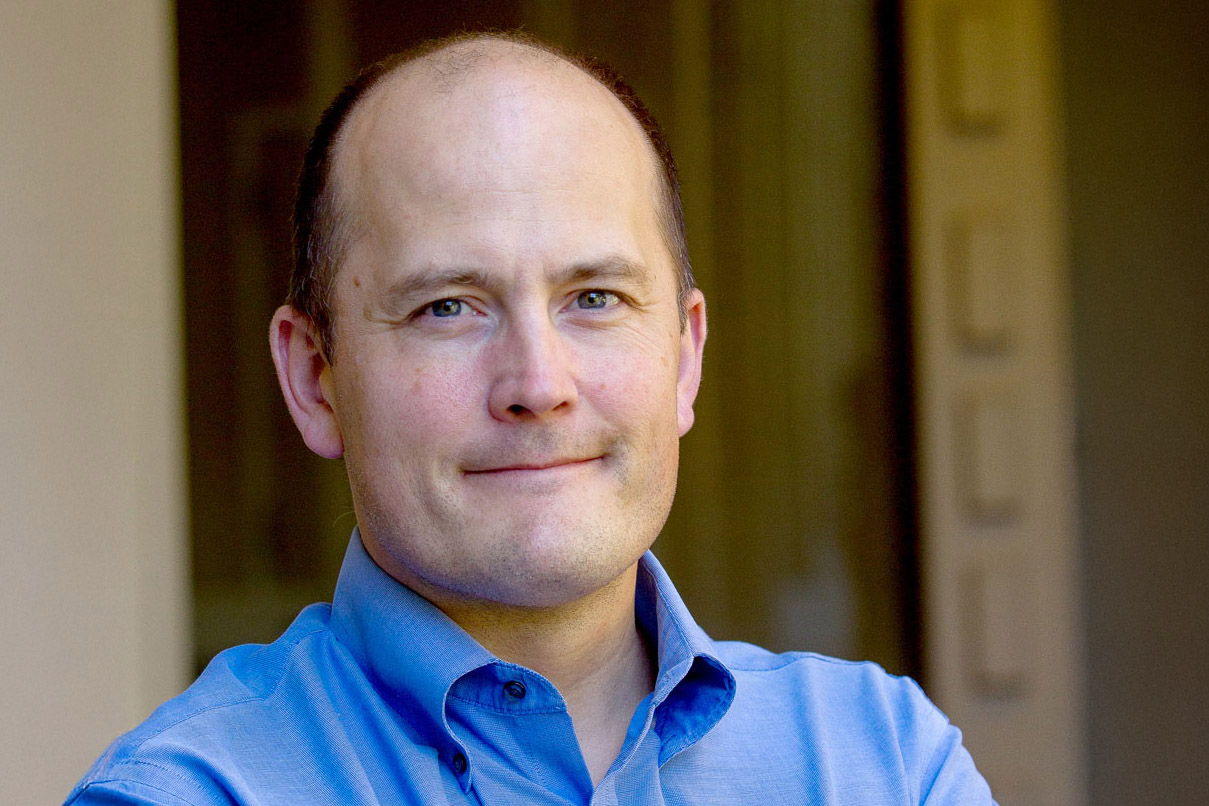
Paul Bollyky, MD, PhD, professor of infectious disease and of microbiology and immunology, has been named to lead the Center for Phage Pharmaceuticals at Stanford University. A grant of $9.5 million over a five-year period from the National Institute of Allergy and Infectious Diseases kicks off the initiation of the program, with the purpose of accelerating clinical applications of research on bacteriophages, usually referred to as “phages.” These are viruses that naturally invade and kill bacteria, but not us, making them a potentially powerful weapon against a number of antibiotic-resistant infections.
Clinical applications of the program’s research could help defeat several antibiotic-resistant bacterial pathogens that are increasingly widespread among hospitalized patients, said Bollyky, the program’s designated director.
Antibiotic resistance has spread beyond high-risk patients to the broader hospital population. The leading major hospital “superbugs” are the so-called ESKAPE pathogens – Enterococcus faecium, Staphylococcus aureus, Klebsiella pneumoniae, Acinetobacter baumannii, Pseudomonas aeruginosa and Enterobacter species. These bacterial species are considered critical threats because they not only resist drugs but swap defense mechanisms and quickly adapt after being exposed to new antibiotics.
“We’re running into bacteria that are resistant to all the antibiotics we have, so we’re dipping into nature’s armamentarium,” Bollyky said. Phages infect and replicate exclusively in bacteria, leaving our own cells alone, he said. And because – unlike antibiotics – phages tend to be extremely selective for specific bacterial species, they spare our resident microbiomes.
“We’re hoping to assemble not only a panoply of phages to treat people for hard-to-arrest bacterial infections but also the regulatory and pharmacological data needed to develop those phages as drugs for personalized therapies,” Bollyky said.
The Center for Phage Pharmaceuticals’ first efforts will target the delivery of appropriate phage therapies to the lung for the purpose of combatting P. aeruginosa infections in cystic fibrosis.
Stanford University is one of three institutions across the country selected to receive NIAID grants for its new Centers for Accelerating Phage Therapy to Combat ESKAPE Pathogens, a coordinated effort to advance the therapeutic development of phages. The two other institutions receiving grants to start up phage-directed programs in coordination with the Stanford University site are the University of Pittsburgh and the Gladstone Institutes, an affiliate of the University of California, San Francisco.
For more information
This story was originally published by Stanford Medicine.
Media contact
Bruce Goldman: 650-725-2106, goldmanb@stanford.edu
Writer
Bruce Goldman