



Stanford seminar becomes book on what works in global health
Research
Steve Luby draws on years of classroom debate to examine why some global health projects succeed and others fail, often in ways he didn’t expect.

As saltwater threatens forests, researchers help landowners adapt
Research
An online tool will guide coastal landowners through conservation programs and alternative income options as saltwater seeps into their soil.
New scanner brings advanced whole-brain imaging to Stanford
Video
The scanner pinpoints when and where brain activity occurs, opening new avenues for research on speech, memory, and neurological disorders.

Gene therapy breakthrough fits where CRISPR can’t
News
TIGRa, half CRISPR’s size, fits in viral vectors to boost protective genes. Its compact design could enable gene therapies throughout the body.
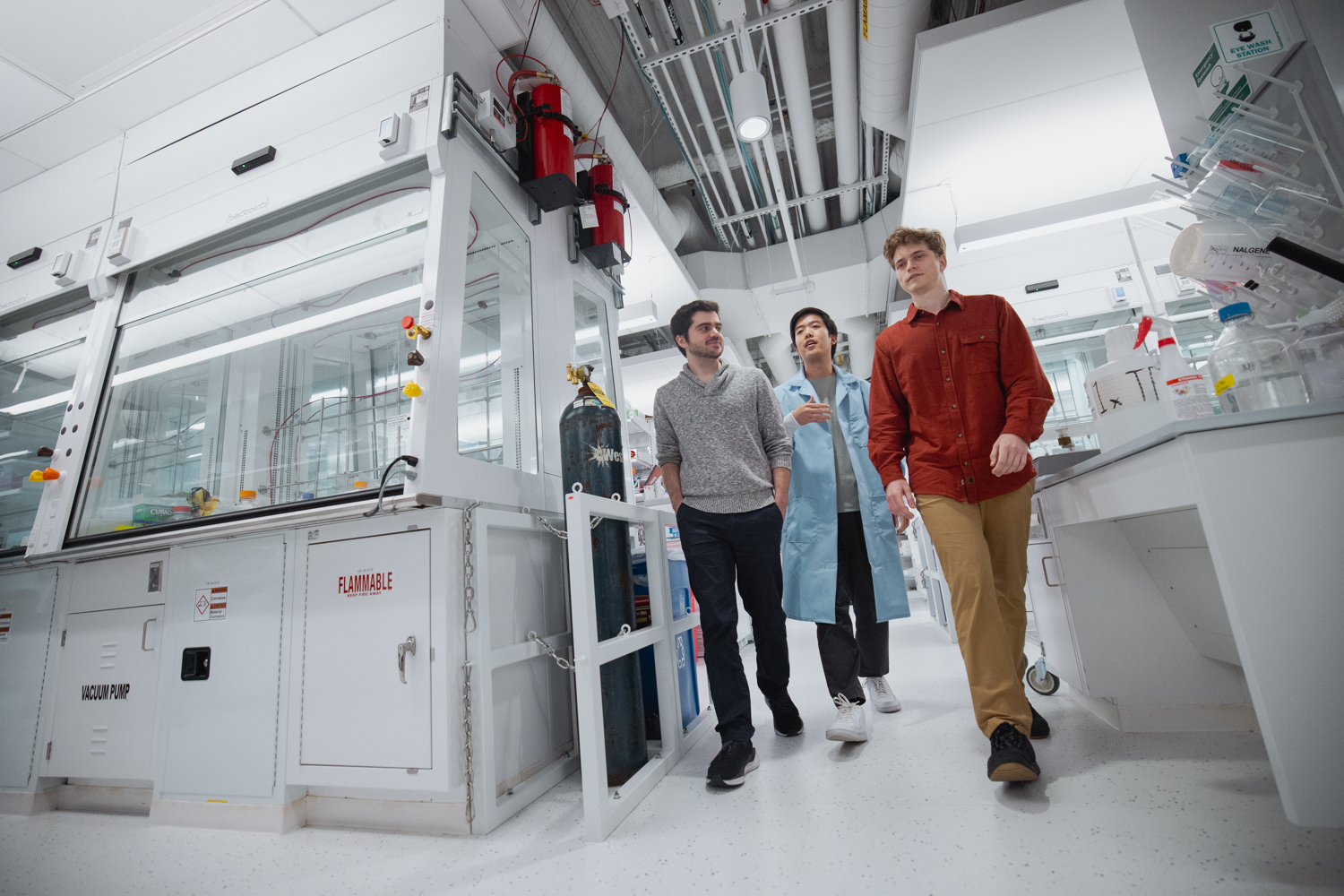
From biology to astrophysics, AI expands the boundaries of discovery
Research
AI is helping scientists model human cells, decode the universe, and accelerate discovery across nearly every field. Here are some key innovations from across campus.

The secret to human ‘brilliance’ that AI just can’t match
Research
New research reveals how people learn social conventions with minimal data – and why that sets us apart from LLMs.

9 things you (probably) didn’t know were invented at Stanford
Feature
The one-handed jump shot, the computer mouse, the klystron, and digital FM synthesis are just a few of the transformative innovations with Stanford origins.

Innovative system turns human waste into sustainable fertilizer
Research
Stanford researchers have developed a prototype that harnesses urine to generate valuable fertilizer, offering solutions for sanitation and energy in resource-limited regions.

The evolution of universities as engines of innovation
Profile
For two decades, Chuck Eesley has studied how entrepreneurship, education, and government investment drive innovation, revealing the critical factors that contribute to entrepreneurial success.

The tax code oversight causing innovation to falter
News
New research finds that when a tax incentive lapsed, U.S. companies slashed their spending on research and development.