


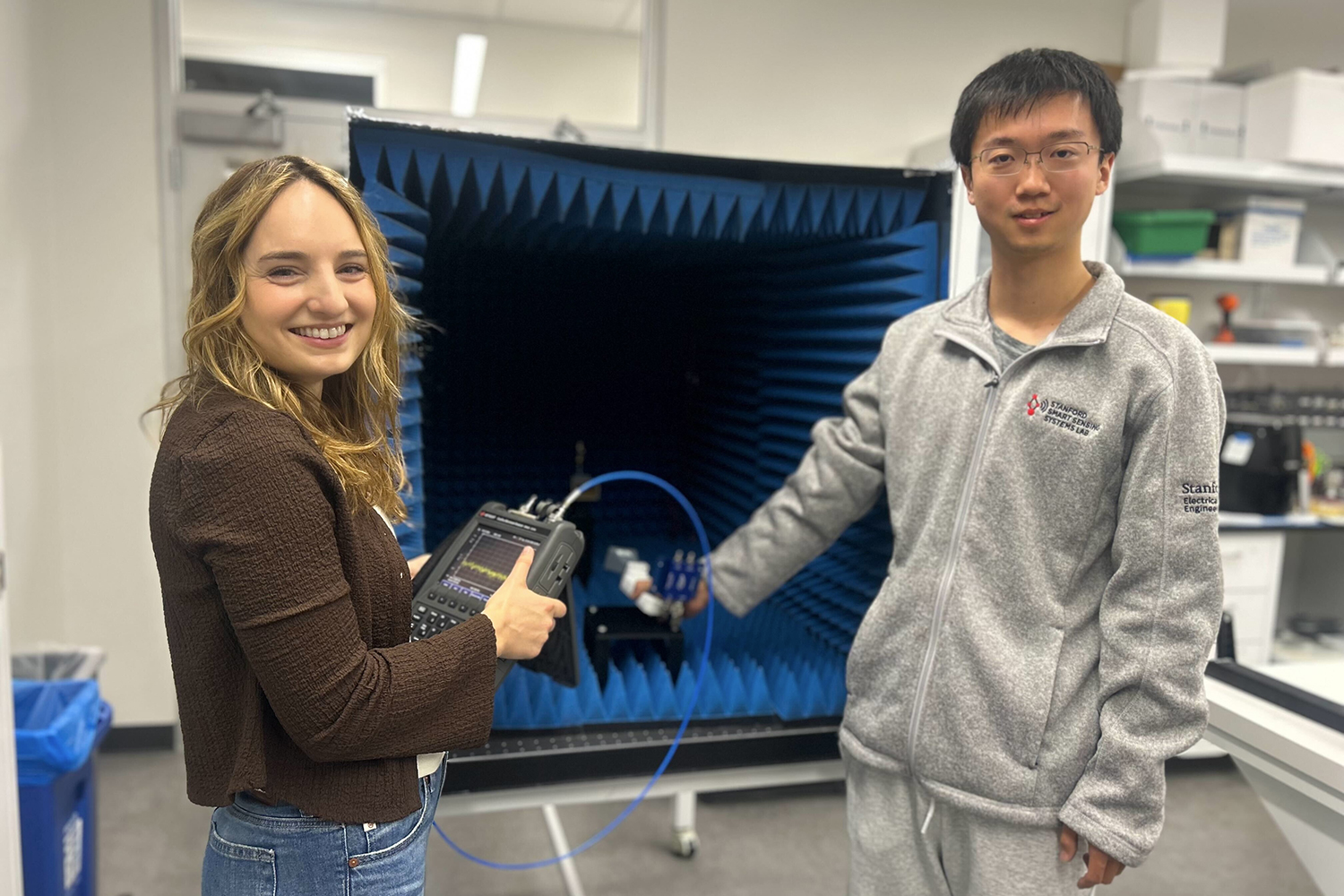
Thermal noise used to send data without an active signal
Research
In a new paper, Stanford engineers detail how to harness the vibrations of electrons to relay data without needing an energy-intensive signal carrier.

Research reveals financial motives behind deceptive political posts
Research
A Stanford study of fake account networks active during the 2020 elections finds that many were financially motivated, using political content as a lure for clicks and profit.
VR tech helps seniors battle isolation
In the News
A Stanford University researcher shares how virtual reality can create meaningful social connections for older adults in care facilities.

AI overly affirms users asking for personal advice
Research
Not only are AIs far more agreeable than humans when advising on interpersonal matters, but users also prefer the sycophantic models.

What does it mean to be reasonable?
Research
In a new book, Stanford philosopher Krista Lawlor explores how understanding this elusive trait can foster more productive dialogue about what really matters.
A crash course on building connection through better listening
Video
Professor Christian Wheeler shares how to have deeper, more productive conversations. “Listening is more than not talking.”
Why young people are struggling to communicate
In the News
Stanford Graduate School of Business lecturer Matt Abrahams on the significant communication challenges facing today’s youth, highlighting shared concerns with colleague Rachel Konrad.

Why we can’t stop clicking on rage bait
Q&A
“Rage bait” is Oxford’s Word of the Year. What makes anger so appealing?

Social media research tool lowers the political temperature
Research
A new method created by Stanford researchers reduces polarization by downranking antidemocratic and highly partisan posts on X.
How to speak clearly and with confidence
Stanford lecturer Matt Abrahams shares how to speak with clarity and be an authentic communicator.